Bangladesh’s export sector could face mounting pressure if the ongoing crisis around the Strait of Hormuz continues to disrupt global energy supplies and drive-up fuel prices, business leaders and economists have warned.
They said a prolonged conflict in the Middle East could significantly increase production costs for industries, weaken export competitiveness and discourage new investment in Bangladesh, alongside risking the nascent macroeconomic stability.
Bangladesh Chamber of Industries (BCI) President Anwar-ul Alam Chowdhury told TIMES of Bangladesh that utilities account for around 10 per cent of a factory’s total operating costs.
“So, if utility prices rise, production costs will increase proportionately. That will erode the competitiveness of Bangladeshi products in the global market,” he said.
He added that Bangladeshi products are already facing intense competition in the European Union market as tariffs imposed by the United States have reshaped global trade flows.
“As a result, countries like China and India are aggressively trying to capture a larger share of the EU market,” he said, adding that Bangladesh’s export sector may face a difficult period ahead.
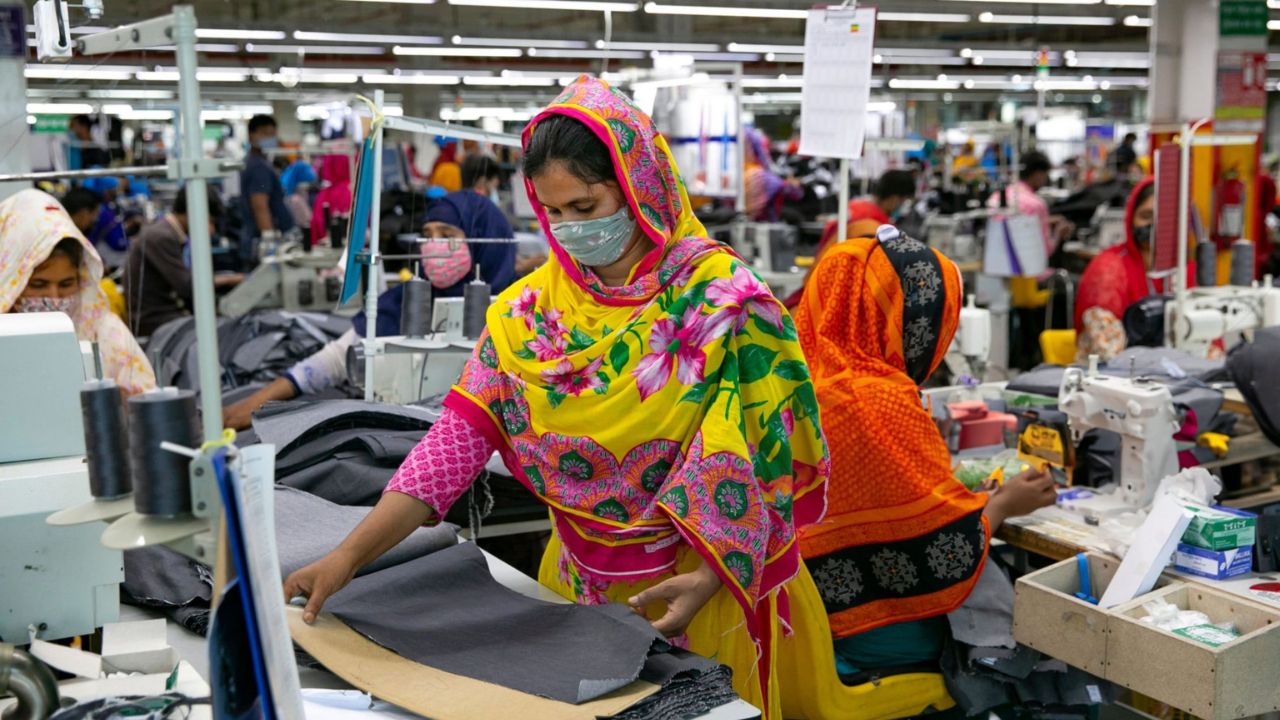
According to him, the industrial sector is already under strain, with around 300 garment factories and about 50 spinning mills having shut down in recent months.
“If the crisis is not managed properly, the number of closures could increase further,” he warned.
Bangladesh Garments Accessories & Packaging Manufacturers & Exporters Association President Md Shahriar said packaging factories use a significant amount of diesel in their operations. Several factory owners have complained that they are not receiving an adequate supply of diesel after the government introduced a rationing system.

He also said that the association will soon officially communicate its position on the matter.
The Strait of Hormuz, which connects oil and gas producers in the Persian Gulf with global markets, is one of the world’s most critical energy routes and a key lifeline for the global economy.
At its narrowest point the strait is about 21 miles wide, yet nearly one-fifth of global oil consumption – about 20 to 21 million barrels per day – passes through this single maritime corridor, along with about 20 per cent of the world’s traded liquefied natural gas (LNG).
The Persian Gulf region itself holds nearly half of the world’s proven oil reserves and more than one-third of global natural gas reserves.
Following the effective closure of the strait on 1 March, concerns have grown that a prolonged conflict could trigger major volatility in global energy markets.
Qatar Energy Minister Saad al-Kaabi warned on Friday that Brent crude prices could surge to $150 per barrel within two to three weeks if the disruption continues.




Such a spike could sharply raise the prices of petroleum products, LNG, fertilisers and other energy-intensive inputs, while also pushing up shipping and war-risk insurance costs and disrupting global food supply chains.
For import-dependent countries like Bangladesh, the implications could be severe.
Nearly 90 per cent of Bangladesh’s imported crude oil and a large portion of its long-term LNG supplies pass through the Strait of Hormuz.
Although some refined fuel and LNG are sourced from Southeast Asia and India through spot markets, the country’s energy security remains heavily dependent on this single maritime route.
Bangladesh’s fuel reserves are also limited, with stocks unlikely to last more than a few weeks, while alternative shipping routes would be more expensive.
As a result, any disruption in fuel supplies could lead to shortages of electricity and gas, affecting industrial production, export performance and overall macroeconomic stability.
Economists say an energy crisis would affect all income groups because energy plays a central role in economic activity, business operations and investment decisions.
According to them, the risks may emerge in two ways: rising production costs could pressure existing investments and slow business activity, while uncertainty over energy supplies could discourage both local and foreign investors considering new projects under the new government.
Research and Policy Integration for Development (RAPID) Chairman Mohammad Abdur Razzaque said Bangladesh is already facing gas and energy shortages, and the Middle East conflict could worsen the situation.
“It is still difficult to predict how severe the crisis will become, but if supply shortages emerge, energy prices will rise and the government may have to provide higher subsidies,” he said.
He also questioned how the government would finance additional subsidies given the country’s limited domestic revenue, adding that it may take about a year for countries like Bangladesh to fully recover from such a shock.
A recent report by BRAC EPL Stock Brokerage said a $10 rise in global crude oil prices would increase Bangladesh’s monthly oil import bill by $70 million to $80 million.
Brent crude prices jumped to more than $93 per barrel on Friday from about $66 three weeks earlier.
If crude price stays at the present level, fuel oil alone will erode more than $2 billion from Bangladesh’s foreign exchange reserves a year, while higher gas prices, shipping costs would further hurt the reserves.
Abdur Razzaque suggested the government should start prioritising key sectors, including ensuring energy supplies for export-oriented industries, enforcing austerity measures and temporarily reducing certain import duties on energy products.
Higher fuel prices could also raise transportation costs, increasing expenses for moving raw materials to factories and shipping finished goods to ports, which may further weaken export competitiveness.
The agricultural sector may also face pressure because irrigation pumps and many farming machines depend heavily on diesel.
If diesel prices rise, farmers’ production costs will increase, which could eventually push up food prices for consumers.
Former World Bank Dhaka office lead economist Zahid Hussain said energy prices have already started rising in international markets due to the Middle East crisis.
“It is still uncertain where the prices will stabilise, and Bangladesh is now facing multiple economic risks,” he said.
However, he noted that Bangladesh may explore alternative energy sources.
“In particular, the country could consider importing energy from the United States under existing trade arrangements,” he added.
LPG Operators Association of Bangladesh Senior Vice President Humayun Rashid said the worst scenario would be a halt in manufacturing due to shortages of energy and power.
“The government must ensure uninterrupted energy supply,” he said.