




At a time when traders are citing high import duties to explain the steep prices of imported fruit, TIMES has examined the wide price gap between wholesale and retail markets.
In Lakshmibazar and Ray Saheb Bazar, just 1.5 kilometres from Badamtoli wholesale market in Old Dhaka, fruit prices were found to be as much as double those at the wholesale market.
When customers question fruit prices, importers point to 122 per cent duties and VAT, while retailers cite transport costs, workers’ wages, shop rents and losses from spoiled fruit. However, there is no transparent breakdown of how much profit is added at each stage beyond these costs.

On the day red apples were selling for Tk180 per kg, Chinese oranges for Tk210, green grapes for Tk225 and pears for Tk220–225 at the Badamtoli fruit wholesale market on the banks of the Buriganga, apples were selling for Tk300–350 per kg at nearby Sadarghat. Oranges were priced at Tk280–300 and pears at Tk280–300 per kg.
In Lakshmibazar and Ray Saheb Bazar, the same apples were found to cost as much as Tk360 per kg – 100 per cent more than at Badamtoli. Prices in Gulistan ranged from Tk320 to Tk350. They were even higher in other parts of the city.

Retailers say they have to raise selling prices to cover transport costs, porters’ and workers’ wages, shop rents, and losses from spoiled fruit after buying from wholesale markets. However, they could not provide specific figures when asked how much these costs amounted to.
Azharul Islam, a fruit seller at Sadarghat, said, “When we open a carton, we often find rotten fruit at the bottom. This causes losses. We have to increase the price per kilogram to recover those losses.”




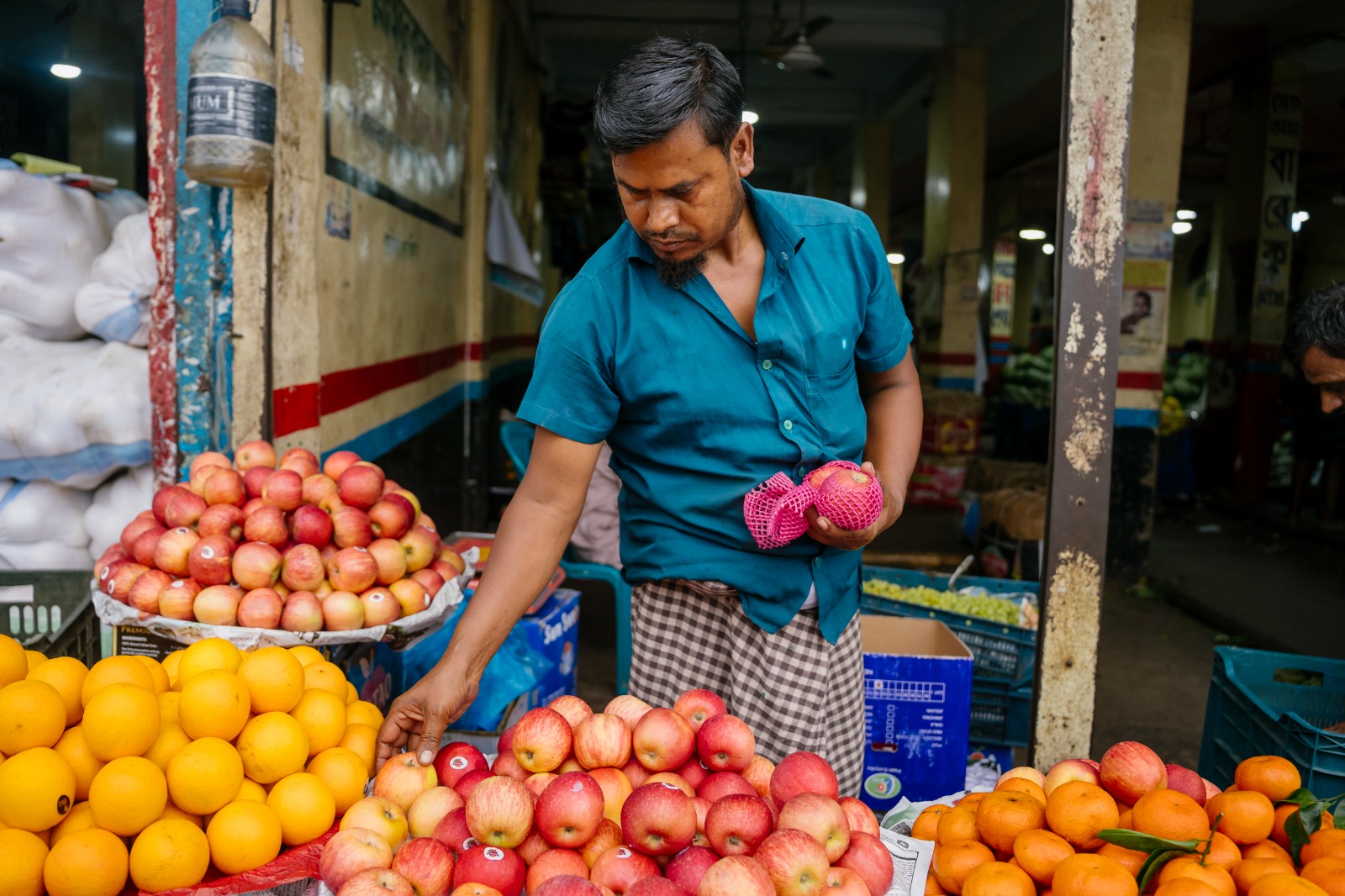
Saiful Islam, a roadside fruit seller in Motijheel, claimed that selecting good-quality fruit and arranging it for display also involved costs. For these reasons, he said, fruit had to be sold at Tk100–150 more per kilogram than at Badamtoli.
Md Rafiq, a street fruit seller in Gulistan, also cited vehicle fares and the cost of his own labour as reasons for the higher prices.
Farhana Yasmin, a private-sector employee in Motijheel, said fruit seemed very expensive when she went shopping after work. “Fruit priced at Tk200–250 per kg in wholesale markets was difficult to find for less than Tk400 at the retail level. Such a wide price gap could not be justified by transport costs alone,” she said.
Sohanur Rahman, who had come to buy fruit in Gulistan, said lack of regular market monitoring meant consumers had to bear the burden of the price gap between wholesale and retail markets.
The country’s fruit market is heavily dependent on imports. The combined rate of duties and taxes on imports of several types of fresh fruit is as high as 121.78 per cent. For some fruits, including kiwi, durian and persimmon, the rate is 129.38 per cent.
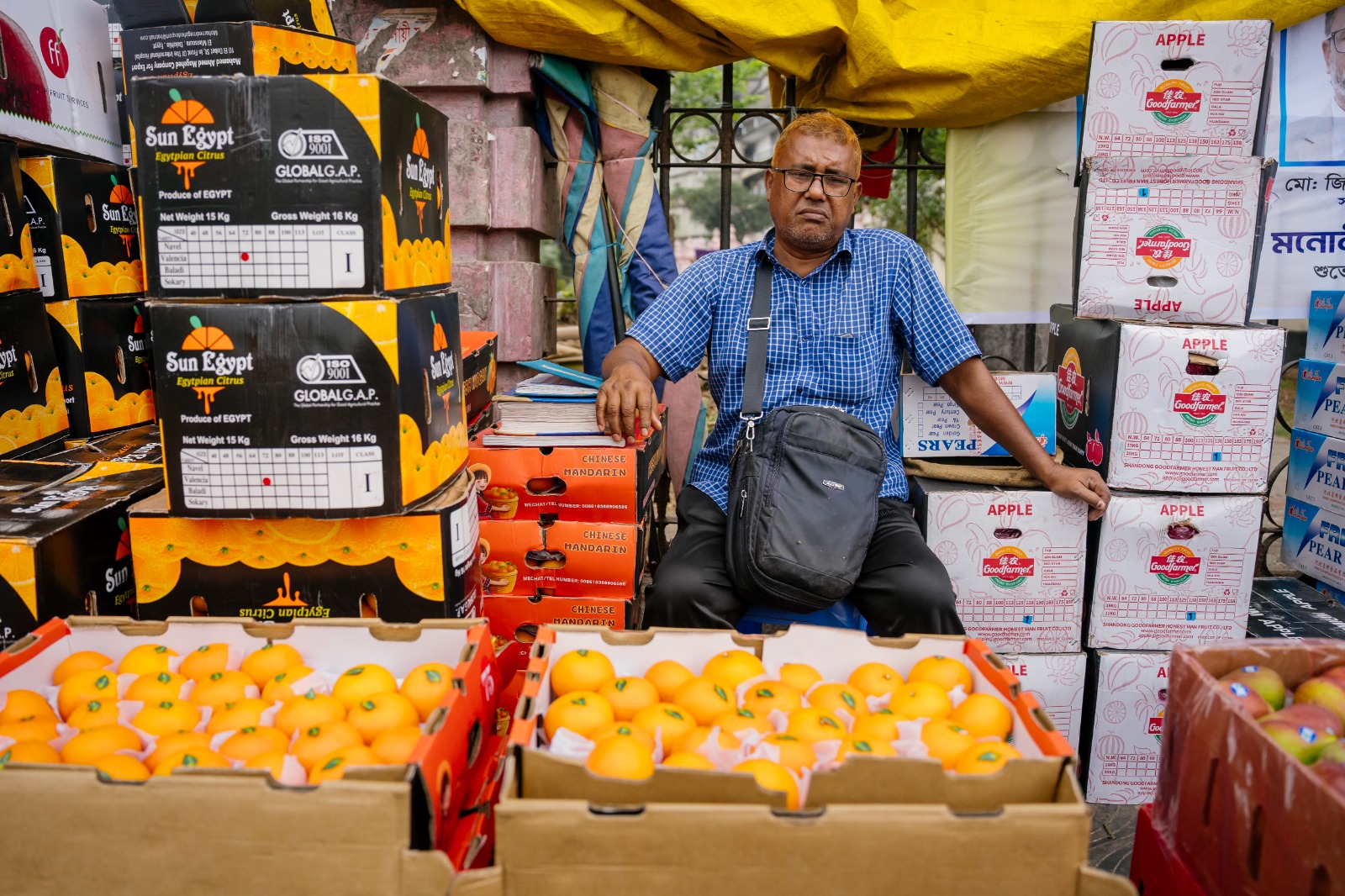
The import price of oranges from South Africa is around Tk90 per kg. After duties, taxes and other costs are added, the price rises to an estimated Tk250–255 per kg at the wholesale level. Yet the same type of orange has reportedly been sold for Tk500 per kg in some retail markets.

An importer at Badamtoli, speaking on condition of anonymity, said importers and wholesale traders sold fruit at narrow profit margins. He said it was unfair to hold them responsible for price increases between the wholesale and retail stages.
A carton of red grapes is selling for Tk1,500–2,000 in wholesale markets, apples for Tk4,500–5,000, white grapes for Tk1,600–2,000 and oranges for Tk4,500–5,000.
However, without information on carton weights and fruit quality, it is not possible to make an accurate comparison between these prices and retail rates.
Tahmid Abdullah, who had come to buy fruit at Sadarghat, said, “There should be transparent accounts of purchase prices, selling prices and profits at every stage – among importers, wholesalers and retailers. It should be investigated whether excessive profits are being made under the cover of transport costs and losses from spoiled fruit.”