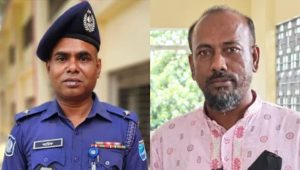
Three senior police officials, including former Dhaka Metropolitan Police commissioner Habibur Rahman, have been sentenced to death for crimes against humanity over the killing of six people at Chankharpul in the capital during the July–August mass uprising.
The two other death-row convicts are former DMP additional commissioner Sudip Kumar Chakrabarty and former Ramna division additional deputy commissioner Shah Alam Md Akhtarul Islam.
The tribunal also ordered the confiscation of their properties in favour of the state.
Five other defendants were handed prison terms of varying lengths. Former Ramna division assistant police commissioner Mohammad Imrul was sentenced to six years in prison, former Shahbagh Police Station inspector (operations) Arshad Hossain to four years, and constables Md Sujan, Imaz Hossain and Nasirul Islam to three years each.
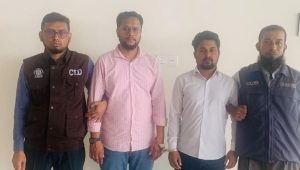
Of the accused, Arshad, Sujon, Imaz and Nasirul are currently in custody and were present in court at the time of the verdict. The remaining convicts are absconding.
The verdict was delivered on Monday by a three-member bench of International Crimes Tribunal-1, chaired by Justice Md Golam Mortuza Mozumder, with Justice Md Shafiul Alam Mahmud and retired district and sessions judge Md Mohitul Haque Enam Chowdhury as members.

In its observations, the tribunal said the constables were bound to follow the orders of their superiors and that some were new to the force, making it unrealistic for them to defy senior officers. On that basis, lighter sentences were imposed on them.
The delivery of the verdict was broadcast live on Bangladesh Television.
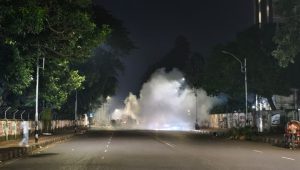
On 5 August 2024, police opened fire on a protest led by students in the Chankharpul area of the capital. The shooting left many people dead and injured. Six people — Shahriar Khan Anas, Sheikh Junayed, Md Yakub, Md Rakib Howladar, Md Ismamul Haque and Manik Mia Shahriq — were killed. The case was later filed as a crime against humanity.




Following the verdict, the chief prosecutor of the International Crimes Tribunal and members of the victims’ families voiced dissatisfaction over what they described as lenient sentences for some of the convicted. Lawyers of the accused also rejected the verdict, insisting that those sentenced were innocent.
‘Leniency after proven crimes is unjust’
The tribunal’s Chief Prosecutor Tajul Islam said that handing down lighter sentences after crimes had been proven was incompatible with justice. He said it had been established that the accused had fired openly, that the attacks were widespread and systematic, and that crimes against humanity had been committed — yet some had received comparatively short prison terms.
He made the comments while responding to the sentencing of five convicts to shorter jail terms, while expressing satisfaction over the death sentences handed to three senior officials.
Tajul Islam said the prosecution would appeal to the Supreme Court, seeking the death penalty for those given lesser sentences.
Families of victims express anger
Families of those killed expressed strong dissatisfaction over the shorter jail terms given to several convicts, publicly questioning the logic of the verdict.
Speaking to reporters at the tribunal premises after the ruling, Sheikh Jamal, the father of victim Sheikh Junayed, asked, “What kind of verdict is this?”
Sanjida Khan Dipti, the mother of Shahriar Khan Anas, said that even with video footage of the killing, one of the accused had been sentenced to just three years in prison. “Can that really be considered a reasonable verdict?” she asked. “I do not think so — because I have lost my child.”
Anas’s maternal grandfather reacted more sharply, saying the ruling amounted to discrimination against the families of the victims. “If we do not get justice even under an interim government, then we have no security for our lives,” he said.
Sheikh Jamal said the verdict had left him deeply distressed. Referring to the killing of his son, he said, “A class seven student was shot in the head, the bullet went straight through — and this is the verdict the court has delivered?”
Defence to appeal
The defence also rejected the verdict, saying it would file an appeal. Lawyer Saddam Hossain Abhi told reporters that the prosecution had failed to prove the charges. “We had expected the accused to be acquitted,” he said. “We have not received justice, and we will challenge this verdict on appeal.”
Background to the case
On 20 April last year, the investigation agency of the International Crimes Tribunal submitted its investigation report in the case to the office of the chief prosecutor. It was the first investigation report into crimes against humanity committed during the July–August mass uprising.
Formal charges were filed on 25 May and were taken into cognisance by the tribunal. The trial officially began on 14 July with the framing of charges. Witness hearings started on 11 August following the prosecution’s opening statement, with 26 witnesses testifying for the prosecution.
On 15 December, prosecutor Mizanul Islam presented the prosecution’s closing arguments.
This marks the tribunal’s second verdict. Earlier, on 17 November last year, the court sentenced former prime minister Sheikh Hasina and former home minister Asaduzzaman Khan Kamal to death for crimes against humanity. Another accused, former inspector general of police Abdullah Al Mamun, who turned state witness, was given a reduced sentence of five years in prison.