Repeated crop losses from early flooding and waterlogging have made livelihoods in the haor wetlands increasingly uncertain, as the region still lacks any comprehensive long-term initiative to address the recurring crisis, leaving millions trapped in a cycle of hardship.
Residents and researchers say the damage is not caused by natural disasters alone, but also by negligence, poor planning and corruption.
Over the past decade, the haor region has experienced several major crop disasters of varying intensity.
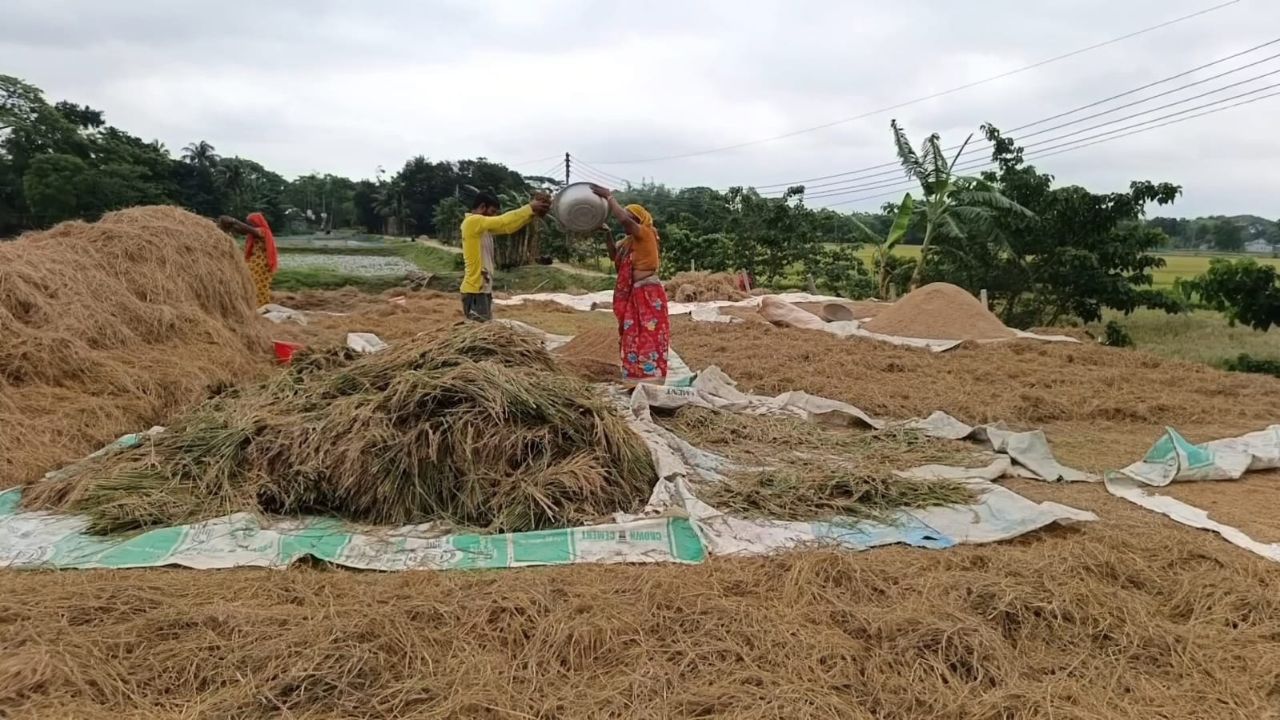
This year alone, Boro paddy cultivated on at least 47,000 hectares of land across large parts of Sunamganj, Kishoreganj and Netrokona has gone underwater.
In some years, the losses were caused by flash floods and upstream water surges. This year, unusually early rainfall in April triggered widespread waterlogging before harvesting could be completed.

Researchers also point to failures in delivering early weather warnings to farmers, unplanned construction projects and the growing impact of climate change.
More than 20 million people live in the haor belt, where agriculture remains the main source of income.
Kasmir Reza, president of the Environment and Haor Development Organisation, told TIMES of Bangladesh that declining river navigability lies at the heart of the crisis.
“The main reason is the loss of river depth,” he said.
“Unplanned embankment construction and corruption linked to these projects have made the situation worse.”

Haor researcher, Shafiqul Islam, said rivers in the region were gradually losing depth because of human activities driven by vested interests.
He identified seven major reasons behind the deterioration: upstream dams and barrages, makeshift barriers built for fishing, illegal houses and markets along riverbanks and even inside rivers, poorly planned submerged embankments, excessive siltation, lack of dredging and climate change.
Questions over unplanned embankments
In the haor region, embankments are repaired or newly built almost every year ahead of the monsoon season.
Leaders of farmers’ organisations in Sunamganj blamed this year’s waterlogging and crop losses on unplanned embankment construction and weak water management.
Haor Bachao Andolon Central Committee General Secretary Bijon Sen Roy told TIMES that between 80 and 90 embankments built this year were unnecessary.
“As a result, waterlogging developed across the haors and crops were damaged,” he said.
He alleged that although transparency is promised every year in embankment projects, oversight disappears after the inauguration ceremonies.




“No one monitors what happens to the embankments afterwards or how the work is carried out,” he said.
“Whenever crops are damaged, excessive rainfall is blamed. But this year the losses were caused by waterlogging, and the main reason was arbitrary embankment construction.”
Haor and River Protection Movement General Secretary Md Obaidul Haque Milon accused the Bangladesh Water Development Board of using embankment projects as a source of corruption.
“More than 300 embankments saw large-scale irregularities this year,” he said.
He also said that soil used in embankment projects since 2018 had gradually filled canals, rivers, waterways and parts of the haors themselves.
“As a result, the haors have lost much of their capacity to retain water during heavy rainfall,” he said.
Farmers in Netrokona have also blamed unplanned embankments and the lack of proper drainage through sluice gates for the widespread crop losses in the district.
Thousands of hectares of Boro paddy have gone underwater in areas including Meda Beel in Kalmakanda, Gonesher Haor in Madan and Tolar Haor in Khaliajuri.
However, Bangladesh Water Development Board Netrokona Executive Engineer Md Sakhawat Hossain rejected allegations of faults in the embankments.
He said the flooding was caused by sudden heavy rainfall and water flowing down from upstream areas, which caused rivers to overflow into the haors.
He also claimed that, apart from one embankment failure in Kalmakanda, no other crops were damaged because of breached embankments.
Early warnings fail to reach farmers
Unlike most other parts of Bangladesh, where farmers can grow two or even three rice crops a year, the haor region depends largely on a single Boro harvest.
The wetlands produce around one-fifth of the country’s total Boro output during the dry season.
According to the Department of Agricultural Extension, around one per cent of this year’s nationwide Boro cultivation was damaged in Sunamganj, Kishoreganj and Netrokona alone.
The agriculture department said farmers had been advised to harvest paddy by 28 April once 80 per cent of the crop had matured.
But questions remain over how effectively such warnings reach farmers at the grassroots level.

Mokammel Haque Nayan, a farmer from Shimulbank village in Itna upazila of Kishoreganj, said he rarely receives advance weather information or official guidance from government agencies.
“We do not know what kind of weather to expect each year, which crops may perform well or which may be affected badly,” he said.
“No one gives us clear guidance on when yields are likely to be good or when crops should be harvested.”
Haor researcher Rowshan Ali Rusho said long-standing weather patterns in the region had changed significantly in recent years.
“In the past, the south-west monsoon used to flow regularly, but now it has largely disappeared,” he said.
What could be the solution?
Researchers and environmental activists say restoring the natural water flow of rivers and wetlands is key to reducing repeated disasters in the haor region.
Haor researcher Rowshan Ali Rusho said large-scale river dredging, tree plantation and greater care for the environment could help restore ecological balance.
“If we take care of nature, nature will also protect us,” he said.

Kasmir Reza also stressed the need for dredging rivers as well as canals and wetlands connected to the haor system.
He said sluice gates must be used properly to ensure the natural movement of water across the region.
Kasmir Reza also urged policymakers to take the ecological characteristics of the haor region into account while planning development projects.
“Otherwise, the expected benefits will never be achieved,” he said.
Additional reporting by Netrokona Correspondent Bhajan Das.