State Minister for Primary and Mass Education Bobby Hajjaj has said the government plans to extend primary education to Class VIII and bring changes to the curriculum.
He also said the new curriculum will prioritise learning through play and storytelling instead of rote memorisation.
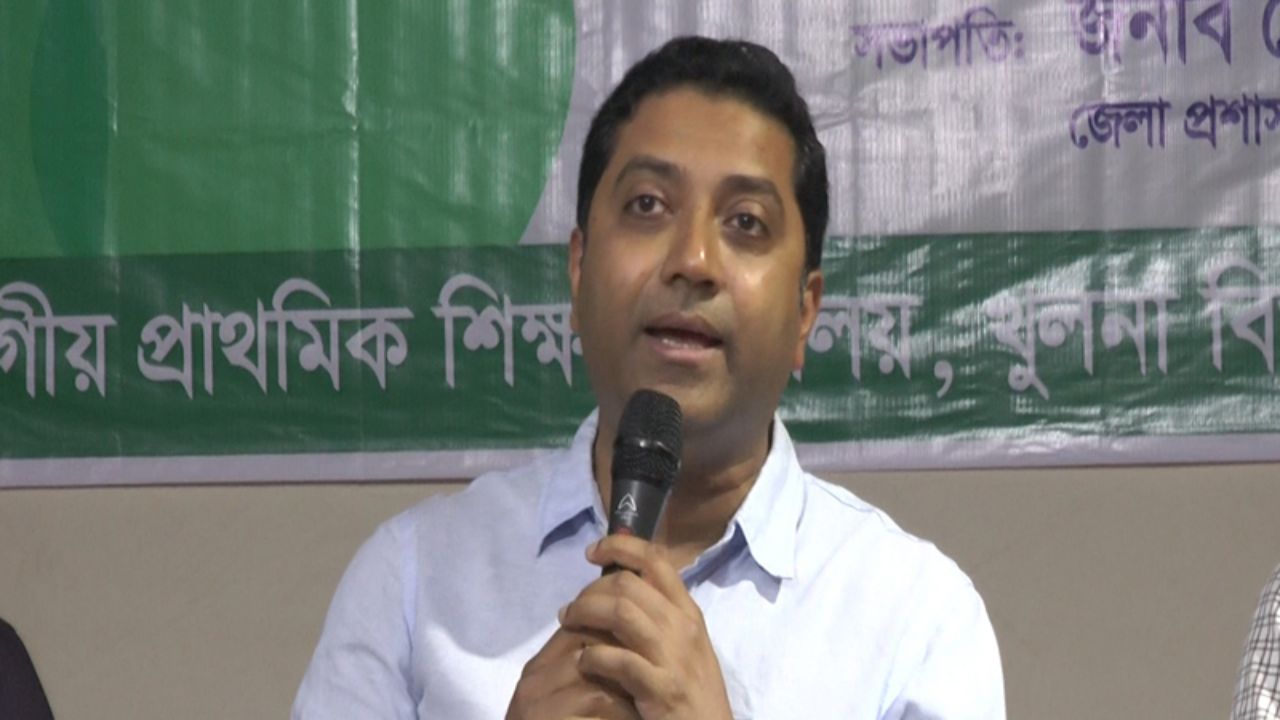
Speaking at a discussion held at the Bangladesh-China Friendship Conference Centre in Agargaon on Wednesday, the state minister emphasised making education enjoyable for young learners.
Consultations with all stakeholders will begin shortly to facilitate this transition, he added.
Online education eco-system
To address “learning gaps” and ensure continuity during future disruptions, the state minister announced the development of an ‘Online Education Eco-system’. This platform will provide digital books, recorded video lectures, and PDF notes, allowing students to study at their convenience.
Bobby Hajjaj also noted that changes would be made to “school day learning hours” to further bridge these gaps.
Addressing the issue of school infrastructure, the state minister expressed concern over the illegal occupation of primary school fields and land.
He lamented that while people respect religious sites, school property is frequently encroached upon and remains difficult to protect.


Shift to outcome-based education
During the session, educationists and researchers called for a shift from traditional models to ‘Outcome-Based Education’ (OBE), citing successful examples from Vietnam, Singapore, and Finland.
They highlighted that approximately 40% of the country’s university graduates are currently unemployed or engaged in the informal sector.
OBE focuses on skill acquisition, critical thinking, and problem-solving rather than memorisation to ensure graduates are workplace-ready.
Manzoor Ahmed, head of the government-formed advisory committee on primary and non-formal education, stressed that while a budget increase is vital, it must be spent correctly through a coordinated approach rather than isolated recommendations.
Budgetary demands and reforms
Rasheda K Chowdhury, executive director of the Campaign for Popular Education (Ganoshakkhorota Obhijan), pointed out that Bangladesh’s education budget is the lowest in South Asia and is declining proportionately.
She noted that the budget has dropped from 2.49% of GDP in the 2016-17 financial year to 1.53% in 2025-26.
Rasheda proposed 21 points for reform, including:
- Increasing the education budget to 2.5% of GDP or 20% of the national budget by FY 2026-27, and eventually to 5% of GDP.
- Utilising 30% of Corporate Social Responsibility (CSR) funds for education and introducing an education surcharge.
- Providing monthly stipends: Tk500 for primary, Tk700 for Class 8, and Tk1,000 for secondary students.
Teacher and infrastructure demand
Khairun Nahar Lipi, general secretary of the Bangladesh Primary Teachers Association, demanded financial security for teachers and the appointment of dedicated cleaners for every school.
Further recommendations from the discussion included the formulation of a teacher policy for recruitment and merit-based promotion, training in Artificial Intelligence (AI) and ICT, and the provision of healthy mid-day meals.
Participants also urged for improved hygiene facilities, including vending machines for sanitary pads, and special measures to ensure education in remote hilly and haor regions.