


Heavy government borrowing from banks often leaves businesses competing for funds to invest and expand. To ease that pressure, Bangladesh is looking to the bond markets of New York and London for long-term financing, aiming to reduce its dependence on domestic bank loans.
Finance and Planning Minister Amir Khosru Mahmud Chowdhury outlined the plan at a press briefing in Cox’s Bazar on Sunday, on the sidelines of the two-day International Debt Conference Bangladesh 2026, which he had inaugurated earlier.
The initiative is part of the government’s efforts to strengthen the capital and bond markets, diversify financing sources and mobilise funds for large-scale investments.
The government also plans to shift towards long-term bonds and Shariah-compliant instruments, particularly sukuk, instead of relying heavily on short-term Treasury bills, to manage debt repayment risks.
Other financing options under consideration include sovereign sukuk, green and blue bonds, and blended finance.
The minister said Bangladesh aims to become a trillion-dollar economy by 2034, but achieving that ambition requires prudent borrowing, fiscal discipline and sustainable financing.
He identified rising debt-servicing obligations, weak revenue mobilisation and limited fiscal space as major economic challenges.

The minister stressed that borrowing, including from international capital markets, must be responsible and sustainable, with funds used effectively to boost economic growth, productivity, public welfare and long-term prosperity.
A stronger bond market could give the government and businesses access to long-term funding, easing competition for bank loans. Heavy government borrowing from banks often restricts private-sector financing, particularly for industries needing large, long-term investments.
Meanwhile, the minister said talks with the International Monetary Fund (IMF) on a new loan programme are expected to conclude by January or February 2027.
The government does not intend to withdraw from the programme but wants its conditions aligned with Bangladesh’s economic realities and five-year development plan, he said.
Two working groups, one from each side, are working to resolve differences. The minister said the programme would proceed as normal once necessary adjustments were agreed through discussions.



Prime Minister’s Special Assistant Tanvir Shahriar Ghani urged Bangladesh to explore dollar-denominated Eurobonds and sukuk while carefully assessing its borrowing capacity.
He said Bangladesh’s inclusion in a JP Morgan emerging-market government bond index could raise the international profile of its securities.
However, attracting foreign investors would require strong economic fundamentals, transparent trading and reliable arrangements for repatriating investment proceeds.
Ghani also called for better connections with international settlement platforms and stronger links between banks and capital markets to finance large industrial projects.
Finance Division Secretary Md Khairuzzaman Mozumder said the division is working to publish an annual borrowing plan to make government financing more predictable and transparent as Bangladesh prepares to graduate from the least developed country (LDC) category.
He said changing global interest rates and exchange-rate volatility have made debt management increasingly complex.
The government is working to improve reporting on domestic and external debt, strengthen Treasury bill and bond auctions, and broaden the investor base.
Financial Institutions Division Secretary Nazma Mobarek said annual interest payments on external debt, measured in taka, are projected to more than double between FY2024-25 and FY2028-29.
She said public debt stood at below 39 per cent of gross domestic product (GDP) at the end of FY2024-25 and is expected to remain around that level through FY2028-29.

Asian Development Bank (ADB) Country Director for Bangladesh Qingfeng Zhang warned that rising debt-servicing costs were squeezing development expenditure and increasing reliance on domestic borrowing.
Total debt servicing rose to 3 per cent of GDP in FY2024-25 from 2.3 per cent in FY2020-21, he said.
Zhang called for fuller disclosure of public debt, including government guarantees, and better coordination of borrowing, cash management and budget planning to smooth repayment obligations.
He also urged Bangladesh to deepen its domestic bond market, strengthen project appraisal and procurement, and improve oversight of state-owned enterprises and public-private partnerships to contain fiscal risks.
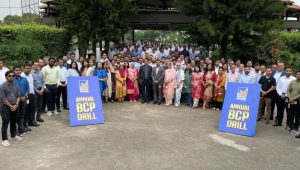
The Finance Division and ADB jointly organised the conference on 15–16 November under the theme “Sovereign Debt Management in a Changing Global Landscape”.
It brought together officials from the Finance Division, Economic Relations Division, Internal Resources Division, Financial Institutions Division, National Board of Revenue and Bangladesh Bank, alongside representatives from the debt management offices of Sri Lanka, Pakistan, Indonesia and Malaysia.
Representatives from ADB, the World Bank and IMF, along with national and international experts, also attended.
Finance Division Secretary Md Khairuzzaman Mozumder chaired the opening session, where ADB consultant and former IMF adviser Prasad Ananthakrishnan delivered a special address on the relationship between sovereign borrowing, productive investment and economic growth.