
The government has fixed 10 Mbps as the minimum download speed for 4G services, marking a significant step towards improving telecom quality in Bangladesh. The decision, approved at a Bangladesh Telecommunication Regulatory Commission (BTRC) meeting last week, aims to enhance customer experience and ensure greater accountability among mobile operators.
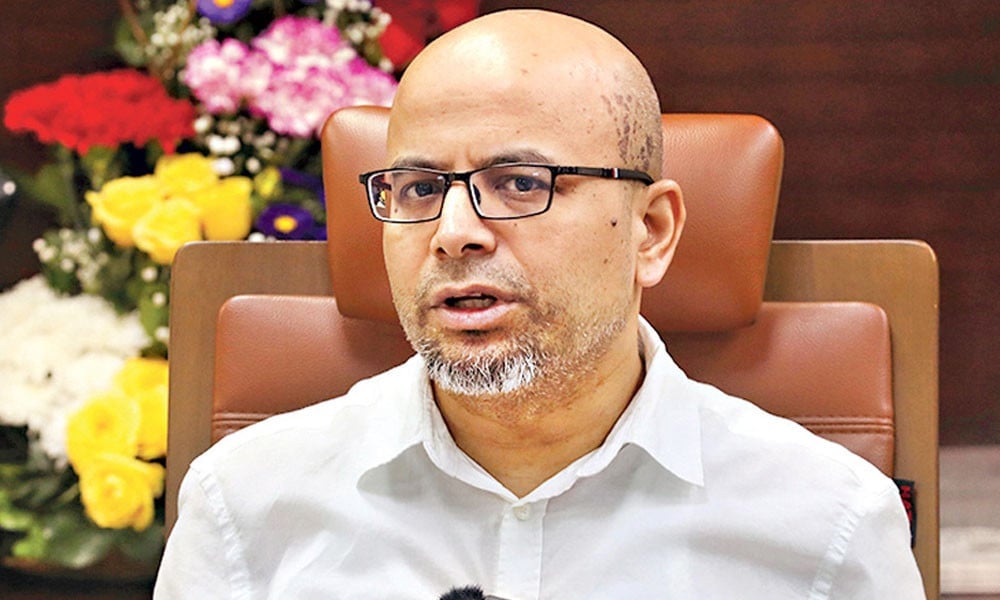
Special Assistant to the Chief Adviser Professor Muhammad Yunus on Post, Telecommunications and ICT, Faiz Ahmad Taiyeb, confirmed Sunday on his Facebook post.
According to Taiyeb, the updated framework will also bring in tougher monitoring. Starting in September, BTRC will conduct monthly checks, reviewing operators’ performance data from the previous month. Officials said the old benchmarks were outdated, and the new rules now align Bangladesh with global standards.

Under the revised system, mobile operators must ensure 10 Mbps minimum speed for 4G services along with a 2 Mbps upload speed. Call setup success rates must remain above 99 per cent at the national level and 98 per cent at district and upazila levels. The call drop rate for 2G services is capped at 1 per cent, while at the upazila level, the limit is 1.5 per cent.
For 4G services, the success rate of data connections has been set at 99 per cent nationwide and 98.5 per cent at district levels. Average download speeds should not fall below 3.5 Mbps at the network level and 2.5 Mbps at district levels. VoLTE must maintain a minimum user index of 3.5.



Operators will also be required to submit monthly reports covering key performance indicators (KPIs) in three areas – accessibility, retainability, and network integrity. Accessibility will measure how reliably users can access the network and make calls, retainability will evaluate call stability and session continuity, and integrity will check network capacity, usage, and error rates.
BTRC will publish monthly results, highlighting the 50 weakest-performing network cells to push operators to act quickly, particularly in rural areas where poor coverage has long been a concern.
The new rules also extend to fixed internet and telephony. For internet services, providers must guarantee at least 95 per cent of subscribed speeds, keep data loss below 1 per cent, and ensure local traffic connection time within 25 ms. For Nationwide Telecommunication Transmission Network (NTTN) operators, latency must be below 5 ms, jitter within 3 ms, and data loss no more than 0.01 per cent. Faults must be repaired within four hours in metropolitan areas and within six hours in rural regions.
Customer service standards have also been tightened. At least 90 per cent of calls to service centres must be answered within 40 seconds, and all within 90 seconds. Non-network complaints must be resolved within 28 days.
Industry experts say the stricter benchmarks will force telecom operators to improve services, especially in under-served rural regions, where complaints over weak networks and frequent call drops are most common.