

When the final Bosnian penalty nestled into the net in Zenica on Tuesday, Gianluigi Donnarumma sank to his knees, hands on head, staring at the turf in disbelief. Around him, his teammates either collapsed to the floor or stood motionless, hollow-eyed, as the home crowd erupted. Italy had just become the first former World Cup winners to miss three consecutive editions of the tournament. It was not a crisis. It was a collapse.
Italian newspaper Gazzetta dello Sport, which had called Italy’s 2018 absence “The End” and an “Apocalypse,” and Il Corriere dello Sport, which had sent the Azzurri “Into Hell” after the North Macedonia disaster in 2022, led Wednesday’s coverage with a simpler, perhaps sadder verdict: “Tutti A Casa.” Everybody Go Home. What else is there left to say?
How it unravelled in Zenica
Italy were gifted the lead against the run of play after 15 minutes when Nikola Vasilj played a dire pass straight to Nicolo Barella, who offloaded to Moise Kean. The Fiorentina striker opened up his body and curled a tremendous finish into the top-right corner, his sixth goal in as many games for Italy, a feat achieved by only three Azzurri players before him. For a moment, it looked like routine.
But the match turned irreversibly in the 41st minute. As Amar Memic darted in behind the defence, Alessandro Bastoni, caught flat-footed as the last man, scythed him to the ground. Referee Clement Turpin showed a straight red card. There was no VAR reprieve. Italy, leading by a goal, would spend more than half the match with ten men against a Bosnia side that had already been the better team.

The pattern of Bosnian dominance intensified after the interval. By the end of extra time, they had attempted 30 shots, eleven on target compared to Italy’s nine, with just three troubling the goalkeeper. Their expected goals figure of 1.73 dwarfed Italy’s 0.86. Bosnia had not just edged this contest; they had dominated it.
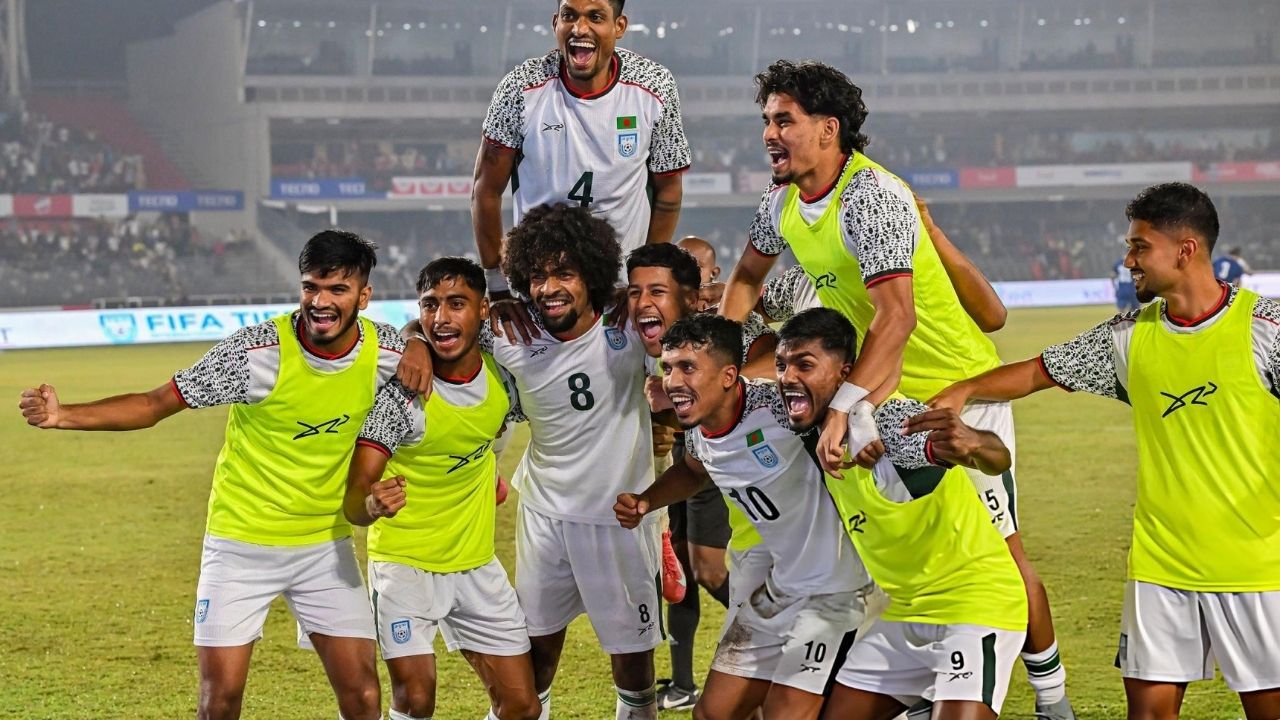
Donnarumma kept Italy alive with a series of outstanding saves, but when he blocked Edin Dzeko’s header in the 79th minute, substitute Haris Tabakovic reacted quickest to tap home the rebound from a yard out. The shootout that followed was painful. Francesco Pio Esposito blazed Italy’s first kick over the bar. Bryan Cristante rattled the crossbar with the third. Bosnia converted all four of theirs. Esmir Bajraktarevic’s final kick confirmed the unthinkable.
A generation lost




By the time Italy next have the chance to appear at a World Cup, it will have been 16 years since they last participated and 24 years since they last played a knockout match that being the 2006 final, which they won on penalties against France. The cruel irony is that the current squad is not without quality. Bastoni, Barella and Federico Dimarco are regulars for Inter Milan. Donnarumma keeps goal for Paris Saint-Germain. Sandro Tonali has thrived at Newcastle. These are not journeymen; they are elite players. And yet the system around them has failed repeatedly to channel that talent into results.
Bastoni will be 30 when the 2030 World Cup arrives. Barella will be 33. Kean, Tonali, Dimarco and Manuel Locatelli will all be at least 29. An entire generation of Italian talent may never grace the World Cup stage. It is, as one analyst put it, not merely a crisis of results but a generational failure.
The structural rot runs deep
The roots of Italy’s decline run far deeper than any single manager or result. After finishing bottom of their group at the 2010 World Cup, behind Paraguay, Slovakia and New Zealand, structural reform was promised. Arrigo Sacchi was tasked with overseeing youth development, while Roberto Baggio led the federation’s technical sector. Baggio produced a comprehensive 900-page blueprint, Renewing the Future, aimed at overhauling talent pathways, scouting and coaching standards. Yet the plan never materialised; he resigned in January 2013, revealing the project had been “literally dead” for a year and had received no funding.
The national team’s struggles have mirrored a broader decline in club football. Serie A’s competitiveness in Europe has waned, highlighted by Atalanta, the only Italian side to reach this season’s Champions League last 16, suffering a crushing 10-2 aggregate defeat to Bayern Munich. Ageing stadiums, declining revenues and resistance to modernisation have left Italian football trailing its continental rivals, weakening the pipeline feeding the national side.
The crisis deepened on 2 April 2026 when Gabriele Gravina resigned as president of the Italian Football Federation after mounting pressure following Italy’s failure to qualify for a third consecutive World Cup.
Further controversy has emerged through explosive claims from former AC Milan youth player Federico Mangiameli, who alleges systemic corruption within the game. He claims agents paid bribes of up to €50,000 to push players into Serie C, while squads have become dominated by foreign recruits and coaches are stripped of control over team selection. Mangiameli also pointed to widespread nepotism, falsified practices and poor treatment of players, describing Italian football as a “toxic” environment and expressing relief at having left the system early.
The question of accountability
Whether Gennaro Gattuso, who had largely underperformed across nine club management roles before taking this job, was ever the right appointment remains an open question. FIGC president Gabriele Gravina, who survived calls to resign after 2022, said on Tuesday he would wait for the board’s verdict before acting. In the meantime, he has asked Gattuso to continue.
Change for change’s sake rarely works. But doing the same things repeatedly while expecting different results is equally futile. Italy’s talent pool remains strong enough that qualification should be achievable. Their failure to do so, three times in a row, speaks to something deeper and more systemic than any one manager, one red card or one missed penalty.
For now, millions of Italian fans must accept watching another World Cup without their team. Worryingly, it is becoming the new normal.