



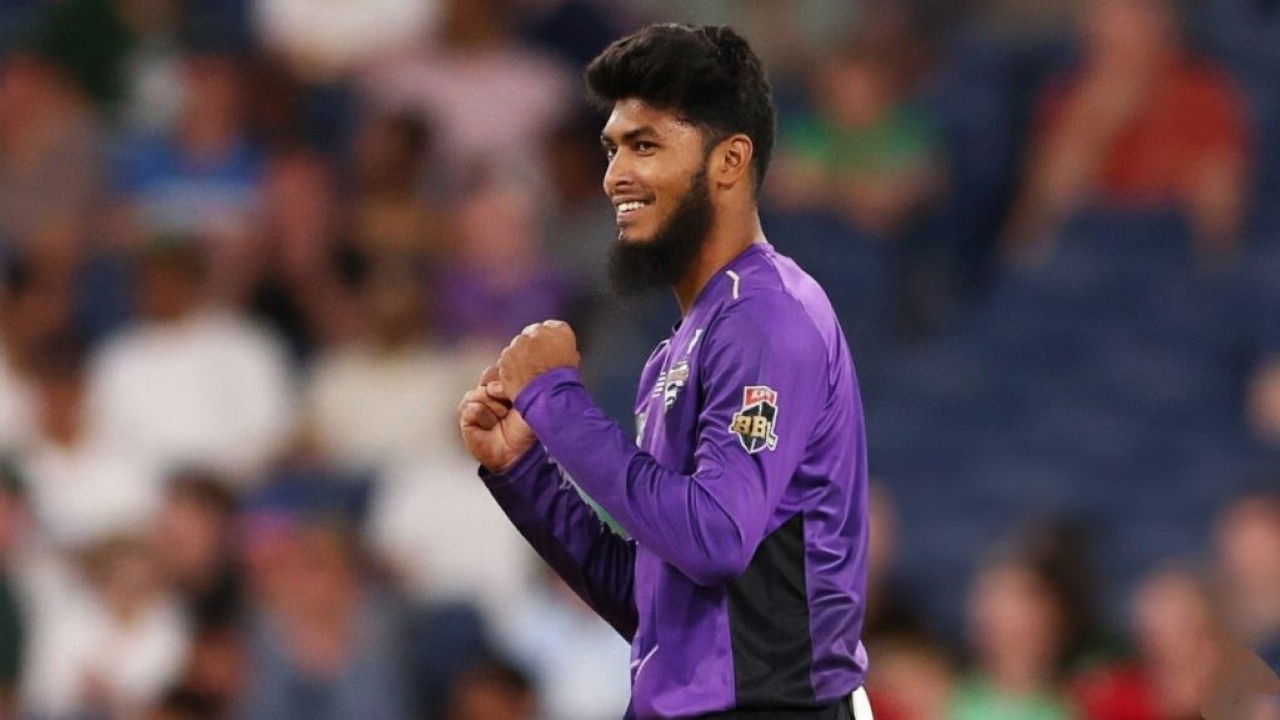
Once criticized for inconsistency despite her obvious talent and strokeplay, Sobhana Mostary often found herself under pressure to justify the faith the team showed in her. She was dropped, recalled, and still searching for the consistency that would define her career.
That breakthrough arrived at the ICC Women’s T20 World Cup Qualifier in Nepal. Bangladesh stormed to the title unbeaten, winning all seven matches to seal their place in the main event in England and Wales. And at the heart of that dream run stood a transformed Sobhana.
She finished as the team’s highest run-scorer and the tournament’s second-highest overall, 262 runs at a strike rate of 145.55 and an average of 52.40, even surpassing top scorer Gaby Lewis in both strike rate and average.
But beyond the numbers, this was a story of evolution. In an exclusive interview with Times of Bangladesh’s Jubayer Tanin, Sobhana opened up about her journey from self-doubt to self-belief, from promise to performance and how one crucial innings came to symbolize that transformation.
You finished the tournament as Bangladesh’s highest run-scorer and the second-highest overall. How satisfying is that?
Honestly, I didn’t think about it that way, like being the highest or second-highest run-getter. My focus was always on making an impact for the team. I didn’t expect that I would be able to contribute in almost every match, because as a batter you can’t always do that.

Except for one innings where I scored 27, all the others were above 30. So I felt that the impact my batting created in each game really helped the team. And being named Player of the Tournament is a different feeling. Even if I wasn’t the highest run-scorer, I don’t feel any regret. I’m not returning empty-handed.
You played seven innings in the qualifier in Nepal. Which one is your favorite?
My favorite is the 32 (which is 30) runs against Ireland. I came in during the last three or four overs. We won by nine runs, although we could have won by 14 or 15 if a few shots had connected better. But those runs were very important for the team. Without that 32, maybe we wouldn’t have won the match so comfortably.
Gaby Lewis was the highest scorer, with a 14-run difference between you two. But your strike rate and average were higher. Over the last one-and-a-half to two years, your batting style and approach seem to have evolved. Could you talk about that transition and what specific areas you worked on?



The main thing I worked on was holding the momentum. If I got to 20–25 runs, how would I construct the innings from there? Playing domestic cricket helped a lot. Before this tournament, in the BCL, I had already scored four consecutive fifties. So I was already trying to build that momentum. How to bat after 25 or 30, how much I can extend it. I focused on those aspects.
If you talk about power-hitting, I worked on strengthening myself in the gym so that when I play my shots, they don’t just travel 60–70 yards but clear the boundary. I also worked on finding the gaps.
Yes, that’s what I wanted to ask, your power-hitting has improved, but now you’re also finding gaps more consistently. Did you follow any specific drills for gap-finding or power-hitting?
Normally during batting practice, I focused on the “no man’s land” areas. For example, if you see the shot over extra cover, usually there’s no specific fielder placed there. I scored a lot of runs in that region this time. So I used that area a lot. In practice, if there was a cover fielder, I would practice hitting over them, even using the bowling machine.
Similarly, at cow corner there’s often no fielder at certain. So I tried to play there. Also straight down the ground. I worked more on targeting those no man’s land areas during practice.
How the mindset has helped you? Now you seem to be in a new mental space. How has this journey of rediscovering yourself shaped you as a person and as a cricketer?
Earlier, there used to be anxiety, like how I would do in camp, how things would go, whether I might perform poorly in an international tournament. Those thoughts were always there.
Now I think differently, where do I want to see myself in five or ten years? What should I do from now to get there? How much hard work is needed to represent Bangladesh consistently? How can I add more shots? That’s the mentality I have now.
For a long time, there was this perception that if Nigar Sultana Joty scored, Bangladesh would post a good total. But in this qualifier, the picture looked completely different. You, Sharmin Akhter Supta, Juairiya Ferdous and Dilara Akter all stepped up. It felt like a proper, complete batting unit. How did that transformation happen? Was there any magic behind it?
I wouldn’t call it magic in just this tournament. Over the last one-and-a-half years, Shupta apa, Pinki apa, Ritu apa and Jyoti apa performed in the middle or at the top. Everyone contributed in some way. But if it’s not a fifty or a hundred, it doesn’t always catch the eye.
There needs to be a milestone for it to be noticed. In the past year and a half, we’ve had milestones. Supta’s fifty, Sobhana’s fifty, Juairiya’s fifty. Because of those, it feels like our batting has improved a lot. But even before that, there were small contributions from them and from me. Maybe earlier, Joty apa would go on to score 50 or 70. Gradually, those 30s and 40s have turned into fifties. That’s how it has developed.
You’re going to England in June for the ICC Women’s T20 World Cup. You haven’t played there before, so the conditions will be new. How excited are you about the World Cup?
We’ve never played in England before, so I’m very excited about that. We once had a chance to go there for the Commonwealth Games, but we couldn’t qualify, and I was very upset then. Now the dream is coming true, we’ll go to England.
But more than just playing there, my focus is on how well we perform and how much we can come into the limelight. I want to prepare according to the kind of wickets we might get there and practice in that environment.