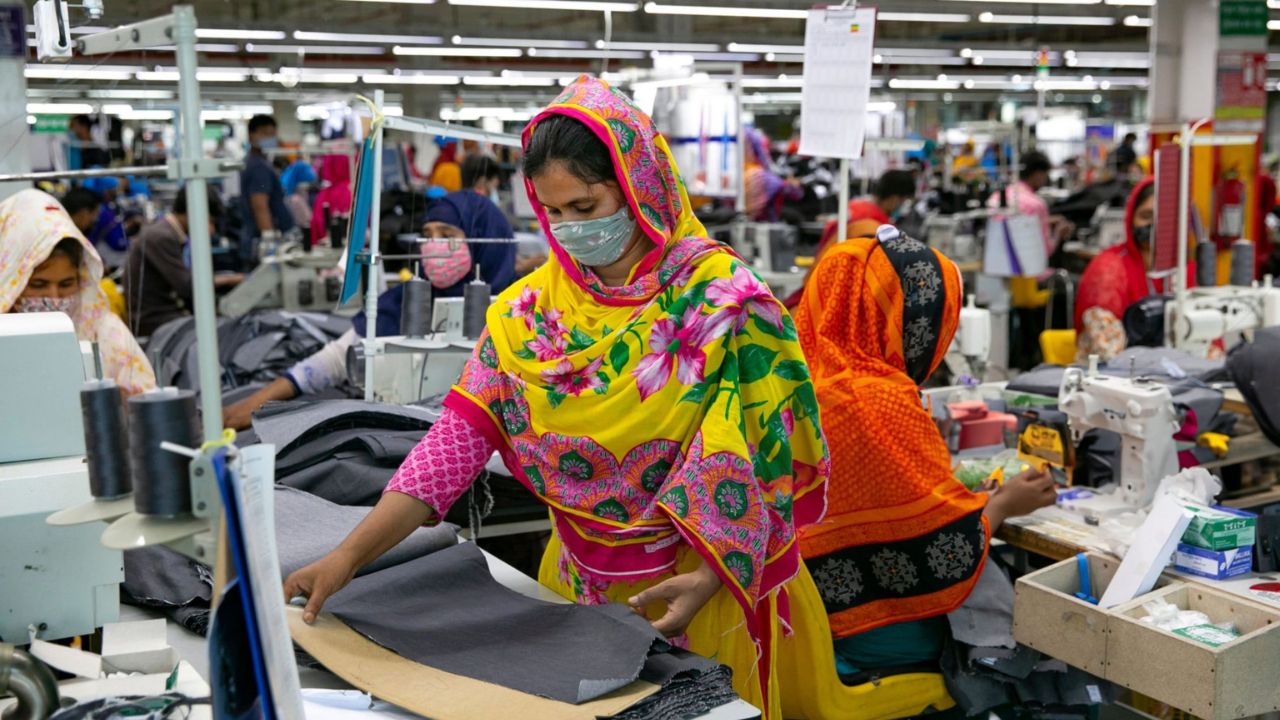

Some factory owners are struggling to fully implement the Bangladesh Labour Act (Amendment) Ordinance 2025, as certain provisions are not feasible while others need to be clarified, according to businesspeople.
They informed that while large export-oriented industries are gradually adopting the revised law in full, smaller companies with less financial capacity have left key sections pending.
For example, the ordinance makes it mandatory for companies with more than 100 employees to set up a provident fund.
A provident fund is a long-term savings facility, where employees voluntarily contribute a portion of their monthly salary, and the employer often matches the contribution.
The accumulated funds are paid out to the employee upon retirement, resignation, or in case of certain emergencies, thereby helping ensure their long-term financial security.
However, many of the roughly 25,000 factories across Bangladesh that have more than 100 employees cannot provide such a scheme as they lack sufficient funds.

Fazle Shamim Ehsan, president of the Bangladesh Employers Association, said the implementation of certain sections of the revised law has stalled because the government, not factory owners, is responsible for executing them.
So, apart from four or five sections, factory owners have implemented nearly all their obligations under the 109 provisions according to their capabilities, he added.
On the other hand, trade union leaders have questioned if the factory owners are making a genuine effort regarding implementation.
Babul Akter, general secretary of the Bangladesh Trade Union Confederation, said factory owners, particularly those affiliated with the Bangladesh Knitwear Manufacturers and Exporters Association (BKMEA), are using various tactics to avoid implementing the revised law.




Still, they are working to ensure its implementation in large factories, especially those dealing with buyers from abroad, he added.
Akther further said that no factory has ever been closed due to trade union activities.
“Instead, many factory closures were caused by mismanagement and corruption.”
SM Enamul Haque, director (administration) of the Department of Labour, said preparations for implementing the amendments began when the ordinance was issued on 27 November.
He also informed that multiple trade union applications are being processed as the number of workers needed to form has been brought down to 20.
However, he added that it is challenging to implement certain sections of the revised law.
These include the provision to extend the maternity leave allowance to 120 days from 112.
Other amendments include increasing the annual festival leave period to 13 days from 11, clarifying the definition of worker, and making provisions for gender equality in the workplace, among others.
Md Rezwan Selim, vice-president of the Bangladesh Garment Manufacturers and Exporters Association, said certain provisions of the law require clarification.
As such, the apex platform for local garment makers raised a total of nine issues for clarification at the Tripartite Consultative Council meeting on Monday, he told TIMES of Bangladesh.
Selim informed that the government accepted their request for clarification, and that there are no obstacles for implementing the remaining provisions apart from these issues.
The new law aims to make wage adjustments more frequent, with a provision to revise minimum wage rates every three years instead of every five.
Moreover, it mandates the establishment of national and sectoral tripartite councils, a national social dialogue forum, and an alternative dispute resolution authority for workplace grievances.
Besides, any discrimination based on nationality, race, gender, religion, political opinion, social status or disability is now prohibited, thereby offering greater protection for workers’ rights.
The law is expected to be tabled in parliament once the relevant legislature is finalised, with further steps for enforcement to follow after its approval.