The government has decided to withdraw the rationing system for sale of petrol, octane, and diesel to facilitate smoother travel during the Eid-ul-Fitr holidays.
Normal supply and sales of fuel will resume at all filling stations across the country from Sunday morning until further notice, a move expected to alleviate the current public suffering regarding fuel access.
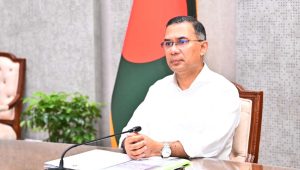
Monir Hossain Chowdhury, joint secretary (operations) of the Energy and Mineral Resources Division, confirmed the decision to TIMES on Saturday. An official notification in this regard is scheduled to be issued at 10am on Sunday.
Earlier on Saturday afternoon, Road Transport and Bridges Minister Shaikh Rabiul Alam informed journalists in the capital’s Gulistan area that fuel rationing for public transport would be lifted starting Saturday night.

“Fuel rationing for long-distance and public transport will not remain in place from tonight. Buses will receive adequate fuel from tonight,” the minister said.
However, the Energy and Mineral Resources Division had not issued a formal notification as of Saturday evening. While Monir Hossain Chowdhury confirmed that the general rationing would be lifted from Sunday, he did not explicitly clarify the specific decision regarding private vehicles.


Fuel rationing was initially introduced by the government on 6 March to maintain a steady supply after customers began panic-buying in anticipation of a fuel crisis triggered by the Iran war.
During that period, the Bangladesh Petroleum Corporation (BPC) imposed limits on fuel delivery at all filling stations.
Under the initial directive, motorcycles were limited to two litres of petrol or octane per day, which was later increased to five litres to accommodate the needs of ride-sharing drivers.
Other rationing limits included a maximum of 10 litres for private cars, 20 to 25 litres for sport utility vehicles (SUVs) and microbuses, and 70 to 80 litres of diesel for pickups and local buses.
Long-distance buses, trucks, covered vans, and container trucks were permitted between 200 and 220 litres daily.
While the overall rationing had recently been reduced from 25 percent to 15 percent, the government is now moving to scrap the system entirely to handle the pressure of home-bound people during Eid.
The government will review the situation and make further decisions after the Eid holidays.