Behind Dhaka’s modern skyline and growing urban prosperity, slum dwellers continue to face severe poverty, social exclusion and insecurity, with rapid urbanisation, weak city planning, institutional failures and structural inequality deepening their hardship, according to a new report.
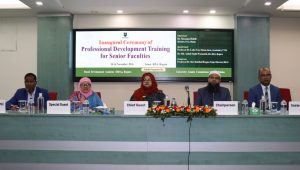
The findings were presented at the launch of the Bangladesh Poverty Watch Report 2025: Demystifying Poverty Dynamics of Slum Dwellers in Dhaka City at the conference room of BRAC Centre in the capital on Tuesday.
The Institute for Inclusive Finance and Development (InM) and the Centre for Inclusive Development Dialogue (CIDD) jointly prepared the report, the fourth in their Poverty Watch series.
It examines slums in Dhaka’s older neighbourhoods, along riverbanks, beside railway lines and on the city’s outskirts, focusing on how poverty, precarious living conditions, social exclusion and inadequate urban planning affect residents.
The research draws on field data, group discussions, case studies and interviews with residents of selected slums. Information was collected through direct interviews and meetings from September to December 2025.

The report gives particular importance to the experiences, views and recommendations of people affected by poverty and social exclusion, seeking to bring the concerns of disadvantaged communities into policy discussions. It also identifies residents’ priority needs and sets out policy recommendations for decision-makers.
To illustrate Dhaka’s socioeconomic divide, the report uses the metaphor “Dark Shadows Under the Light”, highlighting the contrast between the city’s modern, affluent neighbourhoods and the poverty, neglect and insecurity experienced by marginalised communities living nearby.
Dhaka University Professor Mahbubul Mokaddem said the multidimensional poverty rate was higher in small slums than in large ones. According to the figures he cited, the rate was 61% in small slums, 54% in medium-sized slums and 38% in large slums.




He said stronger social cohesion and mutual support in larger slums could help poor residents cope with hardship.
Addressing slum poverty required more than city-based initiatives, he said, calling for rural development, job creation and the expansion of small and cottage industries to reduce migration to urban areas in search of work. Evicting small traders, rickshaw pullers and informal-sector workers without providing alternative livelihoods would further deepen their poverty, he added.
Mokaddem warned that jobless growth and the Fourth Industrial Revolution could intensify labour-market pressures. Ensuring fair wages, improving industrial productivity and providing workers with basic facilities, including housing, water and healthcare, were therefore essential.
He said poverty reduction required policy changes rather than relying solely on the benefits of economic growth to reach poor people. Alongside productive growth, the redistribution of resources and opportunities was necessary.
“Poverty alleviation is a political decision,” he said, stressing the need to include poor people’s voices in policymaking and ensure meaningful consultation, policy implementation, monitoring and accountability.
Dhaka University Sociology Department Professor Salma Akter said poverty among slum dwellers should be assessed not only through income and economic conditions but also through social inequality, gender, age, displacement and social capital.
She called for particular attention to people migrating from rural areas to cities because of natural and human-made disasters, including their access to assets and basic services and their social inclusion.

Women and children bear a disproportionate share of the effects of poverty, she said. The report’s finding that 25.6% of children live below the poverty line was particularly concerning.
She also highlighted gaps in healthcare and maternal health services for women in slums, the risk of gender-based violence and the additional domestic workload caused by inadequate access to safe drinking water and sanitation. These conditions affect women’s lives and employment opportunities, she said.
PKSF Chairman Zakir Ahmed Khan said the report offered a multidimensional picture of urban poverty. It identified housing and health as the main areas of deprivation among slum residents.
He said financial assistance alone would not be enough to reduce poverty. Coordinated action was needed to improve housing, healthcare, sanitation, education and livelihood opportunities.
Research should not end with the publication of reports, he said, adding that evidence and findings must inform decisions and policymaking to bring tangible improvements to people’s lives.