





A sea of golden sunflowers now stretches across Rajbari, turning the district into a striking visual and economic success story this season.
The vibrant bloom not only signals prosperity but also highlights a growing shift toward diversified and high-value crops in the region.
According to the Department of Agricultural Extension (DAE), sunflowers have been cultivated on a total of 55 hectares of land in the district this season. The breakdown includes 20 hectares in Sadar upazila, 10 hectares each in Pangsha, Baliakandi, and Goaland upazilas, and 5 hectares in Kalukhali upazila.
Favourable weather conditions, combined with proper irrigation and the application of fertilisers, have resulted in large, healthy blooms across the fields. Farmers attributed the low production costs and high yields to the government’s provision of free high-yielding variety (HYV) seeds and fertilisers, alongside regular technical advice from agriculture officials.
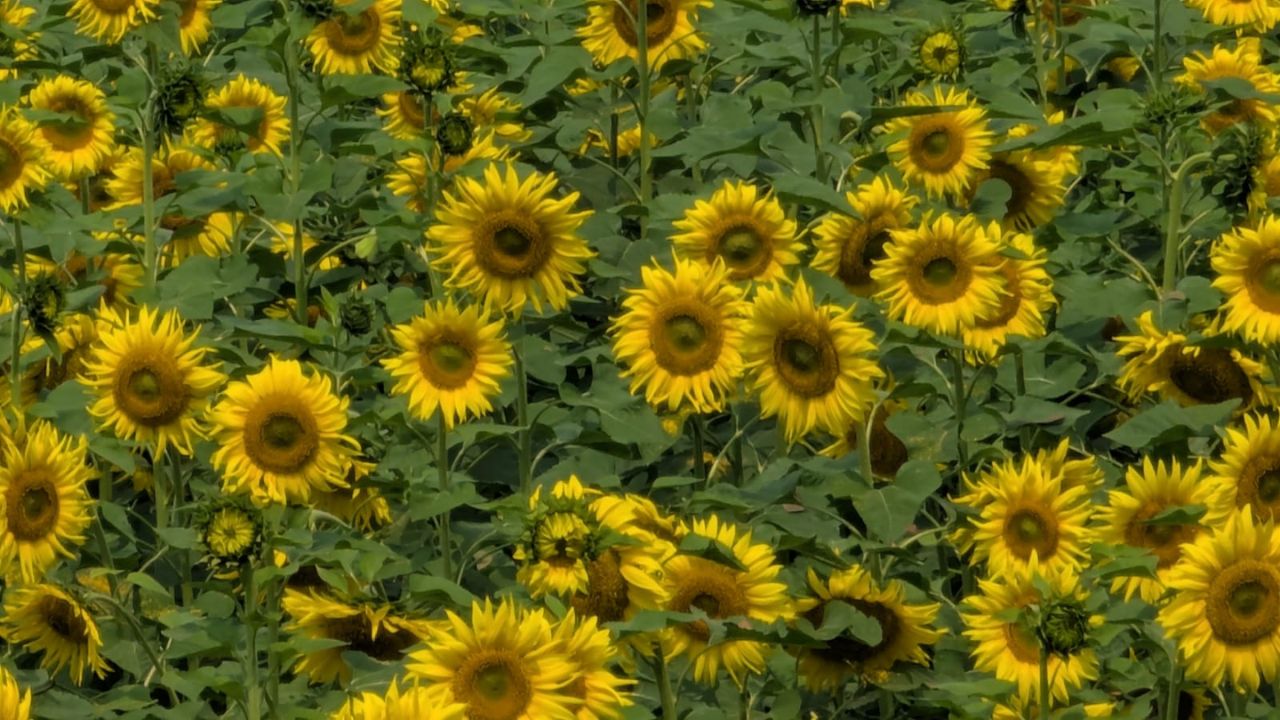
Farmers report that every acre of land yields between 20 and 24 maunds of sunflower seeds, which can produce approximately 12 maunds of oil. Beyond the healthy edible oil, the crop offers additional financial benefits: the oil cake is used as high-quality fish and cattle feed, while the dried stalks serve as household fuel.
Compared to paddy or other traditional crops, sunflower cultivation requires less labour and investment but offers significantly higher profit margins.
Md Rafiqul Islam, a farmer from Rajbari Sadar upazila who cultivated sunflowers on two bighas of land, expressed his satisfaction. “I previously grew traditional Rabi crops, but following the advice of the agriculture office, I switched to sunflowers. I am amazed by the yield; some flowers are as large as plates,” he said, noting that he expects a healthy profit after meeting his family’s oil needs.

In Baliakandi, farmer Swapan Som, who started a one-acre sunflower plot with his wife, noted that their field has become a local attraction. He plans to expand cultivation next year, highlighting the nutritional value of sunflower oil cake for his livestock.
Nazrul Mia from Pangsha upazila described the crop as a “blessing” amidst rising soybean oil prices. He noted that the sturdy nature of the sunflower plant makes it more resistant to natural disasters compared to other crops.
Reducing import dependency Md Shahidul Islam, deputy director of the Department of Agricultural Extension (DAE), stated that the soil and climate of Rajbari are highly suitable for sunflower farming.
“Our primary goal is to reduce dependency on imported edible oil,” Shahidul said. He credited the success to the government’s agricultural incentive programmes and the constant monitoring by field-level Sub-Assistant Agriculture Officers.
He further noted that the profitability of sunflowers is inspiring unemployed youths to become agricultural entrepreneurs, thereby strengthening the rural economy.


