In recent decades, Bangladesh has become a significant reference point in discussions of social change and development in the Global South. Rapid shifts in economy, demography, technology, and cultural life have unfolded within a relatively compressed historical period, inviting analyses that move beyond isolated sectors. To grasp such change requires an approach attentive to how economic reorientation, social differentiation, and cultural reconfiguration operate simultaneously, shaping institutions and everyday life alike.
Social Transformation in Bangladesh: Pathways, Challenges and the Way Forward (Routledge, 2025), edited by Shahidur Rahman and Md. Masud-All-Kamal, responds to this challenge with notable conceptual range. Bringing together twelve chapters from sociology, political economy, media studies, labour studies, public health, and anthropology, the volume treats social transformation as a layered and historically situated process. Bangladesh is presented neither as an exception nor as a model, but as a site where global forces—neoliberal reform, digital capitalism, climate change, and migration—become socially articulated.
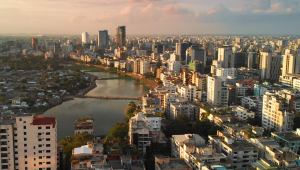
A central contribution of the book lies in its political-economic analyses. Chapters on post-independence development trajectories, urban informality in Dhaka, and platform-based labour show how market-oriented reforms have reshaped livelihoods and institutional arrangements. Informality and flexibility emerge not as temporary conditions but as durable features of contemporary economic life, reorganising time, security, and social risk. These dynamics are further illuminated through attention to gender, particularly in the chapter on women’s work in the ready-made garment sector, which revisits industrialisation and female employment with empirical precision and sensitivity to shifting labour regimes.

The volume also extends its inquiry beyond the economy and work to the symbolic dimensions of transformation. Analyses of news media, post-secular politics, and digital platforms examine how authority, legitimacy, and cultural value are negotiated in a changing social landscape. The chapter on YouTube culture is especially effective in treating digital media not as a peripheral novelty but as a site of aspiration and social recognition.




Later chapters broaden the scope to health, indigeneity, climate adaptation, displacement, and migration. Here, social transformation is traced through environmental, bodily, and transnational registers, revealing how development intersects with questions of belonging and mobility. Studies of Indigenous Chakma communities, Rohingya refugees, and Bangladeshi migrant workers abroad underscore the reconfiguration of social relations across borders.
Concise yet analytically dense, this collection offers a coherent framework for understanding Bangladesh’s ongoing transformation. Rather than advancing a single thesis, it assembles a set of perspectives that illuminate how rapid social change is lived, governed, and contested, making the volume a valuable contribution to contemporary South Asian scholarship.
The author is a poet, translator, and cultural critic. He teaches South Asian literature and culture at the University of Vienna, Austria.