BNP leaders of Chattogram have raised serious questions regarding the necessity, public involvement, and substantial fuel expenditures of Dhaka-Chattogram long march, led by Jamaat-e-Islami Ameer Shafiqur Rahman’s 11-party alliance
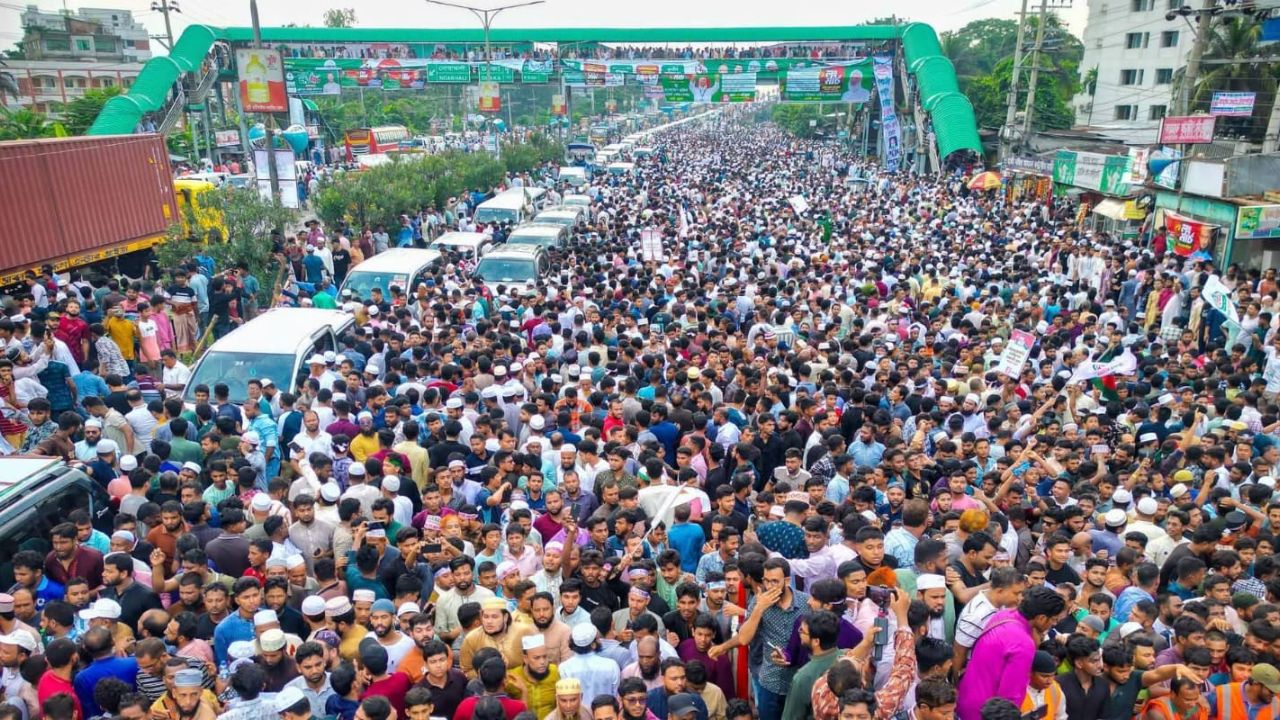
The march was organised on Saturday to press home a six-point charter of demands, including protests against the price hikes of gas, electricity, and essential commodities. The programme has concluded with a public rally at Laldighi Maidan in Chattogram.
Criticising the move, Chattogram City BNP Joint Convener MA Aziz said the political situation in the country is not yet ripe for conducting a long march. He argued that organising such a programme, which consumes massive quantities of oil and gas amidst an ongoing fuel crisis, lacks justification.
“The environment or situation to hold a long march in Bangladesh has not yet been created,” Aziz said.
“The Jamaat alliance possesses a nationwide organisational base. If they felt the need to protest, they could have organised meetings and assemblies at the local, thana, or upazila levels instead of wasting massive amounts of fuel on a long march,” he added.
Skepticism over public support and energy realities
Aziz also claimed that the long march failed to elicit the expected response from the general public. He said the spontaneous presence of ordinary citizens along the roadsides, a common sight in similar past programmes, was visibly absent this time.

“There was no significant response from the common people in this long march,” he added. “While some crowds were seen at road crossings and assembly points, these were merely normal pedestrian gatherings,” the BNP leader said.
Acknowledging that the fuel crisis is a stark reality, he blamed long-term policy decisions for the situation. He claimed that while the interim government had cancelled the work order of a particular group, no alternative arrangements had been put in place.
Pointing out that it takes at least two years for a new project to become functional, he argued that the absence of alternatives has prolonged the crisis.



Meanwhile, former Joint Convenor of Chattogram North District BNP Nurul Amin opined that it is unrealistic to expect a six-month-old government to resolve all the deep-seated complexities in the electricity and gas sectors inherited from the previous administration.
“The current government is only six months old,” Amin said.
“It is utterly impossible to resolve the numerous crises and complexities in the power and gas sectors left behind by the previous regime within such a short timeframe. Despite this, the government is working with utmost sincerity to address these issues,” he added.
Amin warned that attempts to heat up the political arena just six months into the government’s tenure could create opportunities to destabilise the situation.
“This is essentially a well-planned conspiracy designed to pave the way for the arrival of another special quarter or vested interest group,” he cautioned.
Plea for democratic coexistence and party training
Nevertheless, both leaders clarified BNP’s stance on the democratic rights of opposition parties. Pointing out that BNP did not obstruct the opposition parties’ rallies in Mirsharai, Amin maintained that everyone has the right to hold political programmes.
He added, however, that “launching such a long march or movement so soon after the formation of the government is not decent at all.”
Reiterating this position, Aziz said BNP now seeks to abandon the politics of malice in favour of political coexistence. He added that the central leadership of BNP has issued strict directives to avoid falling into any provocations.
“Awami League collapsed because they denied political space to other parties and kept democracy in their pocket,” Aziz pointed out. He further said that “We do not wish to repeat those same mistakes.”
Aziz also expressed deep concern over the rhetoric and behaviour of emerging political leaders.
Emphasising that foresight, education, and mutual respect are vital in politics, he identified the lack of institutional training within political parties as a major shortcoming.
“To engage in politics, extensive reading, practice, and research are essential,” he said. “Unfortunately, our political parties currently lack any specific institution or training framework,” he added.
While both BNP leaders agreed that the crisis concerning fuel prices and essential goods is undeniable, they emphasised that instead of launching massive political programmes against a six-month-old administration, the government must be given time, and criticism should remain constructive.