




Bangladesh’s ready-made garment industry is one of the country’s greatest economic success stories. In just a few decades, Bangladesh has become the world’s second-largest apparel exporter after China. The sector created millions of jobs, especially for women, increased export earnings, and helped transform the country from an agriculture-based economy into a manufacturing-driven one. But despite this remarkable success, an important question remains: how much of the real value created by the global apparel business actually stays in Bangladesh?
Recent discussions surrounding the ‘smile curve’ and industrial upgrading have renewed attention to Bangladesh’s position within global apparel value chains. The smile curve is a popular concept in global trade. It suggests that the highest profits in manufacturing industries usually come not from factory production itself, but from activities before and after production. Manufacturing often receives the smallest share of the final value.
Bangladesh has already proved that manufacturing can transform an economy. Over the years, local factories became larger and more efficient. Workers gained skills, production capacity increased, and the local textile and accessories industries gradually developed. These achievements deserve appreciation. However, the global apparel business is not only about producing garments. It is also about controlling brands, markets, technology, logistics, and consumer relationships. This is where Bangladesh remains relatively weak.
Today, most Bangladeshi factories work mainly for foreign brands and retailers. Those buyers usually control product design, pricing, quality standards, and market access. In many cases, local manufacturers take most of the production risks while international brands keep the largest share of profits. As a result, Bangladesh produces huge volumes of garments but captures only a limited portion of the total value created in the business.
One major weakness is the absence of strong Bangladeshi global brands. Even after four decades of RMG growth, Bangladesh still has almost no internationally recognised fashion or apparel brand of its own. The country also has a very limited retail presence in major global markets. This keeps the industry heavily dependent on foreign buyers. Such dependence weakens bargaining power. When buyers control orders and market access, suppliers often have little influence over prices and profit margins. Bangladesh also remains dependent on imported raw materials and foreign technology in several parts of the industry, especially in woven garments.
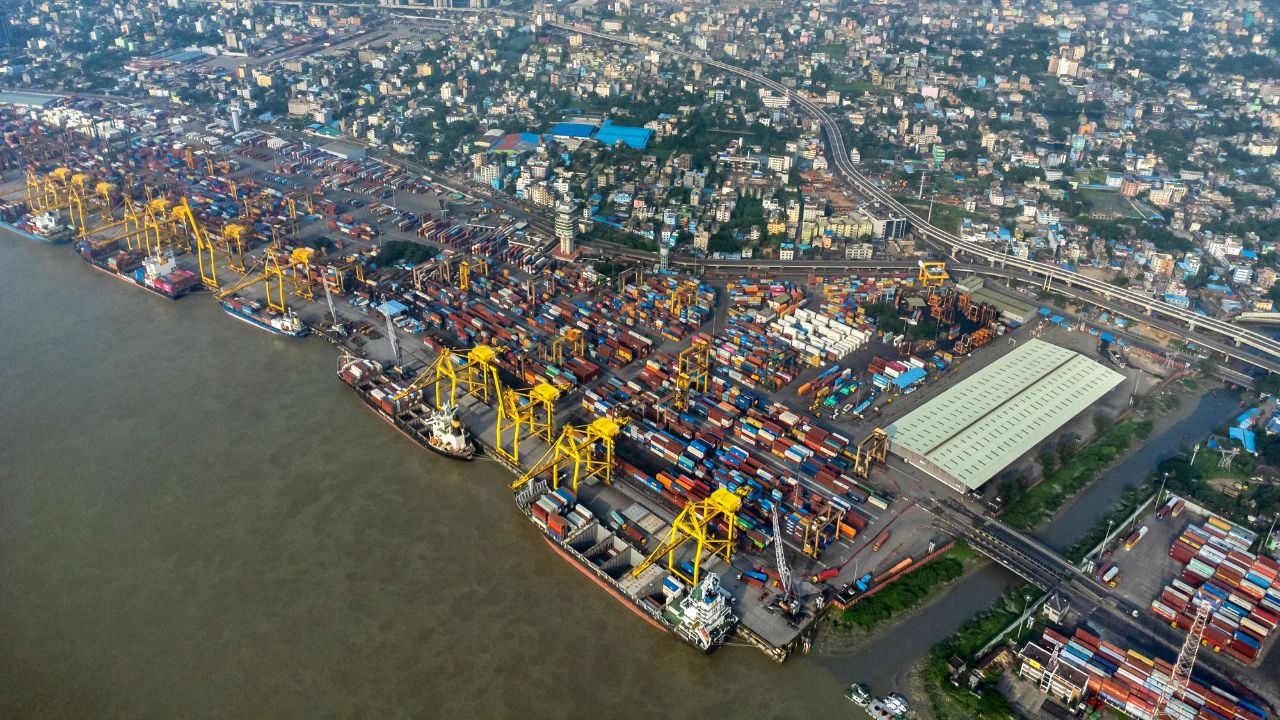
Industry insiders also point to another major challenge: weaknesses in Bangladesh’s logistics and supply-chain system. Port congestion, transportation delays, energy disruptions, customs inefficiencies, and long lead times often force manufacturers to absorb extra costs or offer discounts to buyers to maintain business relationships. In the global apparel market, timely delivery is extremely important. Even small delays can reduce buyer confidence and create additional pressure on already thin profit margins.
Many factory owners believe these pressures have already changed the structure of the industry. While some large and financially stronger factories have successfully evolved into globally recognised compliant, and environmentally sustainable manufacturing units, many small and medium-sized factories have struggled to survive. As a result, the total number of garment factories has reportedly declined significantly over the years. This reflects not only industrial restructuring but also the growing difficulty of operating in a highly competitive market with shrinking margins.
For many years, Bangladesh remained competitive mainly because of low labour costs. But the global competitive environment is now changing rapidly. Countries such as Vietnam, India, and Türkiye are increasingly combining competitive costs with better productivity, stronger logistics, improved technology, and growing design capabilities. Vietnam has benefited greatly from foreign investment and strong trade agreements. India enjoys advantages in cotton production, domestic market size, and industrial diversification.
At the same time, Bangladesh is approaching another important turning point. After graduating from Least Developed Country (LDC) status, the country will gradually lose some duty-free trade benefits in major export markets. This means Bangladeshi products may face higher tariffs in Europe and other destinations in the coming years. Once these trade advantages decline, low wages alone may no longer be enough to remain competitive.
The future of global manufacturing will increasingly depend on automation, digital supply chains, artificial intelligence, and advanced production systems. As technology reduces the importance of cheap labour, countries that rely mainly on low-cost manufacturing may face increasing pressure.
This is why Bangladesh now needs a second phase of industrial transformation. The first phase focused on building factories, creating jobs, and increasing exports. The next phase must focus on capturing more value from the global apparel business itself. That means Bangladesh needs stronger investment in textile innovation, product development, design capability, branding, logistics, technology, and direct market access. Bangladeshi companies must gradually try to build their own brands and establish stronger connections with international consumers and retail networks. This transition will not happen overnight. It will require long-term planning, policy support, institutional efficiency, investment in skills, and improvements in infrastructure and governance.
Bangladesh should take pride in what the RMG sector has achieved over the last four decades. Very few countries have transformed their economies so quickly through manufacturing exports. But future success will depend not only on how much Bangladesh produces, but also on how much value it can retain from what it produces.
Manufacturing created the foundation of Bangladesh’s economic rise. The next stage of development will require stronger control over design, branding, technology, logistics, and market access.
The real challenge is no longer whether Bangladesh can manufacture for the world. The real challenge is whether Bangladesh can eventually own a meaningful share of the value created by what it manufactures.
The writer is a Maritime, Logistics and Supply Chain Policy Analyst, and Adjunct Faculty, Bangladesh Maritime University


