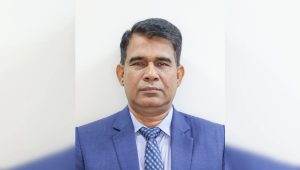
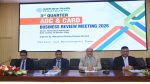
Bangladesh Cement Manufacturers Association (BCMA) President Mohammed Amirul Haque represented Bangladesh at INTERCEM, the world’s leading independent conference on cement production and trading, where he presented the country’s economic outlook and the cement sector’s resilience to a global audience.
INTERCEM Dubai 2026 was held from 2 to 4 February at Jumeirah Emirates Towers, bringing together more than 500 senior decision-makers from over 50 countries to discuss production, trading, investment trends, and future challenges facing the cement industry.
In his address, Mohammed Amirul Haque said Bangladesh is gradually moving forward with a positive growth trajectory, with political stability remaining a key source of economic confidence.
Respect for the national election scheduled for 12 February reflects political maturity and strengthens expectations of good governance, reduced radicalism, and faster economic acceleration in the coming period, he said.

Turning to industry fundamentals, he said the Bangladesh cement industry is almost entirely import-dependent, as the country produces insufficient clinker to meet domestic demand.
Nearly 95 per cent of raw materials are imported from Vietnam, Saudi Arabia, Pakistan, and occasionally India, placing the sector within global supply chains as an intermediary industry, he said.



Despite this dependence, the domestic cement market has continued to expand, supported by steady infrastructure development and construction activity across the country.
Cement consumption has grown consistently over the years, including a recent rise of around 10 per cent between December and January, while per capita consumption increased steadily from 2017 to 2025, he said.
He added that cement consumption remained stable over the past six to seven years despite political changes and repeated natural challenges, contrasting with sharp demand declines seen in many other markets during periods of uncertainty.
The BCMA president also highlighted Bangladesh’s diversified industrial base, spanning cement, steel, fertiliser, and LPG, with around 10 to 15 major groups operating across multiple sectors.
This diversification has played a critical role in sustaining economic momentum and supporting industrial growth, he said.
Addressing investors, he said foreign interest in Bangladesh remains strong, particularly in manufacturing, fertiliser, and energy-related industries such as LPG, with both local and foreign investments expanding and many projects performing well.
Established in 1985, INTERCEM has provided industry insight, analysis, and networking opportunities for nearly four decades through annual events across the USA, Europe, the Middle East, and Asia.