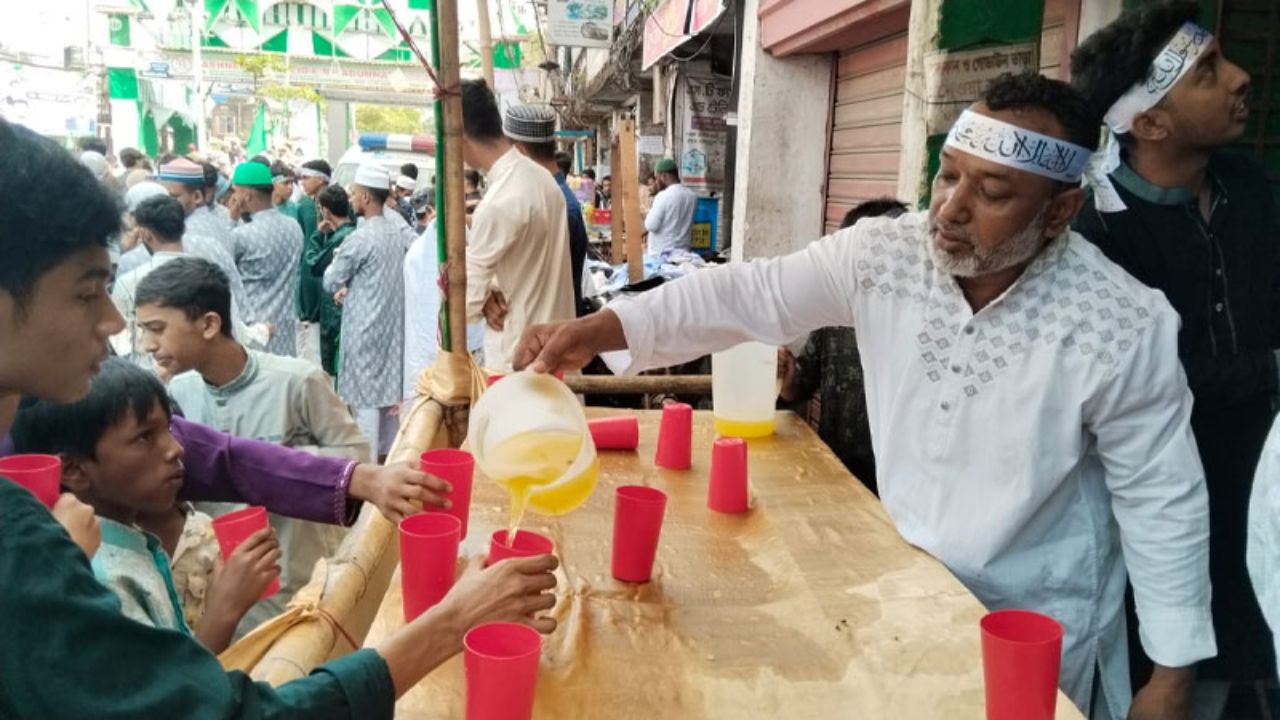



“Come, take whatever you need for free.” Standing beside the stream of thousands of people, Moinuddin Mamun repeatedly called out to passers-by with the invitation.
In front of him were several tables arranged with jars of sherbet, bottles of water, packets of biscuits and pieces of bread. Some stopped for a glass of sherbet. Others collected food for accompanying children or elderly relatives. Some walked away slowly with biscuit packets in their hands, blending into the huge crowd moving along the procession route.
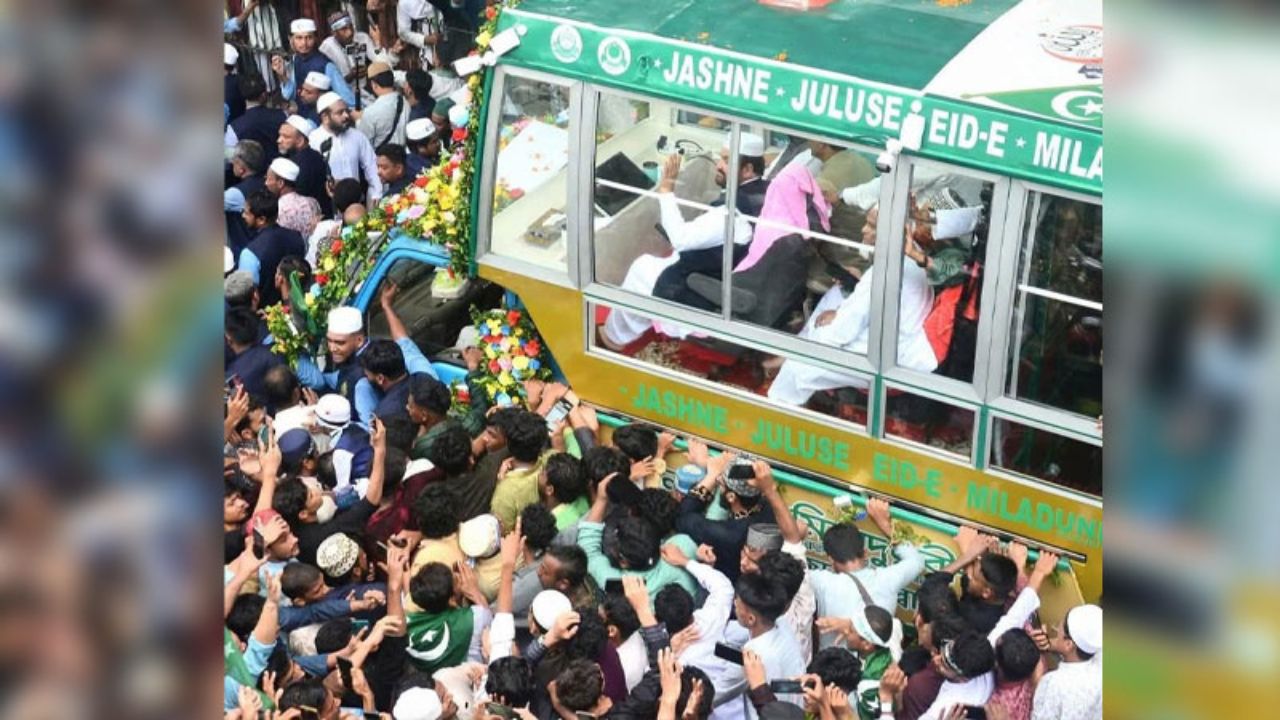
Around them, Chattogram was overflowing with people. Some carried green flags, while others recited Naat and Darood. The chant of “Ya Nabi Salam Alaika” mixed with volunteers’ calls — “Have some sherbet”, “Take water”, “Take food”.
The scene unfolded at Bibirhat on Wednesday along the route of the 55th Jasne Julus organised to mark Eid-e-Milad-un-Nabi (PBUH).
But this was not an isolated arrangement. Along the long procession route, a vast network of people serving people had emerged through countless small initiatives.
In some places, individuals arranged the distribution. Elsewhere, businessmen, local organisations, groups of friends and families set up food stalls beside the roads.
Sherbet, water, biscuits, bread, dates and biryani — people brought whatever they could afford. No money was taken in return.
At a massive religious gathering of hundreds of thousands of people, these small arrangements of food and hospitality told a larger story of compassion, generosity and expressing love for the Prophet (PBUH) through service to others.
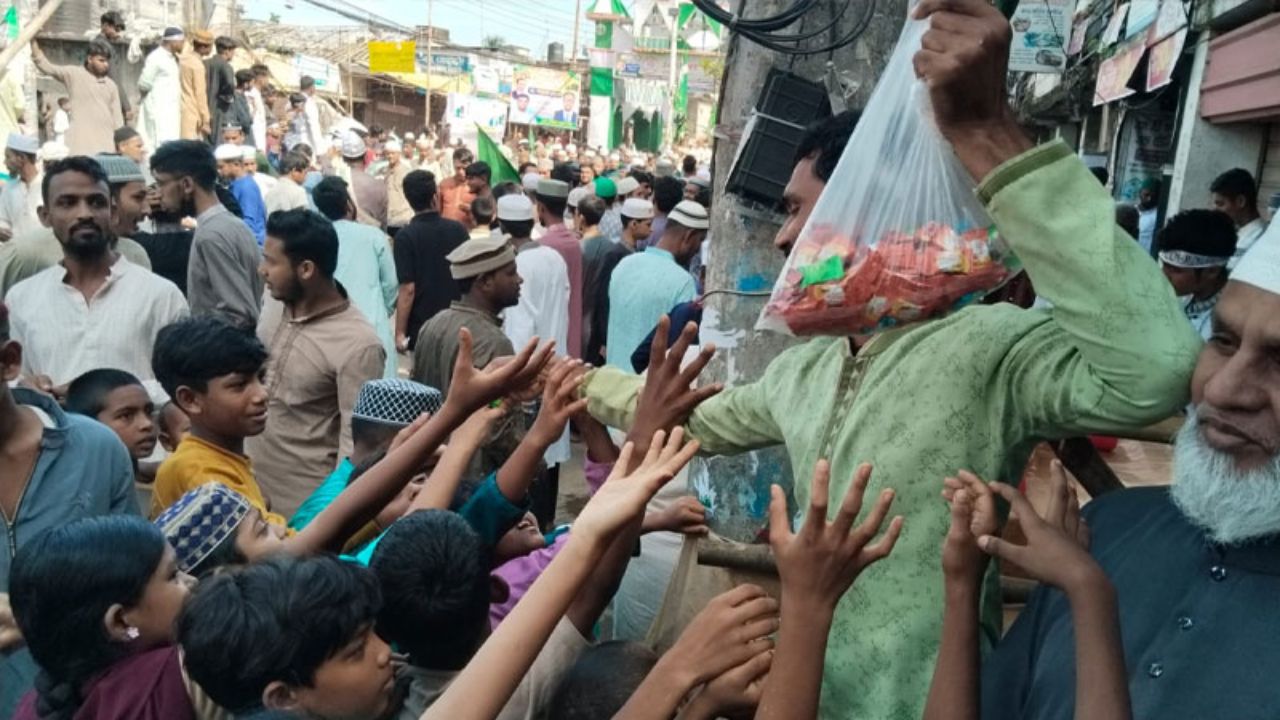
Organisers expected more than 5 million people to join this year’s procession. Alongside the administration, around 10,000 volunteers from Anjuman-e-Rahmania Ahmadia Sunnia Trust were deployed to maintain discipline and provide support.
Hospitality grows as crowds pass Bibirhat
As the massive procession moved through Bibirhat, the crowd on both sides of the road became denser.
Many participants who had been walking for hours showed signs of fatigue. At that moment, several stopped in front of the sherbet stalls along the route.
One person finished a glass of sherbet and returned it, while another waited behind. Some families stood together as children received biscuit packets. Many took food without stopping for long, resting briefly before merging again into the flowing crowd.

At the centre of one such arrangement was Moinuddin Mamun, a businessman involved in the iron trade.
On his own initiative, he arranged sherbet, biscuits and bread for people joining the procession. He said the value of the arrangement could not be measured in money.
“I am very happy to serve the devotees of the Prophet. There is no charge here. People can take whatever they need. As long as people keep coming, we will try to provide food and sherbet,” he said.
Mamun did not know most of the people receiving food, and many of them did not know him either. Yet, for a few moments, a bond was created between them — one person giving and another accepting with gratitude.
At a huge religious gathering like Jasne Julus, no identity card is needed for such a connection.
‘I came from far away, a glass of sherbet brought great relief’
Abdullah came from Hathazari to take part in the Jashne Julus. He left home early in the morning and joined the procession after reaching the city along with the stream of people. He stopped at a sherbet stall in the Bibirhat area.
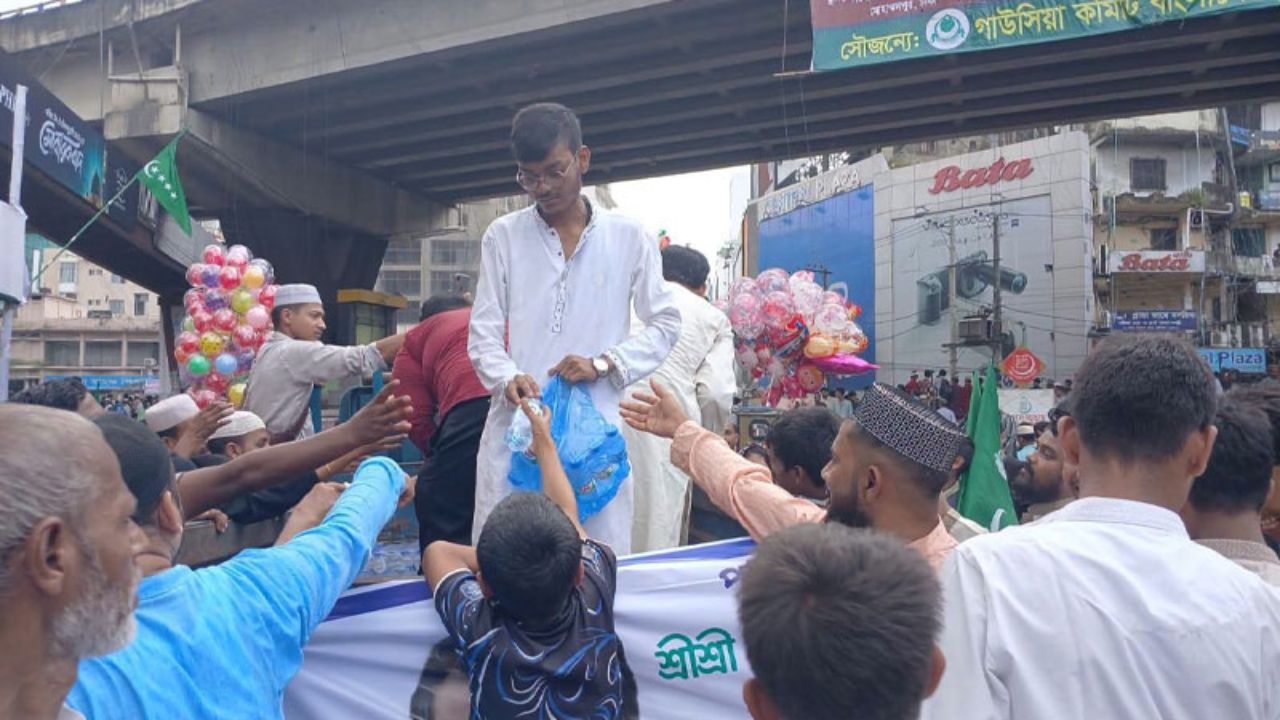
“I have come from a long distance. After walking for so long, having a glass of sherbet felt very refreshing. I also took some biscuits. The best thing is that no one is asking for money here. All these arrangements have been made only to serve people,” Abdullah said.
He added, “In such a large gathering, it is impossible to know everyone personally. But here, everyone seems to have become close to one another. Some are providing food, some are offering water and others are helping people find their way.”