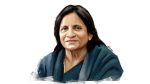
Leesa Gazi, the British Bangladeshi filmmaker, writer, and theatre practitioner, recently returned to Bangladesh for the release of her debut full-length feature film ‘Barir Naam Shahana’ (A House Named Shahana), which has already won five international awards. She had earlier earned acclaim for her short film ‘Rising Silence’, which garnered 15 international accolades. Leesa continues to explore narratives rooted in women’s lived experiences and social injustice.
She sat down with Times of Bangladesh to share her journey, the stories that inspire her, and the joy of using cinema to amplify women’s voices. The interview was conducted by Shamim Shopno.
The full interview follows…
TIMES: ‘Barir Naam Shahana’ is your debut full-length feature film, released recently in Bangladesh. How does it feel to reach this milestone?
Leesa: The film premiered at the Mumbai Film Festival in October 2023. Since then, it has travelled to many countries, connecting with diverse audiences. The response has been overwhelming. From Mumbai to Rome, where it even won the ‘Audience Award for Best Film.’ Initially, I wondered how international audiences would relate to this story, but human emotions are universal. When a story touches those emotions, it transcends borders, time, and language.
Returning to Bangladesh feels especially significant. While the film was shown at the Dhaka International Film Festival, it had only one screening. Now, after the journey since post-production in October 2023, I’ve finally brought it home for all my countrymen.

I find it hard to put the feelings into words. There’s laughter, tears, joy, and even a bit of nervousness that I’ve never felt at any other screening. But knowing that my own people are seeing it gives this moment a deeply personal and overwhelming significance.
TIMES: The film is based on a true story. What drew you to this narrative, and why now?
Leesa: All my life, I’ve been dedicated to telling stories from a woman’s perspective through theatre, film, poetry, and song. That passion led me to write Barir Naam Shahana in 2011, first published in Prothom Alo’s Eid special. Nearly ten years later, in 2021, I felt it needed to be told as a film.


Some characters felt so real that I could almost see them. At that time, Aanon, who plays the lead, was staying at my home, and I asked her to read the story and that’s how the journey began.
I drew on my own experiences as a divorcee in 1990s Bangladesh, where society often treated women like outsiders. I’ve seen how confidence is systematically broken, how a person is made to feel untouchable. But I’ve also seen women rise again, reclaim their lives. Those are stories rarely told.
I wanted to celebrate that courage, the extraordinary resilience of ordinary women. Working with the Birangona sisters reinforced this: their lives exemplify perseverance. My film honours those women, and I hope audiences will see themselves in these heroes.
TIMES: As a woman filmmaker, what challenges have you faced in bringing these stories to life?
Leesa: Filmmaking is challenging for anyone, but in a male-dominated industry, women face additional obstacles. I’ve learned that no one will clear the path for you. I tell women that if they have a dream, they must carve the path themselves. Ignore the doubts and negativity; they will say late-night shoots may be feasible. But if I can do it, so can every woman.
TIMES: Much of your work centres on women’s narratives, often from marginalised communities. What inspires you to keep telling these stories?
Leesa: When we watch films, a woman’s story is often told from a man’s perspective. There’s nothing inherently wrong with that, but a woman’s lived experience is different. From small details like deciding what to wear when you go out, whether it’s morning or night, to larger challenges, women carry an extra burden throughout their lives simply because they are women. Someone who hasn’t lived that experience can’t fully tell that story.
I’m not saying it’s impossible, but I believe stories about women’s experiences are inherently more authentic when told from a female perspective. That’s why, when I watch a so-called ‘female-centric’ film, I often feel something is missing.
This is also the reason I founded Komola Collective. We strive to tell stories from a woman’s point of view, through female narratives. This is my calling, my dedication, and my vision, and I intend to continue this work for the rest of my life.
TIMES: Are there any new projects you’re working on?
Leesa: I’m working on a feature called ‘Shasthi’, co-written with Aanon, with an ensemble cast of four main characters. I’m also developing an eight-episode web series, entirely set in the UK but with a story rooted in Bangla culture, co-written with Annie Zaidi, whom I greatly respect. Both projects are in development simultaneously.
TIMES: What advice would you give to young women filmmakers and storytellers in Bangladesh?
Leesa: There are two things I believe in deeply. First, never take no for an answer. You will hear a thousand ‘no’s’ before you hear one ‘yes.’ You must keep working toward that ‘yes,’ and if it never comes, then you forge your own path. I know this because if I had waited for someone to hand me a role or a creative job, I wouldn’t be here today. Support is important, but ultimately you must stand up for yourself.
Second, women must learn to be friends with other women. Society deliberately plants the idea that another woman is your greatest rival, and we need to reject that. We must question why women are set against one another in the first place and challenge those structures.