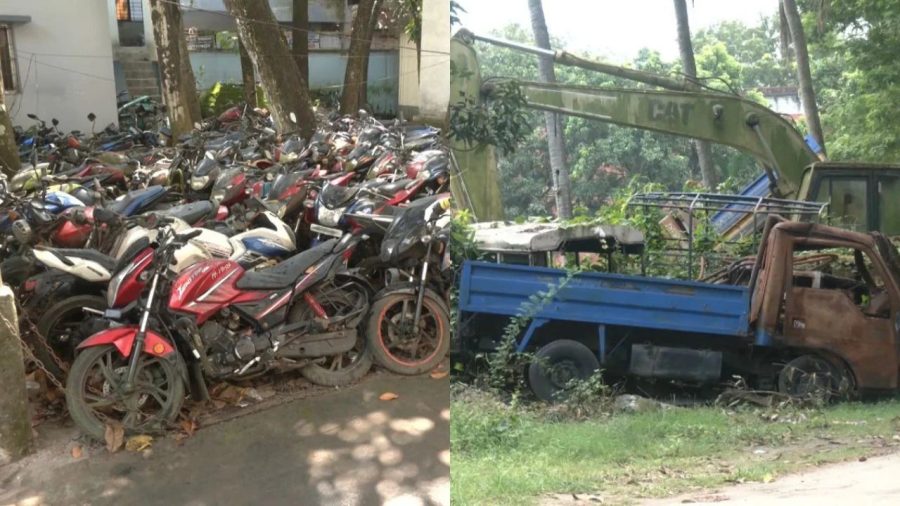



Transport owners and workers across Bangladesh are facing mounting financial losses as vehicles seized by police as case evidence deteriorate due to inadequate storage facilities, negligence, and prolonged delays in their release.
Against this backdrop, Prime Minister Tarique Rahman has directed his principal secretary to take measures to ensure the speedy return of accident-hit vehicles to their owners, according to Bangladesh Road Transport Owners Association Secretary General Md Saiful Alam.
Police routinely impound vehicles involved in accidents or unrest as evidence.
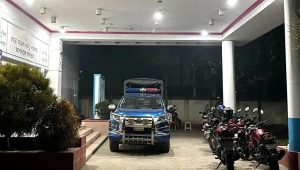
However, a lack of secure, covered storage facilities leaves many seized vehicles exposed to the elements for months, or even years, rendering them unusable by the time they are finally returned.
Owners and workers suffer a double financial blow: first from the initial damage, and subsequently from their inability to resume operations.
Targeted in unrest
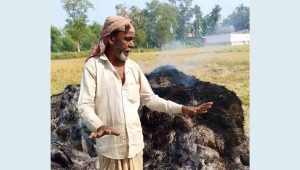
Vehicles, including those belonging to the police, frequently become targets of arson and vandalism whenever political or industrial unrest erupts.

Bangladesh Road Transport Workers Federation General Secretary Humayun Kabir Khan told TIMES that vehicles, even those parked quietly along roadsides, are routinely set ablaze.
“Vehicles become targets during virtually every movement. This is unacceptable under any circumstances,” he said.
Kabir, who also serves as the BNP central committee’s assistant labour affairs secretary, noted that vehicles themselves are not at fault in accidents, yet holding them at police stations for extended periods devastates the livelihoods of both owners and workers.
According to Police Headquarters data, 74 vehicles, including 18 police vehicles, were torched nationwide over a 12-day period between 7 and 18 November, up from 45 vehicles recorded between 7 and 15 November.




The Dhaka Metropolitan Police (DMP) reported buses set ablaze in Pallabi, Mohakhali, Badda, and Rampura, while outside the capital, arson incidents were reported in Faridpur, Narayanganj, Savar, Ashulia, Chattogram, and Khagrachhari.
In Gopalganj, attacks at the Tungipara and Muksudpur police stations also damaged vehicles parked on the premises.
Police attributed the recent wave of arson to garment workers’ protests and violence involving the banned Awami League and its affiliated organisations.
While owners of insured vehicles eventually receive compensation, those who purchase buses or trucks through instalments, loans, or the sale of personal assets face financial ruin when their vehicles are destroyed or indefinitely impounded.


Release hinges on the courts
Senior police officials maintain that the timeline for releasing impounded vehicles rests entirely with the judiciary. Dhaka Range Deputy Inspector General (DIG) Md Mostafizur Rahman told TIMES that the courts determine when owners may recover their property.
Former Inspector General of Police Baharul Alam echoed this, noting, “A court can order the return of a vehicle to its owner within a day. However, when the process is delayed, police are obliged to keep the vehicles in their custody.”
Transport leaders argue the reality on the ground is devastating. Md Saiful Alam, who also serves as general secretary of the Dhaka Road Transport Owners Association, said, “When vehicles are left there for months or years, virtually nothing remains of them. Even vehicle parts go missing from police custody.”

Following demands raised by transport leaders during a meeting with the prime minister on 8 October, attended by DMP Commissioner Mosleh Uddin and other senior officials, the prime minister instructed his principal secretary to expedite the handover process, with owners agreeing to produce the vehicles before the courts whenever required.
Legal hurdles and insurance delays
Police officials explained that following an arson attack, the investigating officer, the Criminal Investigation Department (CID), or a Fire Service forensic team must inspect the wreckage to determine the cause of the fire and check for explosives.
Once the preliminary investigation is complete, or while a trial is pending, the rightful owner may apply to a magistrate’s court under Section 516A or 523 of the Code of Criminal Procedure for interim custody, executing a bond to produce the vehicle as required.
Without such an application, vehicles remain exposed at police stations until the case concludes, a process that can take years before a final disposal order is issued under Section 517.
These legal delays directly stall insurance payouts. For vehicles covered by comprehensive insurance, the wreckage must be preserved in its post-incident state for inspection by an insurer’s surveyor, a step that can only occur once the owner secures court-approved custody.
Supreme Court lawyer and Deputy Attorney General Shihab Uddin Khan noted that while affected owners can petition trial courts for release, custody is generally denied if transferring the vehicle risks compromising the integrity of the evidence or disrupting judicial proceedings.
Police Headquarters Spokesperson and Assistant Inspector General Kamarum Munira iterated that vehicles seized during protests and clashes are preserved strictly in accordance with judicial directives, with arrangements made to return them once ownership is verified and the courts grant approval.