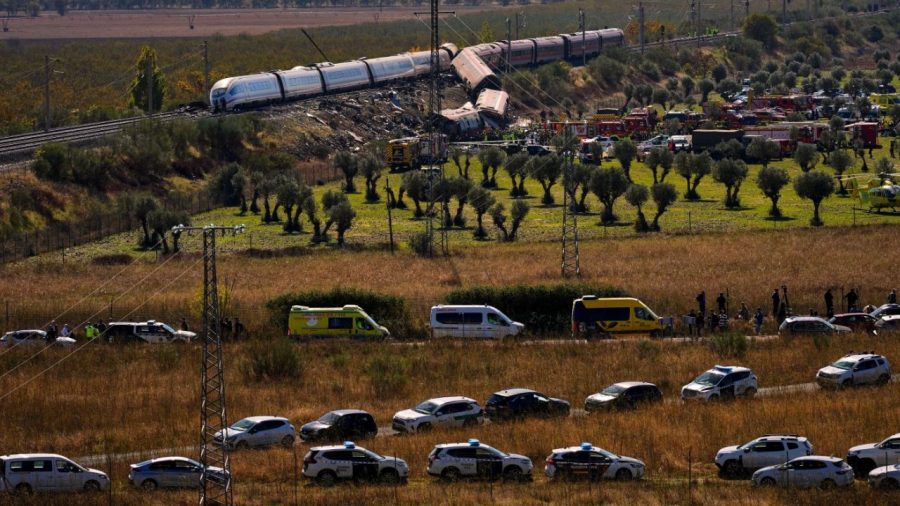



Spain’s Transport Minister Óscar Puente has resigned six days after a high-speed train collision south of Madrid killed 69 people, saying he could not remain in office following two major rail disasters in less than a year.
Puente announced his decision on Tuesday after appearing before lawmakers for several hours to explain the circumstances surrounding the 28 October crash, the second deadly collision involving Spain’s high-speed rail network this year.
“A transport minister in a country like Spain cannot remain in office after two accidents of this seriousness in less than a year,” he said.
The latest disaster occurred when a high-speed train collided with another that had stopped on the tracks.

According to the initial account, the sequence of events began when a communication system essential to the Madrid-Seville line’s safety system failed, reports Associated Press.
Central controllers in Madrid subsequently took control and authorised a state-operated Renfe train to proceed, despite another stationary train operated by private company Iryo being ahead.



The accident followed another major collision in January, when a train derailed and struck an oncoming train further south along the Madrid-Seville route, killing 46 people. That incident remains under investigation.
Puente said he had decided to resign immediately after the latest disaster but had kept the decision private until Tuesday.
The two accidents have intensified scrutiny of Spain’s rail safety standards, with the latest crash occurring just four weeks before a national election.

Spain’s high-speed rail network, the world’s second largest after China’s, has long been regarded as one of the country’s major infrastructure achievements.
Before this year, it had not suffered a deadly accident since beginning operations more than three decades ago.
Earlier on Tuesday, Puente announced a series of safety measures, including improvements to working conditions in railway control centres and an accelerated rollout of the European Rail Traffic Management System, which standardises railway signalling and safety operations.