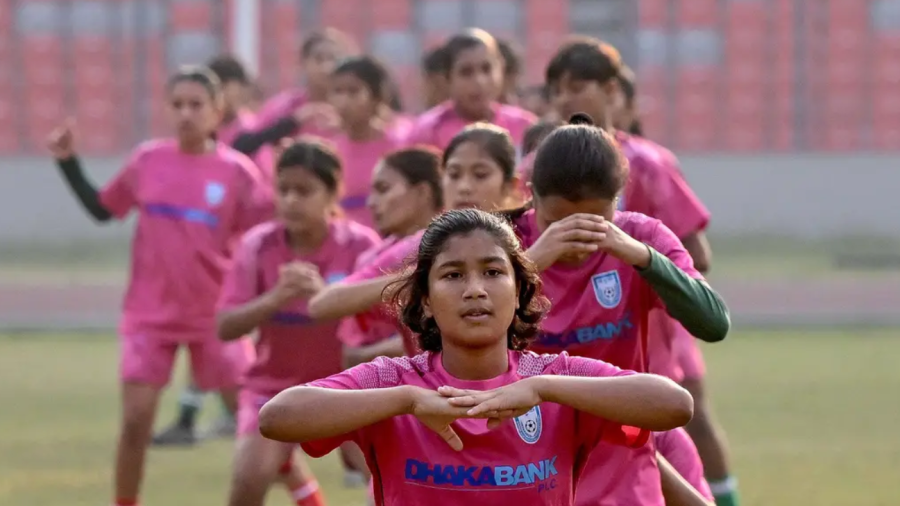



Bangladesh has achieved notable sporting successes in more than five decades since independence, but these accomplishments have largely come in men’s sports and have rarely made a significant international impact. Although women athletes have recorded encouraging achievements in recent years, their overall progress remains far below expectations. Beyond cricket and football, women’s sports remain marginalised, with only a handful of athletes enjoying access to quality training. Overcoming family and social barriers, alongside improving facilities and infrastructure can change this situation.
Women athletes have won medals at the South Asian Games, but their achievements at major international events such as the Olympics, Asian Games and Commonwealth Games remain limited. Since 2016, Bangladesh has won 217 medals at the South Asian Games but only five at the Asian and Commonwealth Games combined. Women have secured just two of these: a cricket bronze at the 2022–23 Asian Games and a wushu bronze at the 2026 Asian Games.
Several factors prevent promising talent from rendering into consistent international success. These include limited competitive opportunities, irregular training, inadequate physical conditioning and deep-rooted social barriers.

National boxer and former Bangladesh Krira Shikkha Protishtan (BKSP) student told Daily TIMES of Bangladesh that reaching the highest level of competition is particularly difficult. In India, boxers gain experience through numerous school- and district-level tournaments before competing internationally. In Bangladesh, athletes may attend a three-month training camp before entering the Asian Games. Outside cricket and football, women receive very few opportunities to compete in boxing and other disciplines.
Family resistance remains one of the first obstacles. Despite modernisation and the achievements of Bangladeshi women, many families remain reluctant to let their daughters pursue sports. Without family support, entering or continuing a sporting career becomes extremely difficult.


Women’s participation has also declined among students and those from relatively affluent families. Many athletes now come from lower-middle-income households, viewing sports as a route to institutional employment and financial independence. However, inadequate earnings often discourage them from continuing. Unless sports offer reasonable financial security, retaining talented athletes will remain difficult.
Social prejudices compound the problem. Some families fear that playing sports will damage their daughters’ appearance and marriage prospects. Meanwhile, school, college and university tournaments that once encouraged participation have largely disappeared. Some sporting events have also faced opposition from extremist groups.
Safety and security are further concerns. Athletes from disadvantaged backgrounds may remain silent about mistreatment because they fear losing their jobs and jeopardising their families’ livelihoods. Sports authorities must establish effective complaint mechanisms, ensure safe training environments and protect athletes from retaliation.
Despite these challenges, we remain hopeful about the future of women’s sports in Bangladesh. Public awareness campaigns must challenge discriminatory attitudes, while government and private-sector initiatives should reduce the financial burdens faced by athletes from low- and middle-income families.

Investment in modern training facilities, regular age-based and regional tournaments, professional coaching and fitness programmes is equally essential. Schools, colleges and universities must revive sporting competitions and ensure equal opportunities for girls. Federations should also provide athletes with regular competitive exposure and clear pathways to international events.
Supporting women athletes is not simply about winning medals; it is a commitment to equality, dignity and national progress.