


The United Nations was founded in 1945 to save succeeding generations from war, promote human rights, and foster international cooperation. Ironically, over 80 years later, the world faces a stark paradox. The international community, more than ever in history, needs effective cooperation, and the organisation, designed to ensure peace, is faltering.
The 81st UN General Assembly opened on 8 September 2026 with the theme “Restoring trust, managing transformation: a United Nations that delivers for all,” reflecting the essence of the organisation’s struggle: the faith in multilateralism and the belief that collective action can make a difference. The vision and reality are coming into sharper focus, and the world doesn’t need the UN less.
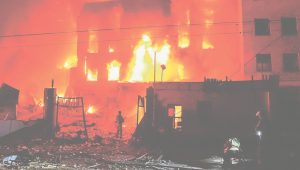
An obvious manifestation of this crisis is Gaza. On 18 September 2025, the United States vetoed a Security Council resolution calling for an immediate, unconditional and permanent ceasefire in Gaza and the easing of restrictions on humanitarian access. The other 14 Council members voted in favour. This highlighted the power of a permanent member’s veto to prevent collective action despite near-universal support. The humanitarian consequences continue to be devastating. The fragile progress in nutrition in the Gaza Strip was highlighted during the reporting day on 16 October 2026. Only about one-third of children under two were receiving the minimum dietary diversity, while approximately one in eight children under five suffered from chronic malnutrition. Some 800,000 children were uprooted. The numbers show a system failing to protect citizens across the world where politics is in the way.
Geopolitical confrontation doesn’t stop at the war front. Failure to keep the fertiliser-shipping plan afloat via the Strait of Hormuz could cause a food crisis in parts of Asia and Africa, a UN official warned on 14 October 2026. Strategic shipping lanes are impacted, impacting the supply of fertiliser, farm yields, and food prices and introducing a risk to vulnerable groups. This indicates the interconnection between global and domestic economic welfare, particularly for Bangladesh, which is vulnerable to the global commodity market and hence global security issues.

Another example of the UN’s shortcomings is Ukraine. The war has resulted in great suffering and displacement since Russia’s full-scale invasion in February 2022. UN agencies reported increased humanitarian needs in October 2026 triggered by damage to power, water and housing infrastructure, in the run-up to winter. Since the fall of the government of Bashar al-Assad in December 2024, a new political chapter has begun in Syria, though humanitarian needs and challenges for reconstruction continue to be overwhelming. Political change does not ensure stability, recovery and protection of vulnerable communities.
The Rohingya crisis is a particularly urgent test of the international responsibility towards Bangladesh. On 20 May 2026, a new UN and partner response plan (2026–28) for up to 1.56 million refugees and the host community was published with a total of US$710.5 million in funding. But humanitarian aid will not be a substitute for a sustainable political solution. The necessary conditions for safe, voluntary and dignified repatriation to Myanmar are citizenship, security, freedom of movement, livelihood and fundamental rights. Forcibly repelling refugees without such guarantees would be unfeasible and cruel.
The long-term engagement in UN peacekeeping operations is an expression of Bangladesh’s commitment to peace and security in the world. However, courage and sacrifice are not enough to ensure peacekeepers will succeed. These need to be provided with clear instructions, required supplies, and proper equipment and cooperation from involved parties in conflicts. The UN needs to enhance civilian protection, technology for protection, more women to be engaged in peacekeeping and impartial investigations of incidents. All those operating under the UN banner need the institutional support they need in order to carry out their duties.




The Security Council’s composition lies at the heart of these challenges. It is composed of 15 members, five of which are permanent members with veto power: the United States, the United Kingdom, France, Russia and China. It was a political fact of 1945 and not of the present-day diversity and distribution of power. It allows for one member to be able to veto action when 14 other members agree.
This structure must be changed, and that is difficult! The UN Charter can only be amended if a two-thirds majority of the General Assembly agrees and two-thirds of all member states, including the 5 permanent members of the Security Council, ratify the change. So, if there is a change in the current setup that may hamper privileges, then it should be accepted by those who benefit from the existing one. In 2022, the General Assembly, by Resolution 76/262, provided for a debate following a veto by the Security Council. This is a good accountability tool, yet, discussion does not substitute for action.
Secretary-General António Guterres’ call for a UN80, established in 2025, represents an opportunity to rethink the UN’s business as usual. Greater efficiency, financial stability, improved coordination and public confidence are important objectives. Lastly, the UN must be prepared for new challenges, and these include AI, cybersecurity, food security and climate change. But administrative reform cannot be only budgetary reduction or reorganisation of the institutions. Efficiency must be for the purpose of the UN’s core mandate – peace, human dignity and international cooperation.
Leadership will also direct the future of the organisation. As Guterres’s tenure approaches its end on 31 December 2026, the selection of the next Secretary-General is a time to stop and reflect on what the world needs from its next Secretary-General. A report dated 16 October 2026 mentions former vice-president of Costa Rica Rebeca Grynspan as a candidate. The next Secretary-General must be credible, independent, possess moral courage, and be able to build bridges without sacrificing the values of the UN.
The UN will not be able to solve all conflicts and cannot compel states that are strong to give up all their interests. But it’s no excuse to take no action. Its credibility is linked to a consistent implementation of international law, to a commitment to humanitarian principles without a double standard, and to having some real say in international decision-making by the smaller States.

For Bangladesh and the wider international community, the choice is not between accepting an imperfect United Nations and abandoning it altogether. It is between settling for its inadequacy and striving to improve it. A world that faces displacement, climate pressures, economic uncertainty and war cannot afford a multilateral institution paralysed by geopolitical rivalry.
The UN’s future does not only reside in the assembly halls, but in the lives it saves, and the crises it helps to overcome. Trust cannot be won on promises alone but by a system capable of action in a fair, collective, and decisive manner. What would be a greater tragedy than the United Nations to be unworthy of the hopes upon which it was founded?
The views expressed in this article are solely those of the author
The writer is an Associate Professor, Department of Public Administration, University of Rajshahi. E-mail: [email protected]