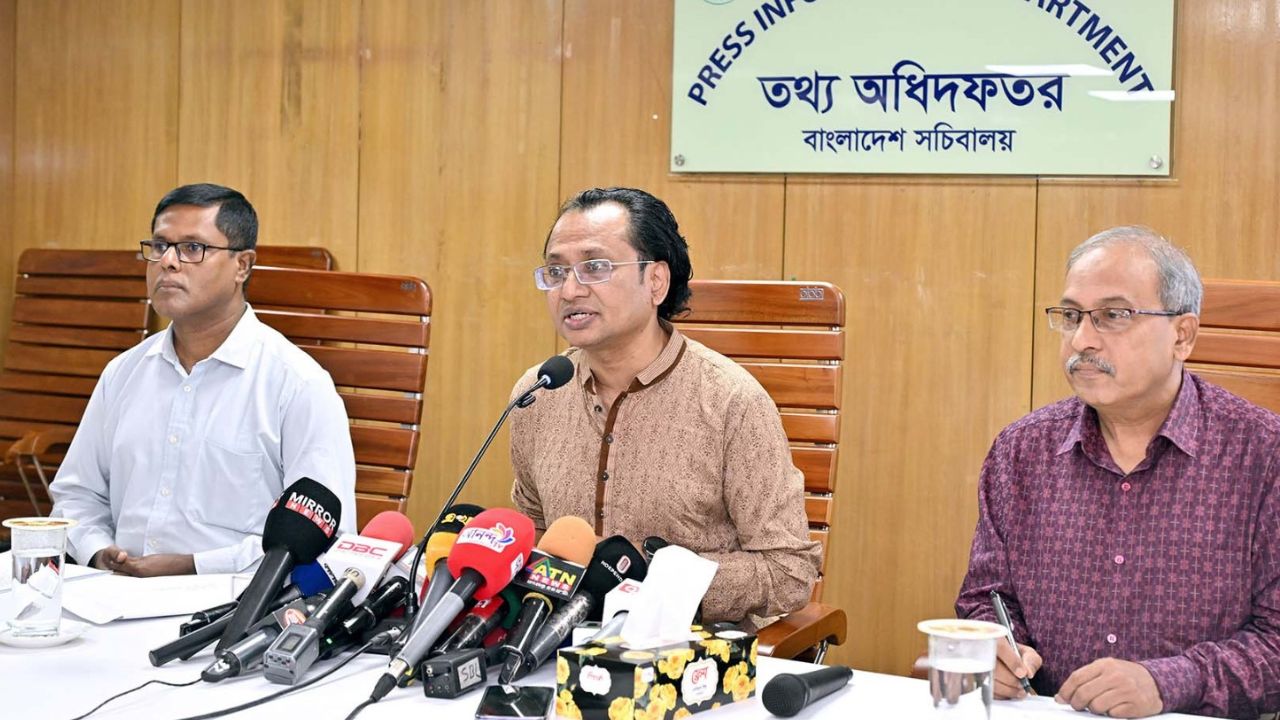



The ongoing countrywide electricity disruptions are part of an “equitable distribution of load-shedding,” Prime Minister’s Strategy and Information Adviser Zahed Ur Rahman said on Tuesday.
The practice under previous administrations was to ensure uninterrupted electricity for Dhaka residents by increasing load-shedding in rural areas.
“However, this government has decided to share the burden of the crisis, which is why load-shedding is now being seen in Dhaka just as it is in rural areas,” the adviser explained.
Speaking at a regular weekly briefing on government development and planning in Press Information Department (PID) conference room at the Secretariat, he observed that power cuts were historically less frequent in urban areas.

The adviser acknowledged that major cities must be supplied with more electricity, clarifying that this policy exists because larger cities host higher levels of economic activity.
Criticising the previous Awami League and interim governments, the adviser noted that during those periods, when claims of “uninterrupted electricity” were being made, the load-shedding burden was completely imposed on rural or remote regions.



He expressed hope of providing the media with detailed data next week on the actual extent of load-shedding and the exact megawatts cut during those times.
“We have shifted away from that practice. We hope the public will understand, and we expect that this will not remain a major problem,” he added.
Explaining the causes of the power deficit, the adviser pointed to fuel shortages, mechanical faults at power stations, maintenance requirements, transmission and grid limitations, and rapidly growing demand.
He stated that when a democratic government assumes responsibility, there is a natural tendency for public economic activity to surge. This growth has generated extra demand, which was comparatively much lower and saw no expansion efforts during the interim government’s tenure.
To keep rural load-shedding at a tolerable level and prevent prolonged power cuts in specific areas, a redistribution plan has been implemented following directives from the prime minister.
Under this scheme, necessary load-shedding is being co-ordinated across areas under Dhaka Power Distribution Company (DPDC) and Dhaka Electric Supply Company (DESCO) in the capital, with the saved electricity redirected to rural areas.
This measure has improved the power supply situation for key consumer categories, including industries outside Dhaka, whilst reducing the pressure of prolonged and frequent load-shedding in rural districts.
“We are in the midst of a crisis,” Zahed said, concluding that the public must share the temporary hardship. “We do not believe this suffering will persist for a long time.”