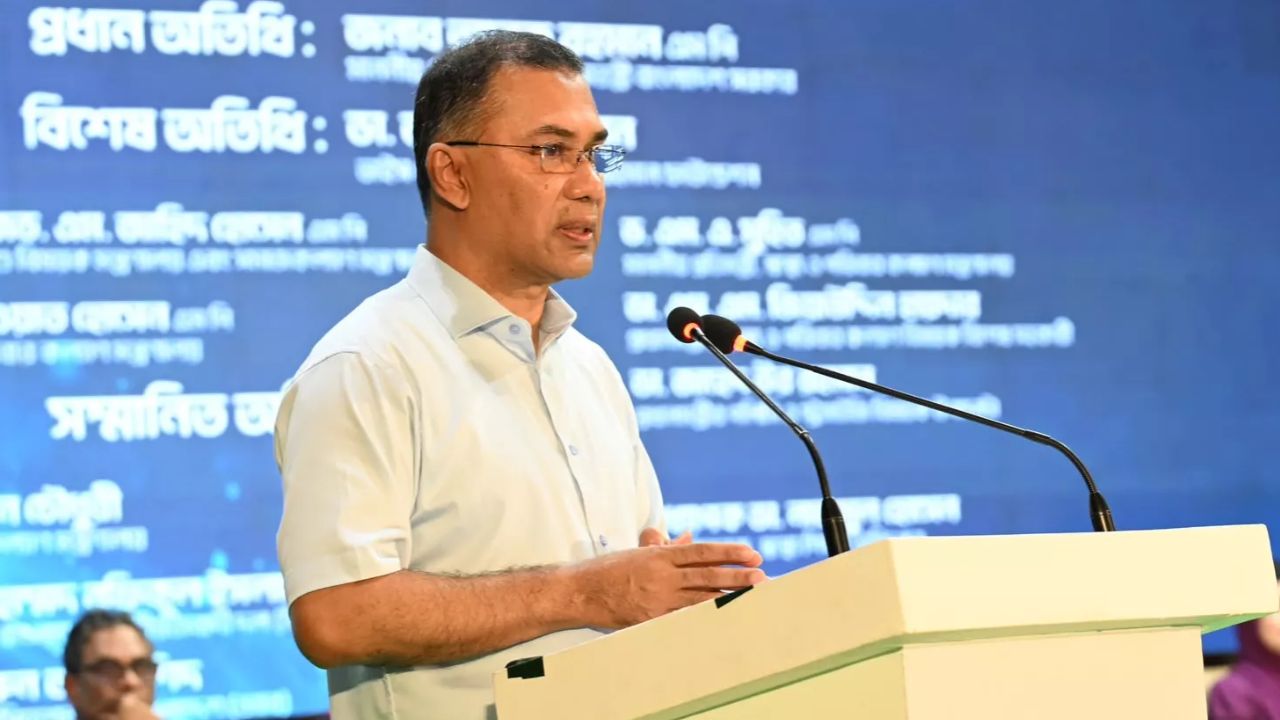

Prime Minister Tarique Rahman on Saturday urged doctors to strengthen public confidence in Bangladesh’s healthcare system through compassionate service, quality treatment and a humane approach, saying greater trust could help reduce the estimated $5 billion spent annually on medical treatment abroad.
Speaking at the inaugural programme of DMC Day-2026, organised to mark the 80th anniversary of Dhaka Medical College (DMC), the prime minister said thousands of Bangladeshis travel overseas every year for healthcare, resulting in a significant outflow of foreign currency.
“Every year, around US$5 billion flows out of the country as thousands of our people travel abroad for medical treatment. As a result, we also lose valuable foreign exchange,” he said.
Tarique said the trend could not be reversed through government policies or institutional reforms alone, stressing that doctors themselves have a key role in rebuilding patients’ confidence.
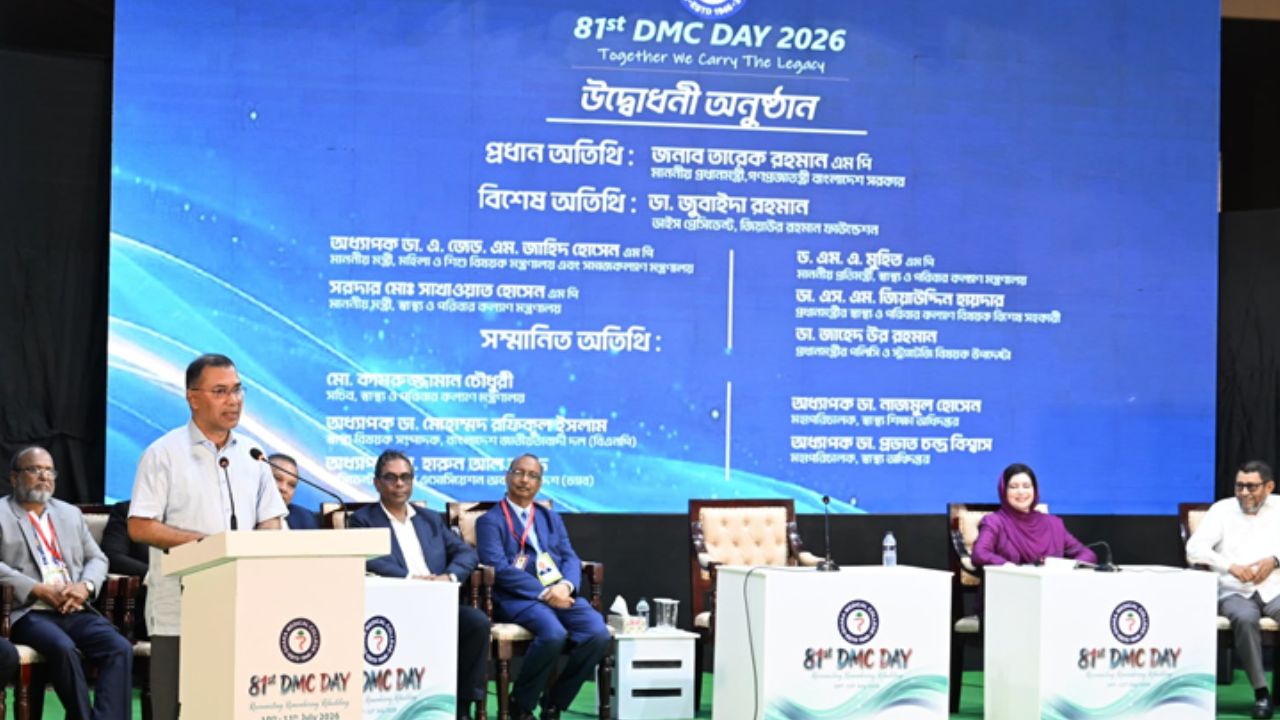
“As a political worker now entrusted with the responsibility of running the government, I expect both practising doctors and future physicians to help change this situation by strengthening people’s trust and confidence in our doctors and healthcare system,” he said.
Addressing doctors, medical teachers and students, he questioned why the country could not improve public confidence in local healthcare and said the solution lies in providing proper treatment with empathy and professionalism.

On the occasion of DMC’s anniversary, the prime minister called upon doctors, medical students and healthcare institutions across the country to work towards ensuring that people have full faith in Bangladesh’s medical services.
He said the government has allocated the highest-ever budget for the health sector in the current national budget and plans to increase healthcare spending to five percent of GDP within the next five years.
Tarique said the government has reduced taxes and duties on several essential medical equipment and materials, including dialysis filters, heart valves, pacemakers, oxygenators, peripheral vascular stents, radiofrequency ablation catheters, intraocular lenses and raw materials used in cancer medicine production.
These initiatives, he said, would help lower treatment costs and provide financial relief to families, as most healthcare expenses in Bangladesh are still paid directly by patients.



The prime minister also outlined plans to improve healthcare facilities outside major cities, saying 51-bed upazila hospitals would be upgraded into 101-bed facilities.
He noted that only five upazilas currently have 100-bed hospitals, despite more than 70 per cent of the country’s population living in rural areas.
Each upgraded upazila hospital will also receive solar power systems with battery storage to ensure uninterrupted electricity supply during surgeries and emergency services, he said.
The prime minister said the government has begun the process of recruiting 100,000 health workers to ensure people receive healthcare advice at an early stage.
He said 80 per cent of the new recruits would be female healthcare workers who would provide family-based preventive and primary healthcare services at people’s doorsteps.
Tarique Rahman said the government has also prioritised child healthcare and taken steps to quickly operationalise five children’s hospitals, including newly built 200-bed facilities in Barishal and Rajshahi.
He said the expansion of specialised paediatric services would reduce the concentration of advanced child healthcare facilities in Dhaka and make them accessible across different regions of the country.
Tarique stressed the importance of proper medical waste management and maintaining cleanliness in hospitals, urging doctors, students and healthcare workers to take responsibility rather than leaving the task only to cleaning staff.
Drawing an example from Japan, where football fans clean stadiums after matches, he called for a similar sense of civic responsibility in Bangladesh.
“A modern building alone is not enough; we must also ensure a clean and healthy environment,” he said.
The prime minister said the government has already taken steps to promote advanced medical research, modern technology and international-standard training, though significant improvements would require time.
He also recalled the dedicated services provided by doctors to his mother and former prime minister Khaleda Zia during her illness, saying such sincere care could not have been bought even with large amounts of money abroad.
Later, Tarique attended an interactive session titled “DMCians’ Thoughts on the Modernisation of Bangladesh’s Healthcare System” at the college auditorium, where he exchanged views with current and former students of DMC.
Responding to their concerns, he assured them that the issues raised would be addressed gradually and expressed hope that negative perceptions and reports about the healthcare sector would decline in the future.
Earlier, the prime minister inaugurated DMC Day-2026 by releasing balloons and pigeons on the college campus. He was accompanied by his wife Zubaida Rahman, a former student of the institution.
The couple later planted two saplings-an Arjun tree and a Neem tree-on the campus. They were also presented with paintings of Dhaka Medical College, while a documentary highlighting the institution’s history and contributions was screened at the programme.