
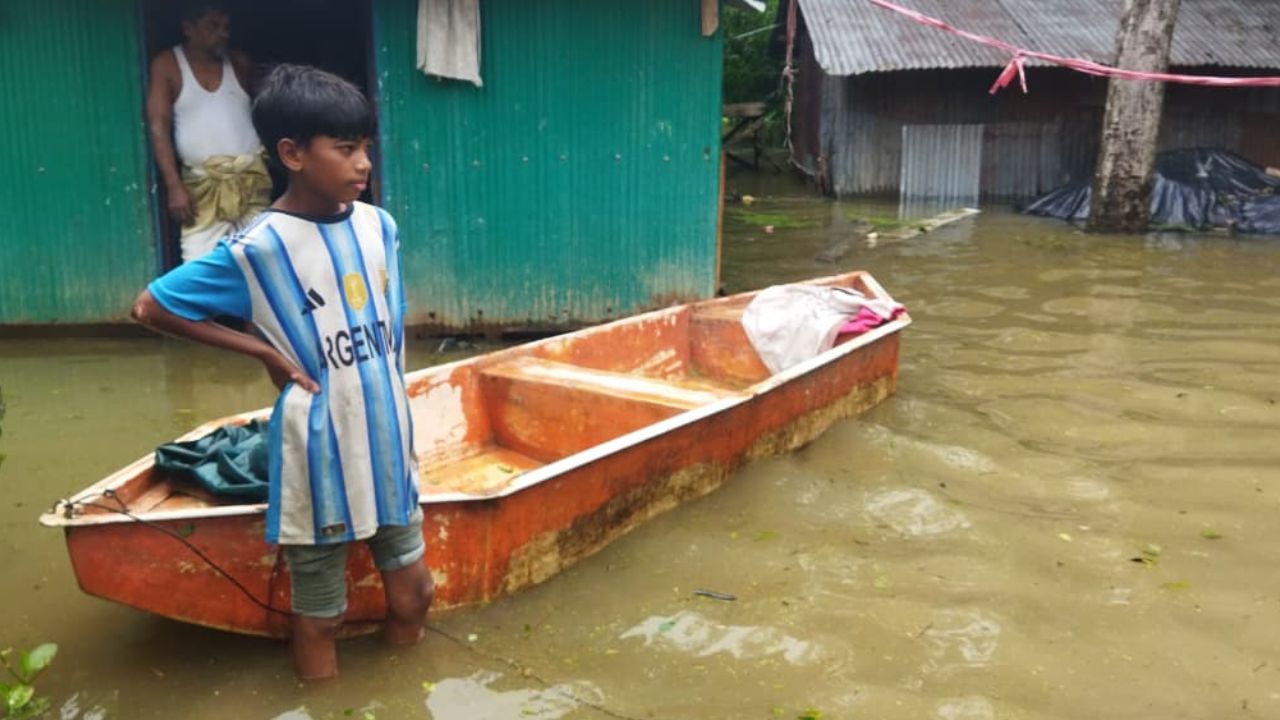



“In my 70 years, I have never seen so much water in my life,” laments Abdul Gafur, a veteran pharmacist from West Gunagari, Chattogram. For four days, he and his neighbours have lived in total darkness, prayings for even five minutes of electricity to break the isolation.
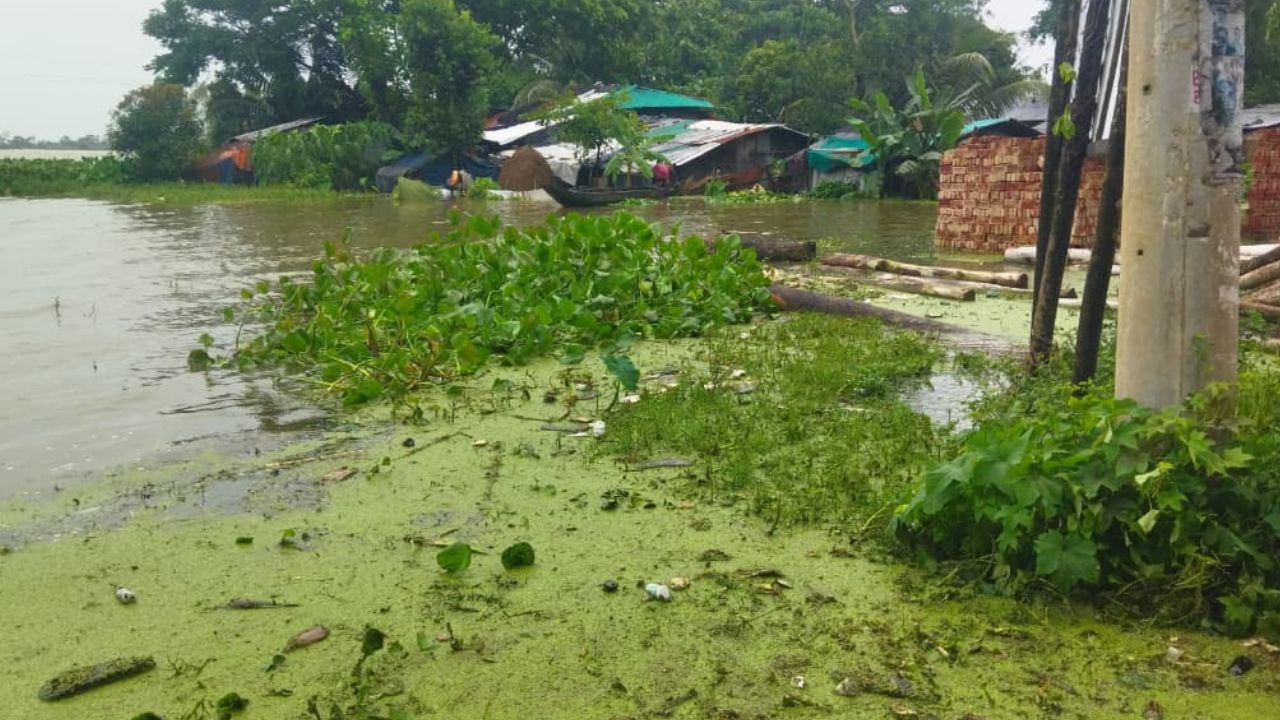
His heartbreak is the shared reality of thousands across Banshkhali, where a combination of relentless rain and flash floods has transformed villages into vast, stagnant lakes.
The scene across West Gunagari, Kalipur, and Baharchhara unions is nightmarish, with water reaching chest-height in some areas. Families have been forced to abandon their ancestral homes, seeking refuge in makeshift shelters or clinging to their last possessions atop tin roofs.

At a temporary shelter in front of Labu’s shop, the crisis takes on a particularly harrowing face. Sadia Sultana sits in a designated waiting area, her pregnancy nearing its term.
With every road submerged, the path to the hospital is severed, leaving her and everyone at the shelter in a state of suffocating anxiety as they wait for a delivery that may come before the waters recede.



The vulnerability of the youngest residents is equally dire. Kiran Bala Joldas struggles to protect her 20-day-old grandchild in a cramped space shared by eight family members. In these overcrowded conditions, there is no clean clothing or hygienic space for a newborn.
Nearby, Pompi Dash recounts a night of terror when her six-month-old child fell ill in the dark; the infant had to be sent to a distant hospital this morning, leaving her in a state of grief and uncertainty.
As the days pass, the struggle for survival intensifies. There is an acute shortage of pure drinking water and dry food, and the lack of milk for infants is making every hour more difficult for parents. The total absence of electricity has plunged the region into heavy darkness every night, amplifying the sense of catastrophe.
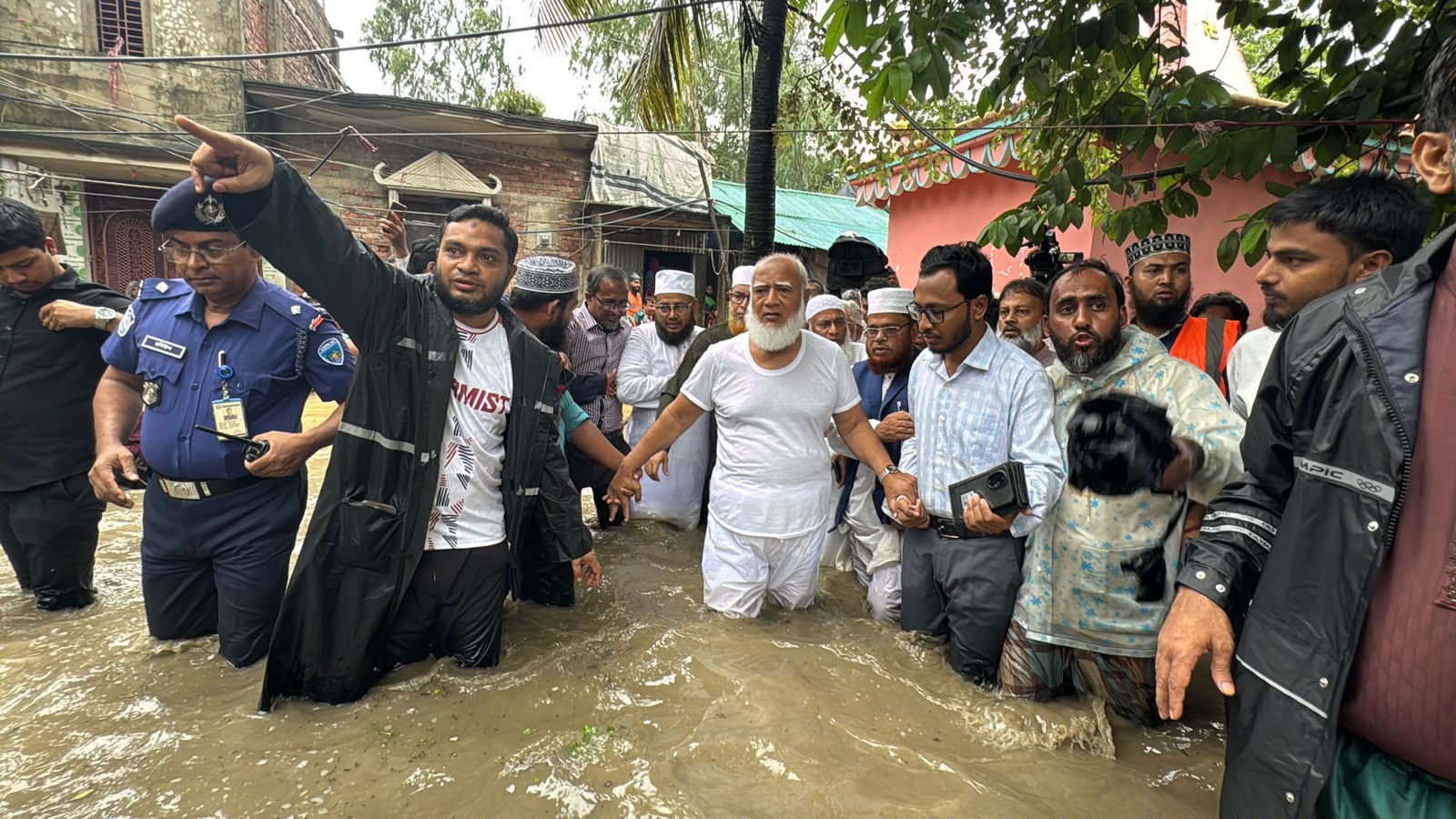
During this period of intense suffering, Jamaat-e-Islami Ameer Shafiqur Rahman visited the devastated areas. He spoke directly with the victims, listening to their accounts of displacement and the mounting challenges they face in the absence of necessities.
Though the rain has finally stopped, the water shows no signs of moving. Displaced residents continue to watch the horizon from their rooftops, but the persistently cloudy skies offer little comfort, suggesting that their wait to return home may be a long one. For the people of Banshkhali, the question remains: when will the water finally let them go?