In a three-storey building in Palashbari, Gaibandha, which houses a kindergarten, the hierarchy of value is laid bare in the ledger books. A teacher here earns just Tk4,500 a month, significantly less than the school’s three nannies, who take home Tk6,000 each. It is a bitter irony: the professionals tasked with shaping the cognitive foundations of the next generation are earning less than what an average middle-class family spends on a week’s groceries.
This is the reality for the educators in Bangladesh outside government support scheme. While the government-run primary sector receives the lion’s share of policy focus, the private sector, comprising over 50,000 kindergartens and thousands of madrasas, has become a gargantuan, unregulated engine of learning. It enrols nearly one crore children, yet it operates in a legislative void where “fair pay” is a foreign concept.
At secondary and higher levels, some educators get government support through the Monthly Pay Order (MPO) system. But private primary and kindergarten teachers remain completely outside this safety net. In many mofussil areas, salaries drop as low as Tk1,000 to Tk2,000.
The crisis is not limited to the rural periphery. In Dhaka’s crowded Mohammadpur, Bithi Akhter spends her days managing a whirlwind of student diaries, homework, and lessons from 8am to 2pm. Her monthly salary is Tk8,000.
“This situation persists because there is no government-fixed salary structure for private school teachers,” she says. It is a sentiment echoed across the country. In the mofussil (rural) heartlands, the floor falls out entirely; some teachers report earnings as low as Tk1,000 a month.
Why do they stay? For many, it is the “social capital” of the title ‘Teacher’– a position of respect in a society that prizes education. For others, it is the desperate hope of MPO inclusion, a government subsidy that provides a state-sanctioned salary to private teachers. But for the vast majority, the MPO remains a mirage.
In most cases, salaries depend entirely on student fees – admissions, monthly tuition and exam charges. In some institutions, even that income does not reach teachers.
Education experts warn the situation is untenable.

Professor Mohammad Moninoor Roshid of the Institute of Education and Research at Dhaka University described it as deeply troubling, stressing the need for a structured, sector-based salary system to ensure a dignified standard of living.
BRAC University’s Professor Emeritus Manzoor Ahmed told TIMES of Bangladesh, “The quality of education and teaching standards in private institutions, as well as faculty working conditions, require rigorous assessment. Current salary structures are both inadequate and arbitrary.”
“To address this, these institutions should be integrated into a comprehensive government legal and regulatory framework that includes a mandatory minimum wage,” he added.
Paid less than Tk1,000
At Rahimganj Pre-Cadet Madrasa in Phulpur, Mymensingh, salaries often exist only on paper. Teacher Md Billal Hossain said most are supposed to receive Tk2,000 monthly, but payments are irregular and frequently lower.
“Students are meant to pay at least Tk400, but many cannot, and some pay even less,” he said. “So, in some months we get Tk1,000, in others Tk1,500, if we are paid at all.”
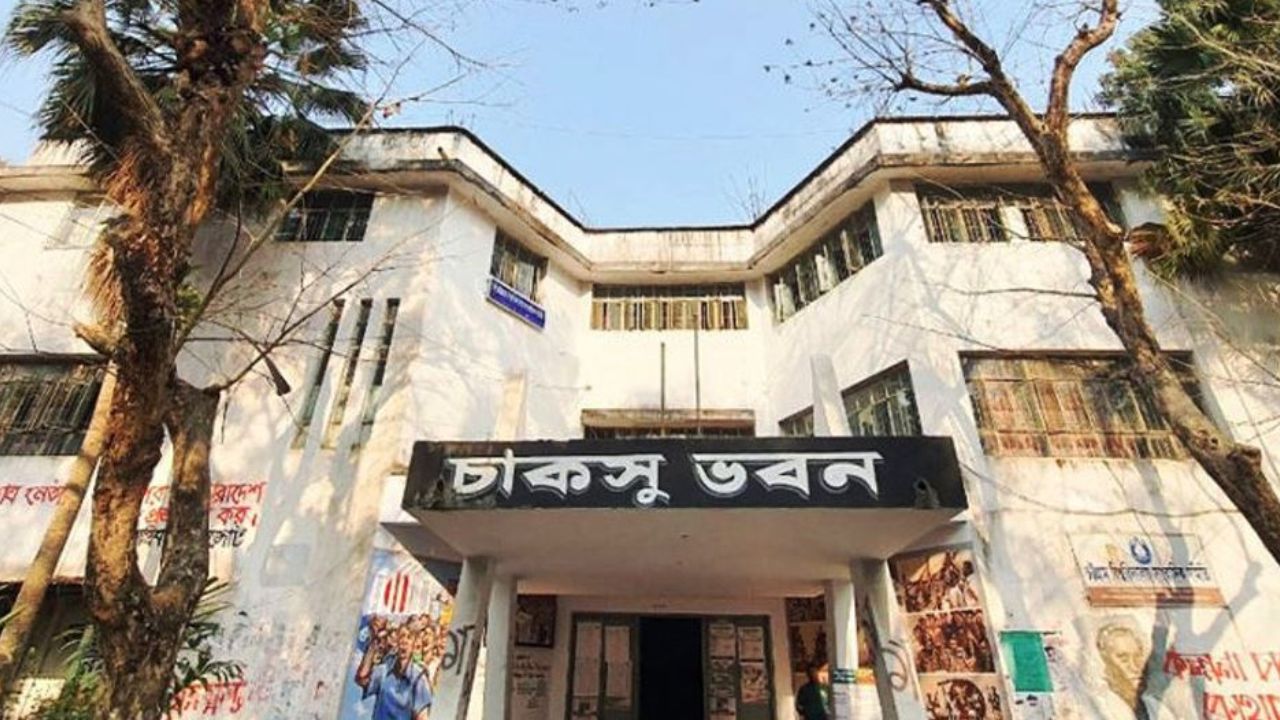

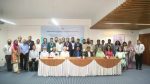
The six-year-old madrasa is still struggling financially, though he remains hopeful enrolment will improve the situation.
In Savar’s Shamlashi Bahar Char area, Md Ibrahim Hossain Sardar, headmaster of Active Pre-Cadet School and College, said new teachers start at Tk3,000, while some office staff earn between Tk4,500 and Tk5,000.
This pattern spans the country. More than 50,000 kindergartens and over 4,000 Ebtedayi madrasas employ at least 400,000 teachers under similar conditions. Beyond that, around 7,000 private institutions, including lower secondary schools, colleges, madrasas and technical centres, remain outside MPO coverage, employing more than one lakh teachers without structured pay.
At the primary level, kindergarten enrolment alone is close to one crore, with several more lakhs studying in Ebtedayi madrasas. At the lower secondary and higher secondary stages, students in institutions outside MPO coverage number no fewer than four lakh.
Yet the issue of a proper salary structure for those responsible for educating this vast population of children and adolescents is barely addressed.
Mizanur Rahman, member secretary of the Bangladesh Kindergarten Association, said the system is entirely income-driven. “Salaries depend on what the school earns. If income is low, salaries are low. There is no fixed structure.”
Asked whether they had sought MPO inclusion or government support, he replied, “No. The government has never raised it with us, and we have not pursued it either.”
Md Ibrahim Hussain Sardar, Dhaka district convener of the Bangladesh Kindergarten Society, said regulation must come first. “Most private schools are not even registered. The government could shut them down at any time. They need to be brought under registration first, then other issues can follow.”
Officials indicate no immediate policy shift. A senior official at the Ministry of Primary and Mass Education said there is currently no plan to address kindergarten curricula or teacher pay structures, as the focus remains on improving government primary schools.
Shahina Ferdousi, the newly appointed Director General of the Directorate of Primary Education, said, “I have only just taken charge. I need to understand the situation fully before commenting.” Her predecessor Abu Noor Md Shamsuzzaman declined to comment after leaving office.
A decade without salary
For nearly ten years, Alamgir Hossain Jewel is teaching sociology in the honours programme at Pirganj Mahila College in Rangpur without a regular salary or allowances.
“I earn a little from students’ exam fees, admission fees and form fill-ups,” he said. “Beyond that, I rely on farming. I rear cows and goats – that’s my main source of income.”
A secretary-level official at the Ministry of Education acknowledged the issue but pointed to complexities. “Alongside genuine teachers, there are also cases of so-called ‘ghost’ or part-time teachers whose primary profession lies elsewhere,” the official said.
“Some remain attached to private colleges mainly to secure recognition. However, efforts are underway to bring greater accountability through the Private Teachers Registration and Certification Authority.”
Living on tuition
Since 2015, Nandan Kumar Karmakar has been teaching higher secondary classes at Amlagachhi Dabiruddin Girls High School and College in Gaibandha. While the school section is under MPO, college teachers are not, leaving him without formal salary support.
“I have a family of six – my wife, two children, and my parents. We survive entirely on tuition income,” he said.
Though trained in political science, he completed a second master’s in English to meet demand for private tutoring. Many colleagues run small businesses or take other jobs to cope.
In rural areas, even tutoring offers limited relief. A kindergarten teacher in Kishoreganj Sadar spends afternoons teaching in five different homes, earning around Tk15,000 a month. At higher secondary level, some teachers earn slightly more through coaching, but most still struggle to exceed Tk10,000 despite working from morning to evening.
Attempts to get official responses on the issue yielded little. Abdul Khaleque, secretary of the Secondary and Higher Education Division, did not respond to calls or queries sent over 24 hours.
Education Minister ANM Ehsanul Haque Milon and State Minister for Primary and Mass Education Bobby Hajjaj were also unreachable, with texts, including those sent via WhatsApp, going unanswered.