The Japan International Cooperation Agency (Jica) has proposed a Tk47,000 crore upgrade for the Chattogram-Cox’s Bazar highway, making it the most expensive road development project to be implemented in Bangladesh.
According to the local office of the leading bilateral donor, the record expenditure stems from an ecofriendly design that prioritises the conservation of regional biodiversity.
Nearly 60 percent of the road will consist of elevated structures, or overpasses, to facilitate wildlife movement, namely the migration of endangered Asian elephants between the Chunati and Fasiakhali sanctuaries.
Jica submitted its report on a yearlong feasibility study in this regard on October 16, outlining a 65-kilometre expansion from Shah Amanat Bridge to Fasiakhali.
Zahid Hossain, superintendent engineer of the Roads and Highways Department (RHD) in Chattogram, said the report serves as an initial baseline for the highway’s expansion.
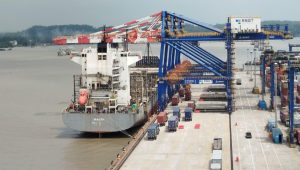
Furthermore, the expanded highway will be linked to the under-construction Matarbari Deep Sea Port through an ecologically sensitive biodiversity hotspot, namely the Fasiakhali Wildlife Sanctuary.

Hossain added that the RHD is reviewing Jica’s study and may draft an alternative proposal to better balance the project costs, connectivity and conservation priorities.
RHD sources said about eight kilometres on each end of the existing 146-kilometre-long Chattogram-Cox’s Bazar highway has already been upgraded to four lanes.
Besides, another project to build 23 kilometres of bypasses at Patiya, Dohazari, Lohagara, and Chakaria, along with an overpass at Keranihat will soon begin. They also informed that a 50-kilometre section from Fasiakhali to Cox’s Bazar has been excluded from Jica’s proposal.




Under Jica’s plan, the estimated cost of civil work alone is Tk21,000 crore, while roughly 25 percent of the total budget is allocated for infiltration control, land acquisition and consultancy.
Of the civil cost, Tk9,000 crore is dedicated to a 10-kilometre elevated corridor between Chunati and Fasiakhali.
To put the numbers in context, the Dhaka–Bhanga Expressway – one of the country’s most advanced highways – cost around Tk201 crore per kilometre, while the proposed Cox’s Bazar-Matarbari Road is expected to cost Tk476 crore per kilometre.
Even Bangladesh’s most expensive infrastructure projects pale in comparison to Jica’s proposed Tk723 crore per kilometre cost for this 65-kilometre stretch.
Hossain praised the world-class, conservation-driven design of the project, but admitted that the expense is “extremely difficult” for the country to bear.
At present, the Chattogram-Cox’s Bazar highway faces chronic congestion and severe safety risks due to its narrow two-lane design, with several sections already over capacity. It is also among the nation’s deadliest roads in terms of vehicle collisions.
With freight traffic expected to surge once Matarbari port becomes operational, a high-speed, four-lane upgrade has become essential to prevent economic bottlenecks and ensure seamless cargo movement between Chattogram, Dhaka, and the deep-sea port.
No compromise on biodiversity
The proposed alignment passes through some of the country’s most critical protected forest and flash flood affected areas, which is home to the endangered Asian elephant and other wildlife species.
For years, the Forest Department has resisted any project that fragments these ecological corridors. The Jica study’s elevated-road proposal directly addresses those concerns, avoiding the mistakes of past infrastructure developments that caused severe habitat disruption.
“The only acceptable solution for the project’s most sensitive segments is elevated roads that allow wildlife to move freely underneath,” said Noor Jahan, wildlife and biodiversity conservation officer of the Forest Department.
“We have seen the devastating impact of unplanned roads and railways on elephant migration routes, leading to tragic loss of life. The 60 percent overpass design is the minimum requirement to safeguard this biodiversity,” he added. “While we understand the cost issue, we cannot afford to lose our natural assets.”
The proposed overpasses would also help maintain the natural water flow and ecological balance of the forest floor, benefiting smaller species and hydrological systems.
The Forest Department has held multiple meetings with RHD and Jica officials, proposing a 10-kilometre continuous overpass from Chunati to Fasiakhali – an area frequently traversed by elephants and other wildlife.