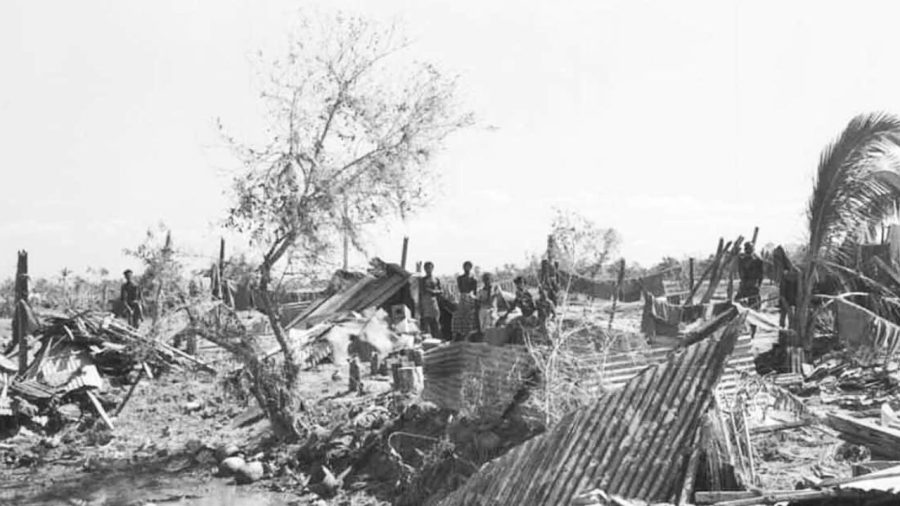



The catastrophic 1970 Bhola cyclone, which devastated Bangladesh’s southern coast on 12 November, marks its 56th anniversary.
However, despite 56 years passing since the tragedy that claimed an estimated five lakh lives, the longstanding demand to officially recognise 12 November as “National Coastal Day” is yet to receive state approval.
The deadliest tropical cyclone in recorded history began forming in the Bay of Bengal on 8 November 1970 before striking coastal regions on 12 November with fierce winds reaching approximately 185 kilometres per hour and tidal surges rising 15 to 25 feet high.
Within moments, vast swathes of the southern coastal belt- including Bhola, Noakhali, Patuakhali, Barguna, and Chattogram were turned into ruins. As night fell, torrential rain, roaring winds, and massive tidal surges submerged village after village while helpless residents searched desperately for shelter.
According to official and international estimates, nearly five lakh (500,000) people lost their lives in the disaster, while unofficial accounts claim the death toll was even higher. The island district of Bhola suffered the most extreme casualties, particularly in the then Tazumuddin area where the extent of human loss was unprecedented.

Coastal localities including Ramgati, Hatiya, and Sandwip in Noakhali, alongside extensive areas of Patuakhali, were reduced to rubble. Countless homes and villages were completely wiped out, livestock washed away, and agricultural lands destroyed.
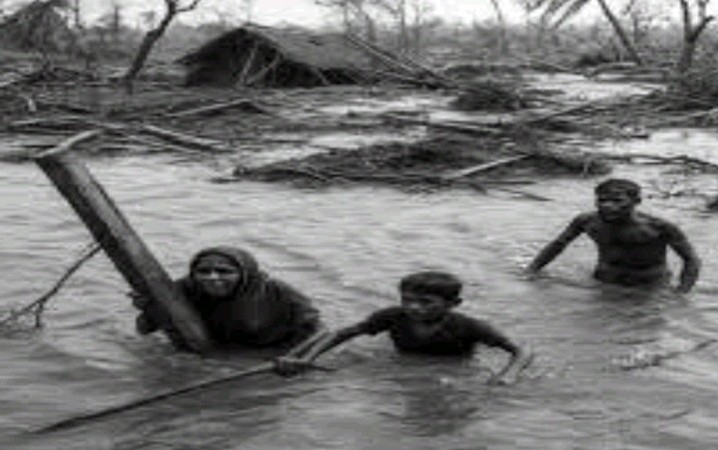
Lifeless bodies were scattered across coastal waterways including the Meghna, Tetulia, and Kalabadar rivers, leaving thousands of surviving families destitute.
The World Meteorological Organization (WMO) formally recognises the 1970 Bhola cyclone as the deadliest tropical cyclone in world history.




Renowned artist Shilpacharya Zainul Abedin captured the horror of the devastation in his historic 28-foot-long artwork titled ‘Manpura 70’. For surviving eyewitnesses and bereaved families, the harrowing memories of searching for relatives’ bodies and facing lost homesteads remain deeply painful memories.
A cyclone that fuelled the independence movement
Beyond its devastating human and physical toll, the 1970 cyclone exerted a profound influence on the political and social history of then East Pakistan.
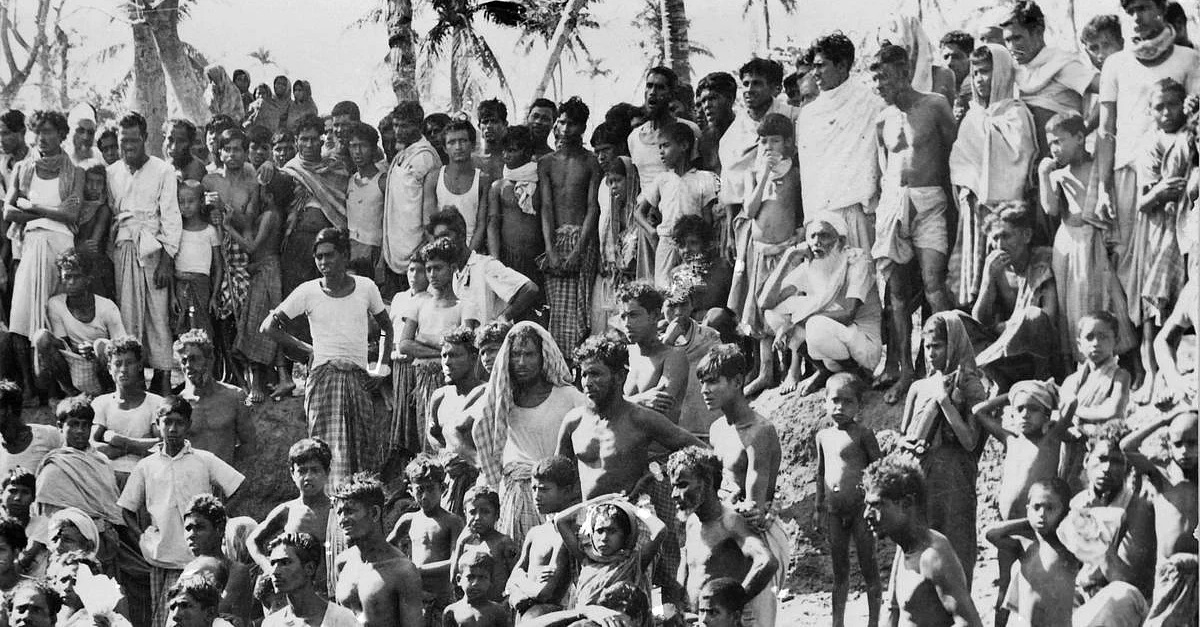
Widespread public discontent erupted over the central Pakistan government’s severe negligence, inadequacy, and failure regarding relief and rescue operations. Political analysts note that this intense public anger served as a critical catalyst accelerating the subsequent movement for Bangladesh’s independence.
Demand for ‘National Coastal Day’
To commemorate the victims, establish the rights of coastal residents, and highlight coastal issues and potential at the national level, 12 November has been observed privately as “Coastal Day” since 2015.
The movement was launched by journalist Rafiqul Islam Montu through the establishment of the Coastal Foundation. Organisations such as Upakul Bangladesh, the Coastal Journalist Forum of Bangladesh, and Alokjatra Dal, alongside numerous local and national bodies, regularly observe the day through various programmes across coastal districts.

However, after 11 years of private observance, state recognition remains elusive.
In 2020, the then state minister for Disaster Management and Relief, Dr Md Enamur Rahman, assured that a proposal to declare 12 November as “Coastal Day” would be presented before the Cabinet, but no visible progress has been made since.
Organisers and residents emphasise that Coastal Day is not merely a day of mourning, but a crucial platform to demand safety, livelihood protection, rights, and fair development for coastal communities.
Official recognition would bring coastal vulnerabilities and potential to national policy-making levels, raise disaster awareness, and educate new generations about the 1970 tragedy.
Asserting that the coastal region is vital to Bangladesh’s economy, environment, and national existence, coastal residents maintain their call for 12 November to be declared National Coastal Day as a national obligation.