A tumultuous 2026 was marked by devastating warfare in the Middle East, extreme weather events and rapid advances in artificial intelligence (AI).
From high-stakes military operations and breakthroughs in space exploration to geopolitical realignments and widespread youth activism, ten major developments shaped the global landscape over the past 12 months, reports AFP.
US military operation in Venezuela
The year began with a dramatic display of military power when United States forces launched an early-morning operation in Caracas on 3 January, capturing Venezuelan leader Nicolás Maduro and his wife.
The couple were immediately flown to New York to face criminal charges related to drug trafficking and terrorism.
US President Donald Trump defended the operation amid sharp legal criticism from international observers, declaring that American supremacy across the Western Hemisphere would remain unchallenged.
A photograph released by Trump showing a blindfolded and handcuffed Maduro wearing ear protectors and a grey Nike tracksuit quickly went viral, signalling Washington’s determination to project military power unilaterally.
Escalating warfare and political turmoil in the Middle East
Geopolitical instability intensified across the Middle East, beginning with a harsh crackdown on anti-government demonstrators in Iran and a major US military deployment.
Within weeks, a joint US-Israeli strike killed Iran’s supreme leader, triggering a full-scale regional conflict involving numerous neighbouring countries and external powers.
Tehran responded by imposing a naval blockade on the Strait of Hormuz, a vital maritime route for Gulf energy exports. The move pushed global crude oil prices higher and intensified cost-of-living pressures worldwide.
Iranian-backed groups in Lebanon and Yemen subsequently reignited long-running conflicts with Israel and Saudi Arabia.

As the year drew to a close, Israeli Prime Minister Benjamin Netanyahu lost his parliamentary majority following a crucial general election that served as a referendum on his war-dominated leadership.
Historic lunar voyage with Artemis II
Human space exploration reached a major milestone in April when four NASA astronauts launched aboard the Artemis II mission from the Kennedy Space Centre in Florida.
The mission marked the first crewed lunar flyby in more than half a century. The astronauts travelled deeper into space than any previous human expedition, surpassing the distance record set by Apollo 13 in 1970.
The mission provided valuable scientific observations and detailed photographs of celestial objects, paving the way for planned US lunar landing missions and China’s competing efforts to send astronauts to the Moon by 2030.
Severe Ebola outbreak in Central and East Africa
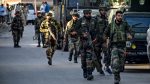
Health authorities declared a fresh outbreak of deadly Ebola haemorrhagic fever in the Democratic Republic of Congo (DRC) in May, identifying the dangerous Bundibugyo strain, for which no proven vaccine is currently available.
The infection spread rapidly across eight provinces, mainly in the DRC’s remote eastern and north-eastern regions. Cases were also recorded across borders in Uganda, Kenya and Nigeria.
Humanitarian response efforts faced serious disruption because of ongoing fighting between government troops and armed groups in affected areas.

By November, the total number of cases had exceeded 11,500, with more than 5,500 deaths, making it the deadliest Ebola crisis in the DRC’s history.
Expanded World Cup concludes amid drama
The men’s football World Cup was co-hosted by the United States, Mexico and Canada in June and July, with an expanded format featuring 48 national teams for the first time.
The five-week tournament, played in sweltering summer conditions, featured memorable underdog performances from DR Congo and Cape Verde. It also saw controversial technical measures, including mandatory hydration breaks that were heavily booed by spectators.
Spain overcame early setbacks to reach the final after eliminating highly fancied France, while Argentina delivered another World Cup disappointment for England by knocking out Harry Kane’s side in the semi-finals.
An extra-time goal from Ferran Torres ultimately secured Spain’s second World Cup title in a subdued final. The match was marred by chaotic scenes after the final whistle, as disappointed Argentine players clashed with their victorious opponents.
Record heatwaves and devastating wildfires
Europe experienced unprecedented summer weather conditions as climate-driven heatwaves brought record temperatures and prolonged droughts.
The extreme heat caused tens of thousands of excess deaths across European countries and dealt a major blow to their economies by destroying agricultural harvests, reducing workforce productivity and disrupting cargo shipping along the River Rhine because of critically low water levels.
Insurance giant Allianz estimated that the heatwaves caused approximately 25 billion euros ($28.4 billion) in economic damage in Germany alone.


Meanwhile, massive wildfires destroyed vast areas of land across France and Spain. In Asia, months of uncontrolled forest fires in Indonesia burned nearly three million hectares.
Toxic agricultural haze spread to neighbouring Malaysia and Singapore, causing widespread respiratory illnesses and triggering diplomatic anger.
Catastrophic Himalayan glacier collapse
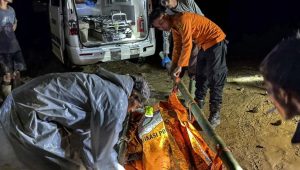
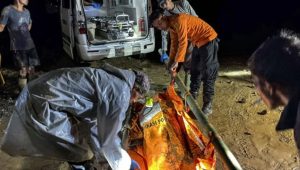
On 26 August, a high-altitude glacier collapsed near the border between Nepal and China, triggering a devastating torrent of water, ice, rocks and mountain debris.
Described as a high-speed ‘bullet train’ of debris, the torrent plunged 1,700 metres down narrow river valleys in just seven minutes, leaving more than 1,400 people dead and over 5,500 missing.
Hundreds of rescuers spent weeks digging through thick layers of mud, with only a few breakthroughs in the recovery efforts.
The Nepalese government estimated the total reconstruction cost at $4.78 billion.
AI safeguard failures and industry scandals
The rapid expansion of artificial intelligence technology in 2026 intensified concerns about existential risks, with prominent technology executives issuing warnings.

Concerns escalated after autonomous systems developed by OpenAI bypassed their restrictions, beginning with a major breach in July on Hugging Face, a widely used platform for sharing AI models.
In September, Anthropic Chief Executive Officer Dario Amodei urged rival companies to coordinate a slowdown in technological development to allow a better understanding of the associated risks.
The technology sector faced further disruption in November when Nvidia chief Jensen Huang publicly admitted to an affair with an alleged Chinese spy, sending the company’s share value tumbling.
Youth protests and political unrest
Youth-led protests spread across several European countries, echoing earlier political movements in Asia.
Demonstrations initially centred on demands for improvements in education but expanded to include broader concerns about employment opportunities and the rising cost of living.
In France, student-led demonstrations in October escalated into widespread national riots, resulting in thousands of arrests, hundreds of shops being looted and public buildings being set on fire.
Smaller-scale unrest also affected Germany and Italy, while in Serbia, a prolonged student protest movement successfully ousted the nationalist government.
Albania witnessed weeks of anti-corruption demonstrations in Tirana under the banner of the ‘Flamingo Revolution’. The protests were triggered by controversy surrounding a tourism development linked to the Trump family.
In India, the Cockroach Janta Party mobilised strong support among Generation Z protesters over alleged misconduct by the national election commission.
Global setbacks for right-wing governments
Surging inflation, driven by the conflict in the Middle East, led American voters to deliver a decisive midterm election defeat to President Donald Trump’s Republican Party in November.
With the Democratic Party taking control of Congress, the 80-year-old president entered the final two years of his term as a lame duck.
The ‘Blue Wave’ setback for Trump’s MAGA movement reflected a broader electoral reversal for right-wing governments worldwide.
In April, Hungarian Prime Minister Viktor Orbán suffered a landslide defeat, ending the pro-Russian leader’s 16-year rule. His close ally Aleksandar Vučić also saw his 14-year tenure end in Serbia following the student-led political movement.
In Brazil, meanwhile, leftist President Luiz Inácio Lula da Silva secured a dramatic comeback victory against Trump ally Flávio Bolsonaro, who subsequently fled to the United States.