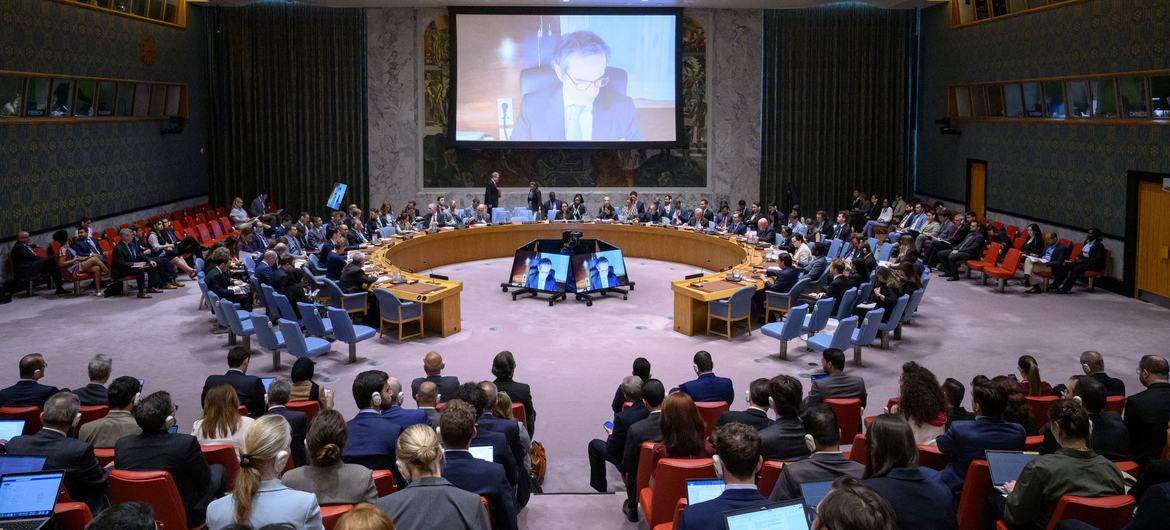



Bangladesh has adopted a cautious and neutral position regarding a draft resolution submitted by Bahrain at the United Nations Security Council (UNSC) concerning recent missile and unmanned aerial vehicle attacks carried out by Iran against Gulf states.
Diplomatic sources in Dhaka and New York said Bangladesh has shown little interest in co-sponsoring the proposed resolution, which was circulated on March 10. While the UNSC consists of 15 members, non-member states are also allowed to co-sponsor draft resolutions. However, Dhaka has so far refrained from joining the list of co-sponsors.
What the draft resolution says
The draft resolution was introduced by Bahrain, currently a non-permanent member of the UNSC. The text remains open for co-sponsorship by other UN member states.
The resolution reaffirms the inherent right of individual or collective self-defence in response to what it describes as armed attacks by Iran. It also condemns the targeting of civilian areas and infrastructure, including airports, energy facilities, food production and distribution systems, and other critical installations.

The proposed resolution expresses strong support for the sovereignty and territorial integrity of Bahrain, Kuwait, Oman, Qatar, Saudi Arabia, the United Arab Emirates and Jordan.
It further condemns what it describes as “egregious attacks” by Iran against the territories of these states, characterising them as violations of international law and a threat to regional and international peace and security.



The draft also calls on Iran to immediately cease all attacks and provocations, comply with international humanitarian law — particularly in protecting civilians and civilian infrastructure — and refrain from actions that could disrupt navigation through strategic waterways such as the Strait of Hormuz and Bab al-Mandab.
Dhaka’s balanced approach
Diplomatic observers say Bangladesh traditionally adopts a cautious approach toward country-specific resolutions at the United Nations, particularly those related to ongoing geopolitical conflicts.
According to analysts, Dhaka often prefers to avoid taking positions that could be interpreted as siding with one party in a complex international dispute.
Former foreign secretary Shahidul Haque said Bangladesh’s approach is consistent with its broader foreign policy principles.
“My understanding is that, after considering all relevant factors, the government has chosen to maintain a balanced and pragmatic position rather than becoming directly associated with such a resolution,” he said.
Observers note that Bangladesh has historically emphasised dialogue, respect for sovereignty and peaceful resolution of disputes in its diplomatic positions at international forums.
Maintaining neutrality in contentious resolutions, they say, allows Dhaka to preserve constructive relations with different partners while upholding its longstanding policy of balanced diplomacy.