


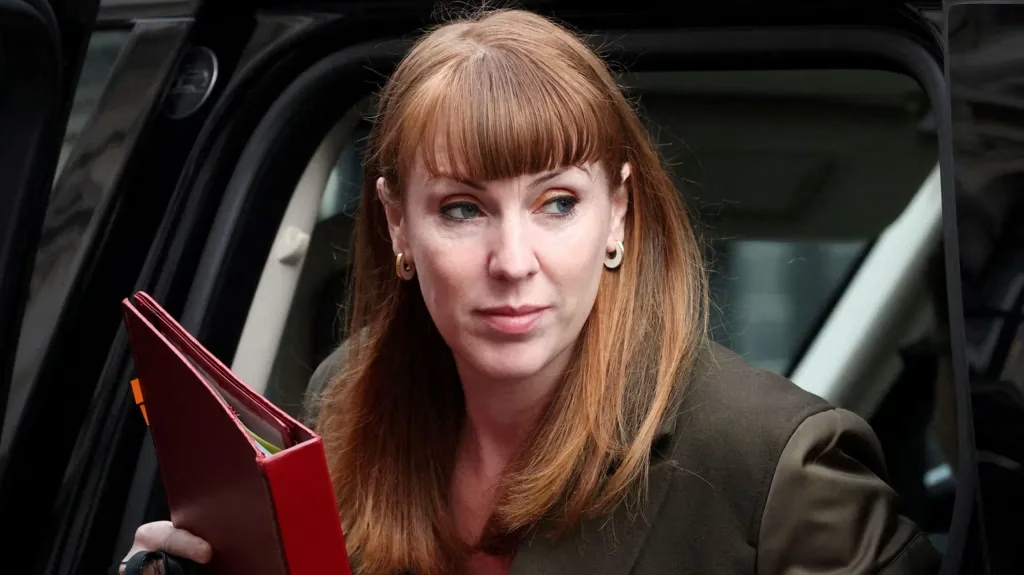
British Deputy Prime Minister Angela Rayner resigned on Friday after acknowledging that she had underpaid property tax on a new home, delivering a significant blow to Prime Minister Keir Starmer.
At 45, Rayner is the eighth and highest-ranking ministerial departure from Starmer’s team, marking one of the most damaging exits. Starmer had initially shown his full support when Rayner was first accused of attempting to avoid paying the correct tax rate.
“I deeply regret not seeking further specialist tax advice… I take full responsibility for this mistake,” Rayner stated in her resignation letter to Starmer.
Starmer expressed sadness over her departure but agreed that it was the right decision, reports Reuters.
With Labour currently trailing the populist Reform UK in the polls, Starmer faces yet another challenge in trying to restore his authority and the party’s image. Previously, critics have accused him of hypocrisy for accepting expensive gifts, such as clothing and concert tickets, from donors.
The loss of Rayner is particularly damaging. Rayner, who overcame her working-class background to reach one of the highest political positions in Britain, had played a crucial role in bridging the divide between Labour’s left-wing and centrist factions. She had broader appeal than Starmer, which made her a key figure within the party.
Rayner had long been considered a potential successor to Starmer. However, after admitting her mistake regarding the tax payment, she referred herself to the independent adviser on ministerial standards on Wednesday.
In an emotional interview, Rayner spoke about setting up a trust for one of her sons, who has lifelong disabilities due to an injury.
The trust had been used to sell her share of the family home in northern England, funding an apartment in Hove, southern England, under the belief that she would be exempt from the higher tax rate on second homes.
After seeking legal advice, she realised her mistake and took steps to rectify the tax error.
Rayner’s departure, alongside eight other ministerial resignations (five of which were due to wrongdoing), means Starmer has faced the highest number of ministerial resignations at the start of his tenure since at least 1979, outside of government reshuffles.
Starmer’s leadership has been more tumultuous than that of Boris Johnson, whose government was embroiled in scandals over COVID lockdown parties.
This comes at a time when Starmer is preparing for a challenging end to the year, with a government budget expected to include tax hikes. Additionally, the growing threat from Nigel Farage’s Reform UK adds to the pressure.
Upon returning from a summer break on Monday, Starmer had hoped that a reshuffle within his team would demonstrate his readiness to tackle the remainder of the year with renewed vigour, especially in economic matters.
However, the allegations against Rayner and Farage’s claims of censorship quickly overshadowed his plans.