



Ferran Torres struck deep into extra time to hand Spain their second World Cup title on Monday, breaking down a ten-man Argentina side that had held firm for well over 100 minutes at MetLife Stadium, in a final that ended in ugly scenes as tempers boiled over at the whistle.
Kickoff came six minutes later than scheduled. Spain lined up in a 4-2-3-1, with Unai Simon in goal behind Pedro Porro, Pau Cubarsi, Aymeric Laporte and Marc Cucurella, Fabian Ruiz and Rodri anchoring midfield, and Lamine Yamal, Dani Olmo and Alex Baena supporting Mikel Oyarzabal. Argentina set up in a 4-4-2, with Emiliano Martinez behind Nahuel Montiel, Cristian Romero, Lisandro Martinez and Nicolas Tagliafico, Rodrigo De Paul, Enzo Fernandez, Alexis Mac Allister and Nico Gonzalez in midfield, and Lionel Messi partnering Julian Alvarez.

Spain dominated the opening exchanges, Olmo releasing Yamal inside five minutes, only for Emiliano Martinez to block well, while Argentina’s best moment of the half came when Unai Simon raced 40 yards off his line to deny a breaking Messi. Spain held around 64 percent of possession through the first 45 minutes, though clear chances remained scarce, just three shots came in the entire half, the fewest in a World Cup final on record since 1966, and all of them Spain’s. Lisandro Martinez was booked for a reckless challenge on Oyarzabal in the 41st minute before being withdrawn through injury three minutes later, replaced by Nicolas Otamendi. The sides went in level at the break, before a half time show featuring Madonna, Shakira, Justin Bieber and BTS delayed the restart by 27 minutes, the longest interval in World Cup history.

Spain continued to press after the interval, with Leandro Paredes introduced to shore up Argentina’s midfield. Torres and Pedri came on just past the hour mark, Torres soon denied by a strong save before missing a free header from a Yamal cross. Argentina’s problems deepened further, with Romero forced off injured and all five substitutions used inside 72 minutes without registering a single shot on goal, becoming only the third side in tournament history, after two separate Costa Rica sides, to fail to attempt a shot in normal time of a World Cup match.
The match turned in stoppage time. Fernandez, already booked for dissent, caught Cubarsi late and in full flight, earning a second yellow card and a straight red in the 90th plus third minute, becoming the sixth player sent off in a World Cup final and the third Argentine, following Pedro Monzon and Gustavo Dezotti in 1990. Argentina held out for the remainder of normal time with ten men, Yamal’s resulting free kick well saved by Emiliano Martinez, before referee Slavko Vincic brought the goalless 90 minutes to a close. Spain finished normal time with 12 attempts on goal to Argentina’s none.
Extra time initially offered little change. Nico Williams thought he had given Spain the lead early in the first period, only for the goal to be ruled out after Mikel Merino was adjudged to have fouled Otamendi in the build-up, a decision former England striker Alan Shearer criticised as harsh on BBC commentary. Emiliano Martinez produced a string of saves to keep the score level, eventually finishing with 11 in total, the most by any goalkeeper on record in a World Cup final.
Spain finally broke through six minutes into the second period. A looping cross from Porro was headed back across goal by Williams, and Torres arrived to fire home left footed for his first goal of the tournament, becoming only the second substitute to score a World Cup final winner, after Germany’s Mario Gotze against Argentina in 2014. Torres had a second effort ruled out for a marginal offside soon after, before Giuliano Simeone blazed over Argentina’s best chance of extra time from a half cleared corner, their first attempt on goal since Messi’s 117th minute effort had cannoned into Merino.
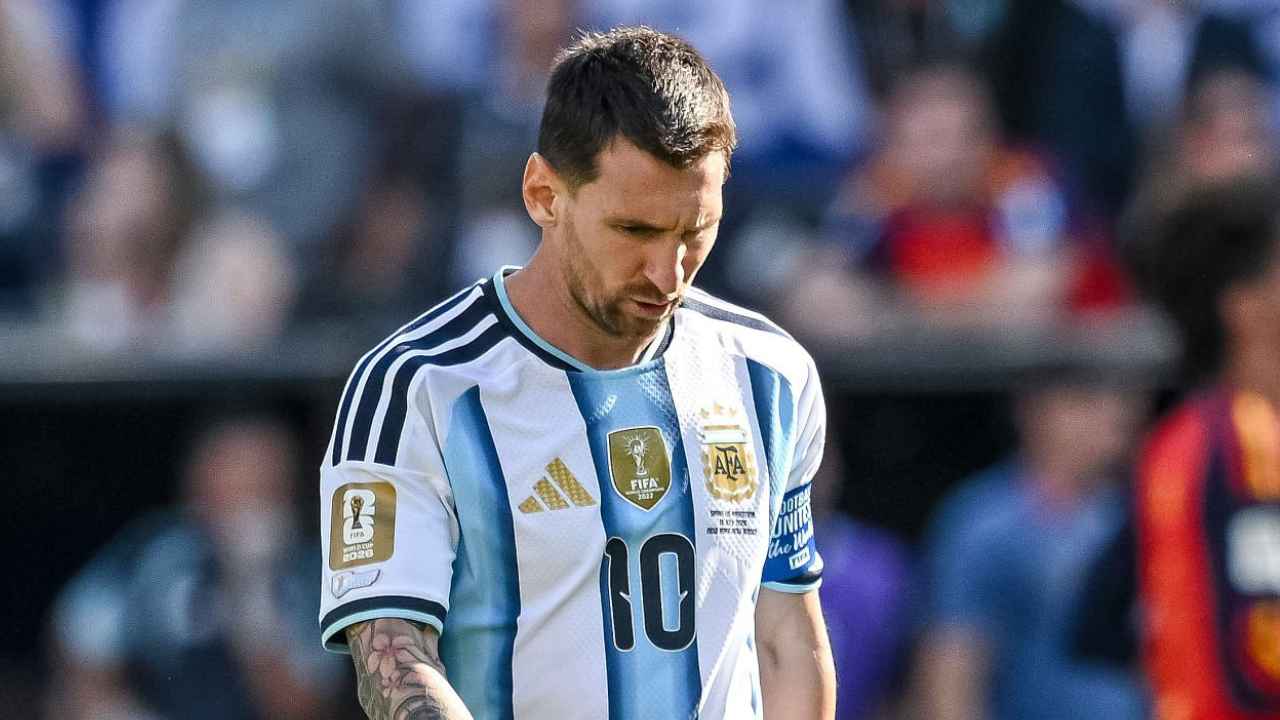
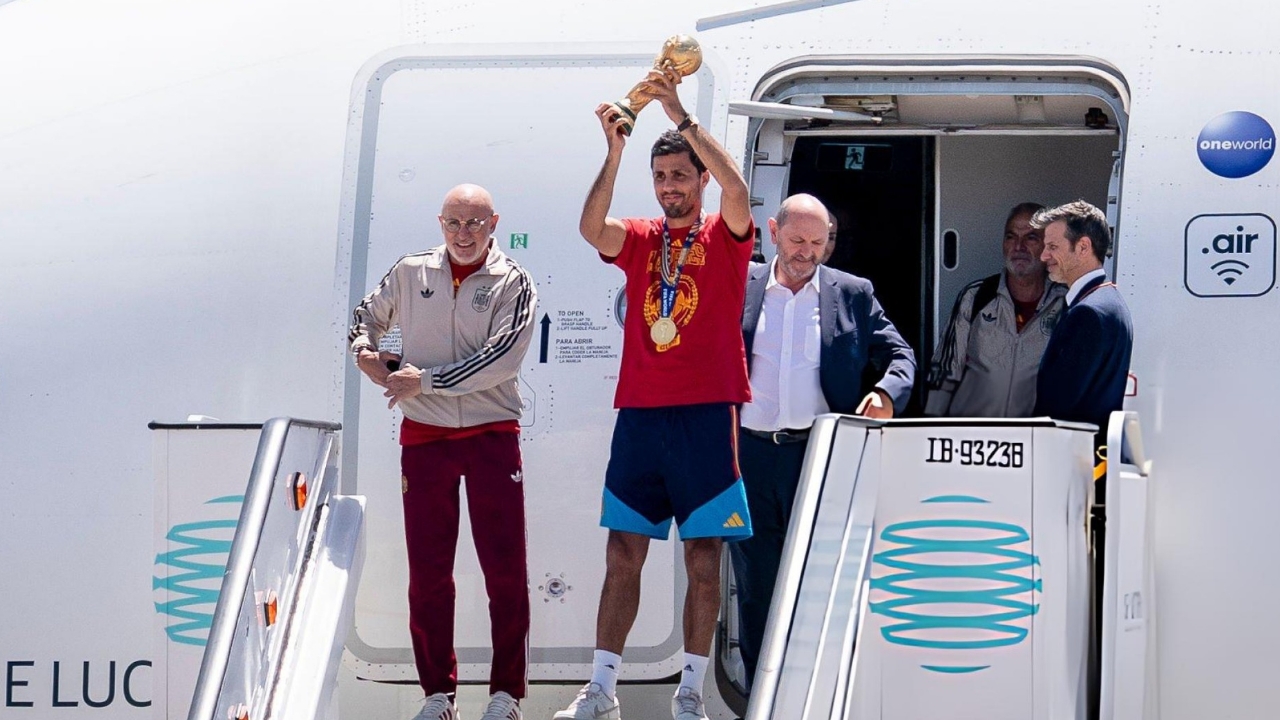
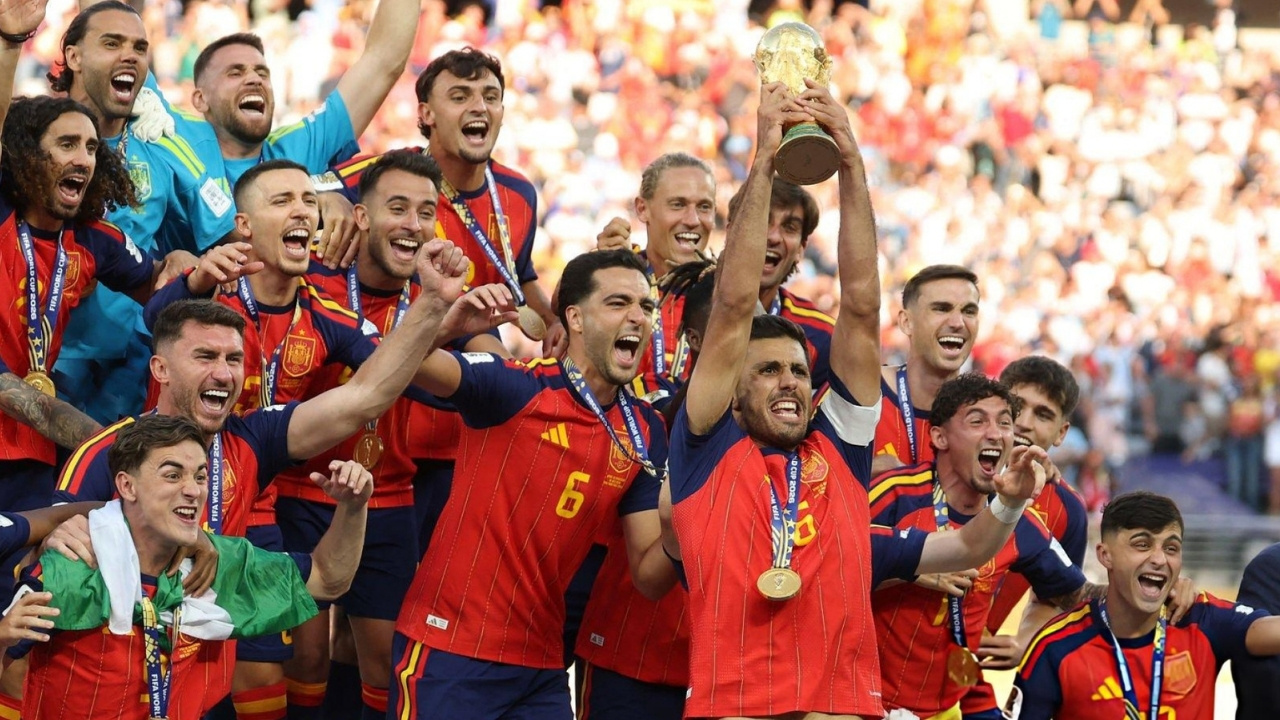
Spain held on to seal a 1-0 win and their second World Cup title, matching their 2010 triumph, which was also settled in extra time by a substitute, Andres Iniesta. The win made Spain only the fourth side to hold the European Championship and World Cup simultaneously, after West Germany, France and Spain’s own earlier side, and stretched their unbeaten run to 38 matches, the longest in the history of European or South American national teams. Messi, at 39 years and 25 days, became just the second player to appear in three World Cup finals, after Brazil’s Cafu, and finishes as a runner up for the fourth time with Argentina, level with Germany for the most in history.
The full time whistle brought disorder rather than celebration. Nahuel Molina and Rodri went nose to nose after Rodri celebrated in the defender’s face, before Eric Garcia intervened. Paredes then appeared to push Garcia by the throat, prompting a shove from Gavi, before Thiago Almada threw the Spain midfielder to the floor and Borja Iglesias joined the fray. Former England goalkeeper Joe Hart, working as a BBC pundit, was scathing in his assessment. “Disgusting,” he said. “There was one man who did have class, and that was Lionel Messi, who shook hands with every one of the Spanish players. Argentina can have absolutely no complaints about what happened today.”
Spain’s dominance of the tournament was confirmed at the closing ceremony, with Rodri named the tournament’s best player after a display in which he completed 101 passes, Cubarsi collecting the young player award having completed 121, both figures among only three instances of a player passing the century mark in a World Cup final on record, and Unai Simon taking the Golden Glove. Messi took the Silver Ball, missing out on what would have been a record third such award, with Kylian Mbappe, the tournament’s new all time leading scorer, claiming bronze.


