



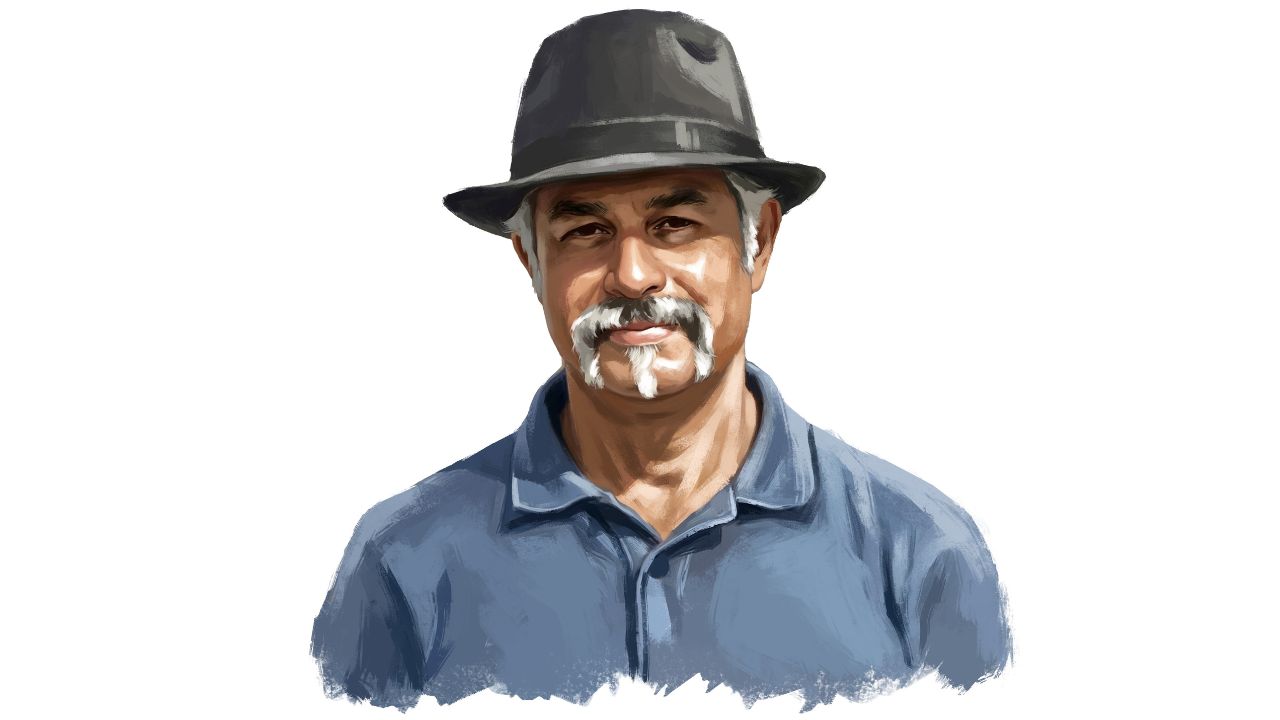



Professor Kamrul Hassan Mamun warns that Bangladesh risks repeating a cycle of political revenge and exclusion unless the spirit of the July uprising is preserved.
A long-time critic of irregularities in the education sector and political interference on campuses, he says replacing one form of dominance with another will only deepen divisions and “sow seeds of hatred and vengeance”.
A frontline figure in the teachers’ network during the July 2024 uprising, the Dhaka University physics professor also joined street protests demanding a research-friendly environment in universities. Two years after the uprising, Mamun spoke to Aleem Haider of TIMES of Bangladesh about how partisan politics has weakened hopes for democratic reform, institutional accountability and meaningful changes in the education system.
You were an active voice in the July movement. After such a big change, have expectations been met?
During the 1990 mass uprising, people also had aspirations. But those hopes were soon buried. After BNP came to power in 1991, the Awami League faced repression, which fuelled resentment. When Awami League returned to power in 1996, it took revenge against BNP. The cycle continued after BNP returned to power in 2001 and Awami League came back in 2009.
Awami League created a system to prevent BNP from returning to power, with one questionable election after another. In this way, the aspirations of 1990 were destroyed. The hopes created during the 1/11 caretaker government period were also crushed. The expectations after the 2024 uprising have suffered the same fate quickly.
Whose responsibility is this?
Our politicians and intellectuals are too partisan and self-centred. When they gain power, they focus on their own interests and those of their parties rather than the country.

Politicians and bureaucrats must take responsibility. They do not seek advice from genuine educationists on reform, and even when good suggestions are offered, they ignore them. Nothing changes because decisions are made based on party interests.
The pledge to build a new Bangladesh meant education reform would be one of the most important areas. What has changed?
Good education is the backbone of a nation. But those responsible for building this backbone have themselves been weakened by poor salaries and a lack of social dignity.
Teachers have to take to the streets even to demand their salaries. Instead of building digital classrooms, we first need to create good teachers through proper training, fair pay and respect. A good teacher can produce excellent students even under a tree.


The interim government did not even form a commission on education reform. Why didn’t the teachers’ network play any role in this?
The teachers’ network played an important role in creating the environment for the 2024 uprising. When we announced programmes, BNP and Jamaat members also joined us. But after the uprising, they changed the direction of the movement.
We are few in number, while they are many. If they decide to destroy the spirit of the movement, a small group of teachers cannot stop them. We have families, classes and research responsibilities. We cannot remain on the streets permanently.
You have been vocal against the suppression of dissent in universities. Now those in power have formed a committee to take action against dissenting voices.
This is a crucial issue. We have heard that a list of 231 teachers has been prepared for disciplinary action. At the same time, many students previously involved with Chhatra League are being denied access to classes and exams.
If someone is guilty, they should face trial, but due process must be ensured. I urge the administration not to allow anarchy to prevail. Removing hundreds of PhD-holding teachers from Dhaka University would cripple the institution.
Why aren’t other teachers speaking up about this?
They are overwhelmed by partisan interests and have lost their sense of right and wrong. Political influence has reached an extreme level in both administration and educational institutions. The young people who sacrificed themselves did not do so for this.
Has the possibility of higher education moving beyond political influence been completely closed off?
Recent university appointments suggest that political influence continues. Earlier, Awami League appointed people from the Neel Dal; now many appointments are coming from the Sada Dal.
The previous government denied positions to qualified people because of political differences. Repeating the same approach now means we are sowing seeds of hatred and vengeance.
If this continues, people will once again rise against such injustice. How long can people be suppressed?
The government is repeatedly being obstructed in its efforts to modernise education and make learning joyful. Even during the interim government, religious groups obstructed progress. Are they becoming the controllers of the education system?
A group that dislikes music, dance, Sufism and Baul traditions has emerged as a powerful influence. Even opposition to the national anthem and Tagore’s works is being seen after 54 years of independence.
Science may be studied for jobs, but rejecting ideas such as Darwin’s theory of evolution and restricting cultural expression will destroy the foundation of education. Great scientists such as Einstein, Max Planck and Satyen Bose were also connected with music.
Our primary education has become the education of the poor. Only those who cannot afford private schooling, or people in rural areas, send their children to government primary schools. Is this how a nation can be built?
This is deeply shameful. Primary school teachers have low salaries and little social status, making them vulnerable to disrespect.
A nation needs a clear education philosophy and curriculum. Primary education must teach academics alongside manners, social behaviour, patriotism, history and heritage. Technical education must also receive respect and proper planning. In developed countries, many students pursue technical education, but Bangladesh has no clear strategy for this neglected sector.


