



There is no weight heavier in sport than a nation’s hope. Billions of people cannot play football, cannot score a penalty under floodlights with sixty thousand voices shaking the air, cannot control their bodies when their legs have turned to concrete and their hands won’t stop trembling. So they give that weight to someone else. They hand it to the best player they have, the one who has carried them this far, the one whose poster is on the wall and whose shirt is worn by the kid down the road. They hand it over entirely, and they wait.
Most of the time, the moment passes cleanly. A goal goes in, the crowd erupts, history is made in the right direction. But sometimes, in the cruelest way sport can arrange itself, the moment arrives and the legend flinches. Not because they are not good enough. Not because they don’t care. But because they are human, and sport is occasionally merciless in the way it chooses to remind you of that fact.
As the 2026 World Cup approaches, these are the moments that prove that genius has a shadow, and that the higher you stand, the louder the silence when you fall.
Roberto Baggio, 1994 Final vs. Brazil
Italy’s divine ponytail had carried his country through an entire tournament. Baggio scored late to rescue Italy against Nigeria, won it in extra time, put them past Bulgaria with two goals in the semi-final. Going into the Pasadena final against Brazil, he was undoubtedly the best footballer on the planet that summer.
The final went to penalties. Franco Baresi missed first for Italy, then Daniele Massaro. When Baggio stepped up fifth, he had to score to keep his country alive. He had a plan, he later said. The ball sailed three metres over the crossbar and into the California night. The image of him standing at the spot, head bowed, ponytail hanging, is one of the most reproduced photographs in football history. He had converted 71 of 79 career penalties before that moment. Nobody has ever adequately explained the 72nd.
Diego Maradona, Expelled from the 1994 World Cup Due to Doping
Argentina’s greatest player arrived in the United States in 1994 already carrying a 14-month cocaine ban and a career in visible freefall. For two games, he looked like Maradona again. He scored against Greece and celebrated by sprinting towards the camera with the face of a man possessed, providing an assist against Nigeria in a 2-1 win. A nation that had buried him was daring to believe.

The urine sample after the Nigeria game came back positive for five variants of ephedrine. His camp blamed an energy drink, arguing he had unknowingly switched to an American brand that contained the substance. Whatever the truth, he was sent home in disgrace. Argentina went out in the round of sixteen to Romania. The goal against Greece turned out to be his last for Argentina, and his international career ended not with a farewell but with a flight home and a nation weeping on its televisions.
Zinedine Zidane, 2006 Final vs. Italy
In his final game as a professional footballer, Zidane was the best player on the pitch. Three FIFA World Player of the Year awards, a Ballon d’Or, a World Cup won in 1998. For this campaign he led France past Spain, Brazil and Portugal to reach Berlin, and was named player of the tournament. He scored a magnificent chipped penalty in the seventh minute of the final itself.
Then, in the 110th minute of extra time with the score level at 1-1, Marco Materazzi said something to him about his sister. Zidane turned around and drove his head into Materazzi’s chest. The referee showed him a red card. France lost the shootout 5-3. Zidane walked past the World Cup trophy on his way to the tunnel without looking at it. A five-metre bronze statue of the headbutt now stands outside the Pompidou Centre in Paris. It is not the image of a champion.



David Beckham, 1998 Round of Sixteen vs. Argentina
England were flying. Michael Owen had just scored one of the great World Cup goals to put them 2-1 up against Argentina in Saint-Etienne. Then, after Diego Simeone left Beckham on the ground with a foul, Beckham flicked his right foot back into Simeone’s legs. The referee showed a straight red card.
England played the remainder of the game and the entire penalty shootout with ten men and went out. Beckham was burned in effigy outside a London pub. His wife received abuse in stands across the country. Rival fans jeered him at every away ground the following season. Decades later, he said he still beat himself up about it. His teammate Michael Owen was more direct, saying he was absolutely convinced England would have won with eleven men.
Ronaldo, 1998 Final vs. France
Going into the 1998 final in Paris, Ronaldo Nazario was the best player in the world, full stop. He had scored four goals in the tournament, terrorised every defence he faced, and carried Brazil to the brink of their fifth title. Then, hours before kick-off, his roommate Roberto Carlos found him having a seizure. He was sedated. His name was initially left off the team sheet.
Forty minutes before kick-off, Ronaldo insisted he was fit and demanded to play. Brazil lost 3-0. Ronaldo was a ghost of himself. The manager lost his job. A congressional inquiry was launched in Brazil. Nike denied any involvement in the decision to play him. Nobody ever provided a clean answer about what really happened in that hotel room.
Wayne Rooney, 2006 Quarter-Final vs. Portugal
England topped their group in Germany, reached the quarter-finals, and arrived against Portugal with genuine belief. Rooney had been their most dangerous player throughout. Rooney stamped on Ricardo Carvalho, the referee produced a straight red card, and Cristiano Ronaldo was seen winking at the Portugal bench the moment it happened.
England lost the penalty shootout, with only Owen Hargreaves converting from the spot. The wink detonated the British press for months. Ronaldo became a villain, Rooney became a cautionary tale. The manager Sven-Goran Eriksson said plainly that he believed they could have won the tournament, and that the red card made that impossible.
Gonzalo Higuain, 2014 Final vs. Germany
One of the most clinical strikers in European football, Higuain arrived in the 2014 final in Rio carrying Argentina’s hopes and a country’s thirty-year wait. In the final he missed three genuine chances. Germany scored in extra time through Mario Gotze and won 1-0. And Higuain, who emptied nets across Europe with routine ease, could not score when it mattered most. He missed in the Copa America final in 2015, missed again in 2016. His international career became a monument to the cruelest gap between club form and tournament reality.
Others Who Carry the Weight
Luis Suarez, 2014 Group Stage vs. Italy: Suarez found a new way to disgrace himself on the world stage. In a group game against Italy, he sank his teeth into the shoulder of Giorgio Chiellini. It was his third biting incident in professional football. He was banned for nine international matches and four months from all football. Uruguay were eliminated in the round of sixteen.
Asamoah Gyan, 2010 Quarter-Final vs. Uruguay: After Suarez’s infamous handball on the line in the final seconds of extra time, Gyan stepped up with the penalty that would have put an African nation into a World Cup semi-final on African soil for the first time in history. He struck the crossbar. Ghana lost the subsequent shootout and went home.
Oliver Kahn, 2002 Final vs. Brazil: Kahn had been the undisputed best player of that entire tournament, winning the Golden Ball as the first goalkeeper ever to do so. In the final, he fumbled a routine Rivaldo shot and Ronaldo tapped in from close range. Brazil won 2-0. A tournament of almost supernatural goalkeeping, finished by a single drop.
Andres Escobar, 1994 World Cup: The Colombia defender put the ball into his own net against the United States, helping to eliminate one of the tournament’s most anticipated sides. He was shot dead in Medellin twelve days after returning home.
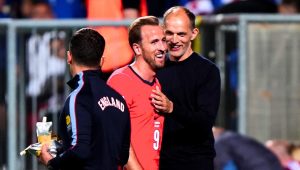
Harry Kane, 2022 Quarter-Final vs. France: Kane scored the first penalty to draw England level and match Wayne Rooney’s all-time England scoring record. Given a second penalty with six minutes left and the score at 2-1, he blazed it high over the bar. At the final whistle he dropped to his haunches and stared at the turf. England went home, again.
The 2026 World Cup will produce more of these moments. It always does. Some player, somewhere, will stand at a spot twelve yards from goal, or find themselves alone with a goalkeeper, carrying the weight of an entire country on their back. They will either convert that moment into something glorious or they will not.