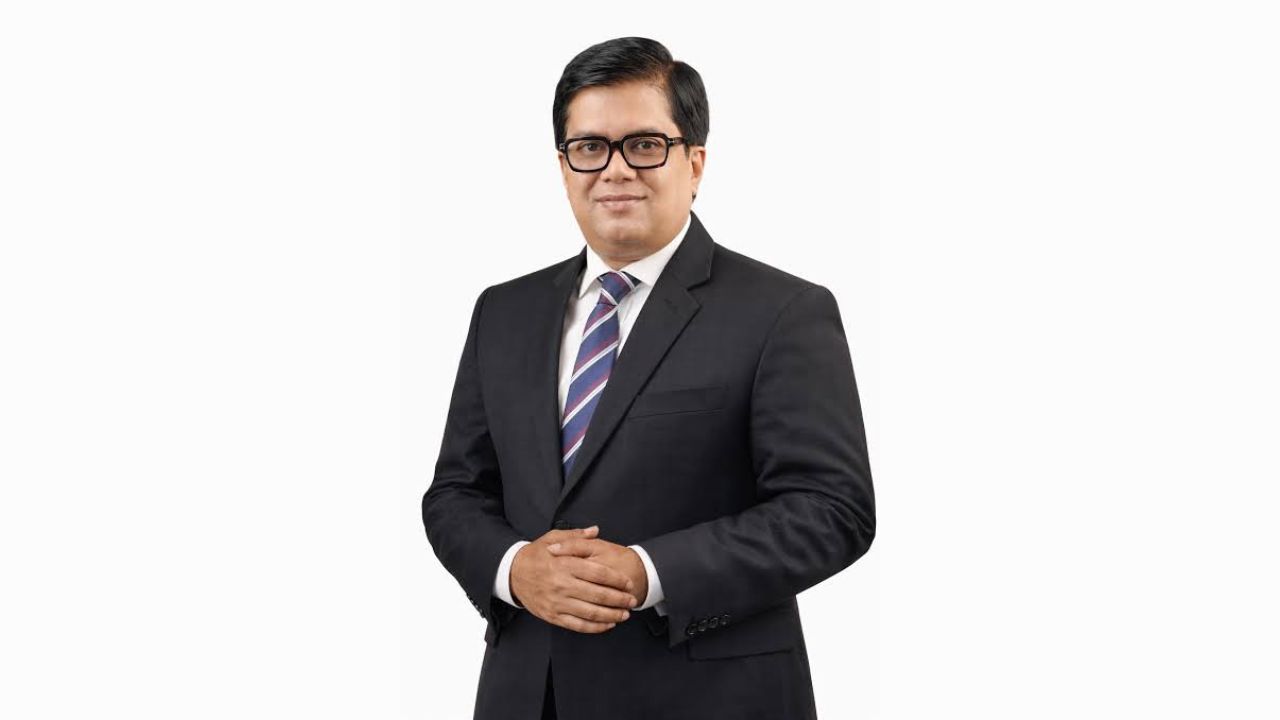



A secure financial future is not built only by earning more, but by managing income, spending, savings and investments with discipline, said Md Rashed Akter, head of retail distribution at SBAC Bank.
“Personal financial management is an area where we need more academic learning opportunities as well as personal awareness,” the senior banker said in an interview with TIMES of Bangladesh’s FinPulse show host Mahfuz Ullah Babu.
The power of compounding is one of the most underestimated tools in personal finance.
He said, for instance, a person saving Tk1,000 every month through a compound-based product such as a DPS for 40 years could accumulate more than Tk63 lakh at a 10 per cent return. At an 11 per cent return, the amount could exceed Tk68 lakh.
However, most savings products in Bangladesh do not offer such long tenures.
Banks generally provide schemes for up to 20 years. To continue benefiting from compounding, he advised investors to reinvest maturity proceeds.
For example, saving Tk1,000 monthly for 20 years could generate around Tk7.63 lakh at a 10 per cent return. The amount can then be reinvested in double-benefit or triple-benefit schemes or through automatic reinvestment of returns.
“The two most important things in savings are time and tenure — when you start and how long you continue,” he said.

Rashed recommended the 50:30:20 formula as a basic framework for managing income.
Under the model, 50 per cent of income should go towards essential needs such as education, healthcare and housing, 30 per cent towards lifestyle choices and 20 per cent towards savings and investment.
He said people often spend first and save whatever remains. Instead, they should save first and plan expenses from the remaining income.
He suggested setting up standing instructions on salary day to transfer money automatically into a DPS or savings scheme.
Within the 20 per cent allocation, he recommended keeping 10 per cent for savings, 5 per cent for insurance and 5 per cent for investment.



“If basic expenses exceed 50 per cent, reduce lifestyle spending rather than cutting into savings,” he said.
Plan before retirement
Rashed said retirement planning remains weak in Bangladesh, with structured plans largely limited to government employees, multinational companies, banks and financial institutions.
He said the challenge is simple: income may stop after retirement, but expenses will continue and can rise due to inflation and healthcare costs.
He described the Universal Pension Scheme as a positive government initiative, while noting that banks and insurance companies also offer retirement-focused products.
Alongside long-term savings, Rashed stressed the need for an emergency fund to deal with illness, disability, accidents, job loss or business setbacks.
He recommended keeping three to six months of basic expenses as a reserve, while those with greater capacity can maintain up to 12 months of expenses.
Create income beyond salary
Rashed said passive income does not only mean owning property.
Depending on financial capacity, people can invest in rental vehicles, gradually build income-generating assets, create digital content or use bank schemes offering monthly returns.
“Alongside direct income, we should think about indirect income options,” he said.
Rashed said the choice between a credit card and personal loan depends on the purpose and repayment period.
Personal loans are more suitable for needs extending one to three years, while credit cards are better for short-term borrowing that can be repaid quickly.
Personal loan rates generally range between 9 per cent and 14 per cent, while credit card charges can rise to 25 per cent with delayed payments. Credit cards, however, offer a 15- to 45-day interest-free period.
More than 70 per cent of people remain outside the formal financial system, while Bangladesh’s financial inclusion rate remains below 30 per cent under Bangladesh Bank’s financial literacy framework.
Track your wealth
Rashed advised people to maintain a financial diary containing details of investments, loans and other assets.
Many customers fail to update nominees and addresses, he said, making it difficult for families to access assets later.
He added that hundreds of crores of taka remain unclaimed due to such lack of awareness.
While savings certificates remain popular, awareness of treasury bills and bonds is still limited.
Government securities have become easier to access, with a BO account-like ecosystem allowing ordinary investors to buy and sell bonds more easily. A deep understanding of financial market cycles helps investors benefit from the instruments.
Whatever the instrument is, the mantra for a financially secure retired life is, “Start early, save consistently, protect against risks and build alternative income sources.”
For him, the formula is simple — 50 per cent for needs, 30 per cent for choices and 20 per cent for the future, and the 20 per cent portion is not negotiable at all.