Crude bomb attacks have increased at various locations amid ousted prime minister Sheikh Hasina’s announcement that she intends to return to Bangladesh in December.
While the bombs were initially detonated in open spaces, recent attacks have increasingly targeted law enforcement offices and prominent establishments.
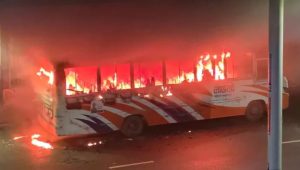
Buses have also been set on fire, mostly while parked.
However, an attack targeting a private car has raised concerns about public safety and mobility in the capital.
The Dhaka Road Transport Owners’ Association has written to the Inspector General of Police expressing concern over attacks and arson targeting vehicles.
It has urged the police chief to take stronger measures to ensure the safety of vehicles and people involved in the transport sector.
Stating that the attacks are intended to spread panic among the public, police officials reassured by saying that intelligence surveillance, security measures and patrols have been strengthened.
Ainul Islam, a professor at the Department of Political Science at Dhaka University, told TIMES, “The explosions are collectively creating a climate of instability in the country. There is no scope to view these incidents as entirely separate from Sheikh Hasina’s possible return to Bangladesh.”
He also warned that such activities could intensify in the coming days.
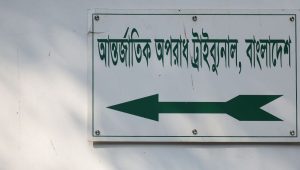
The International Crimes Tribunal has sentenced the Awami League chief, who flew to India on the day of the mass uprising on 5 August 2024, to death.

She has since announced her intention to return to Bangladesh and face trial.
The interim government, led by Muhammad Yunus, cancelled the ousted prime minister’s passport and national identity card.
However, she has applied for a new passport as part of her preparations to return home.
The government made it clear that she will not be issued one.
Meanwhile, reports have emerged that Awami League leaders from different countries are gathering in Kolkata to return to Bangladesh.
Reports of grassroots leaders making various attempts to return home have also been circulating on social media.




Against this backdrop, bomb blasts and arson attacks on buses are adding to public anxiety.
For several days, explosions at multiple locations in the capital shortly after nightfall have become increasingly common with blasts taking place in front of police stations, at the gates of an international hotel chain and outside the offices of a police investigative agency.
Explosions have also been reported in front of the Bangladesh Television building in Rampura, beneath Agargaon Metro Rail Station, outside Government Boys’ School in Dhanmondi, at the Kalabagan bus stand, in front of Ramna Shopping Complex, around the July Mass Uprising Memorial Museum in Sher-e-Bangla Nagar and on a road beside the Prime Minister’s Office in Tejgaon.
Educational institutions including university campuses, private cars and public transport have all been targeted.
In just 20 hours, from 10pm on Saturday to 6pm on Sunday, three buses were set on fire in Mirpur, Mohakhali and Bhatara. During the same period, crude bombs were detonated at Dhaka University, the Criminal Investigation Department (CID) headquarters and Pallabi Police Station, among other locations.
A police officer at Pallabi Police Station was injured by fragments from an exploded bomb.
The attacks have largely been hit-and-run operations in which attackers arrive suddenly, set off explosions or start fires and flee.
In most cases, they escape without being caught, although several arrests have been made.
At around 6pm on Sunday, a bus belonging to Jolsiri Cantonment School and College was set ablaze while parked on the 100-foot road in Bhatara.
The previous night three bus attacks were reported: an attempt was made to set fire to one beneath Pallabi Metro Station in Mirpur-12, a separate arson attack was reported in Mohakhali and a vehicle belonging to Baishakhi Paribahan was set on fire at the Coca-Cola intersection on Pragati Sarani.
Explosions were reported at Dhaka University’s TSC, the gate of the Senate Building, Bangladesh-Kuwait Maitree Hall, Fazlul Huq Muslim Hall and the Nilkhet area.
University students detained three people in connection with the incidents and handed them over to the police.
Explosions also occurred inside the CID headquarters in Malibagh and at the gate of Pallabi Police Station where a member of SRB-4, inside the police station compound, was injured.
A crude bomb was also thrown at a private car in front of Sony Hall in Mirpur-1.

The incidents were not confined to Dhaka; five crude bomb explosions were reported in Cox’s Bazar on the same day.
Pallabi Police Station Officer-in-Charge Jalal Uddin said a crude bomb thrown from an elevated road exploded in front of the station’s main gate while Mirpur Model Police Station Officer-in-Charge Md Hafizur Rahman observed that efforts were under way to identify those involved in the attacks.
Last Thursday, a series of bus arson attacks were reported in Dhamrai, where buses were parked beside a highway.
According to the Fire Service, three buses were set on fire on three consecutive nights. Over the following two days, at least six vehicles were reported to have been set ablaze on Dhaka and inter-district routes.
The incidents included bus arson attacks in Savar, Dhamrai and Baridhara.
Humayun Kabir Khan, general secretary of the Bangladesh Road Transport Workers Federation, believes the explosions and arson attacks are linked to Sheikh Hasina’s planned return to the country.
He told TIMES: “Sabotage is being carried out in a planned manner to create panic.”
Saiful Alam, general secretary of the Dhaka Road Transport Owners’ Association, asserted: “Transport owners and workers strongly condemn such destructive activities.”
Mohammad Akhtar Hossain, deputy commissioner of the Media and Public Relations Division of Dhaka Metropolitan Police (DMP), assured: “Police are closely monitoring and investigating the explosions and vehicle arson incidents; several people suspected of involvement have been arrested, including members of various banned organisations and their affiliated bodies.”
He said efforts were also under way to identify the sources of materials used to make crude bombs and the flammable substances used to set vehicles on fire.
“CCTV footage is being collected and analysed to identify those involved,” he added.
According to police, five members of the affiliated bodies of banned organisations were arrested in connection with cocktail bomb explosions in the 24 hours before 8 November.
A report citing Police Headquarters data said at least 21 people had been arrested in connection with explosions between 1 and 7 November.