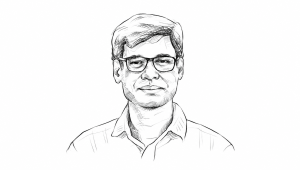
Prof. Dr. Muhammad Mahboob Ali
Bangladesh will graduate from Least Developed Country (LDC) status in 2026, and stands at a pivotal moment. The 8th Five-Year Plan of Bangladesh reached its terminus in June 2025 without any formal extension. This significant conclusion marked the end of a policy cycle that had failed to institute lasting, specialised programmes to generate employment for the country’s large youth and aging population. The nation must tackle significant challenges, including low labour productivity and providing skills matching the workforce.
The economy heavily relies on the Ready-Made Garment (RMG) sector, accounting for 82% of exports, leaving it vulnerable to global market fluctuations. As for the banking sector, the capital market never works and the NBFI is downtrodden. To navigate these challenges, transformative strategy is needed emphasising dignity and efficiency. Drawing on insights from Banerjee and Duflo (2011), we understand that the poor often face limited choices due to inadequate safety nets.

Four interconnected pillars are needed for achievement. The first pillar focuses on a Skills Revolution for the Future Economy, requiring the education system to evolve by integrating subjects like AI, IoT, Blockchain, and Machine Learning. The second pillar emphasises Infrastructure for Efficiency and Connectivity, proposing a $30 billion investment to reduce logistics costs and improve regional equity. The third pillar focuses on Strategic Export Diversification, introducing a “Diversify or Tax” policy that levies charges on RMG firms dependent solely on EU and US markets. Lastly, the Governance and Productivity Reform, leveraging technology for enhanced transparency and efficiency, where implementing AI-powered labour markets for real-time skill matching.
A phased roadmap from 2026 to 2029 is proposed to implement this strategy. The first phase, Establishing Foundations, involves enacting the National AI Act and Export Diversification Act, forming a National Productivity Council and launching pilot “Skills Factories” in Gazipur, Chattogram, and Jessore. The second phase, Scaling Up, aims to expand to 10 Skills Factories nationwide, deploy AI job-matching platforms, and enhance faculty development with UGC-certified, industry-experienced PhDs. The third phase, Integrating Systems, will focus on completing major infrastructure projects, installing modular nuclear reactors, and digitising land records. To be truly transformative, TVET (Technical and Vocational Education and Training) requires deep industry integration to align curricula with real-world demands and robust apprenticeship programs that merge earning with learning. Embedding entrepreneurship cultivates innovation, while a curriculum geared toward global standards and sustainable solutions future-proofs our workforce. Strategically executed, TVET serves as a powerful catalyst for both individual advancement and national economic prosperity.


Funding for this ambitious plan, estimated at $50 billion by 2040, can come from diaspora bonds, sector-specific taxes, and loans from international institutions such as the ADB, NDB, and IFC. Strict monitoring will ensure accountability, with monthly competency assessments and blockchain-tracked funding. Furthermore, Bangladesh should actively pursue regional integration, seeking membership in ASEAN’s $3.6 trillion economy, revitalising BIMSTEC for logistics and energy security, and unlocking SAARC’s potential for climate and health collaboration to enhance market diversification and sustainable growth. By 2050, this strategy aims to reduce the poverty rate to 15%, triple exports to $150 billion, double GDP per worker to $6,500, and generate $50 billion annually from increased productivity in the tech sector. Ultimately, the goal is to foster an economy driven not only by efficiency but also by employability and ethics.
The urgent need for a skills overhaul is highlighted by the ongoing youth unemployment crisis, with 2.62 million unemployed in 2024, including 2 million disaffected young people. Preparing this population for the future workforce means equipping them for high-value AI-related roles which are central to the Strategy’s vision. Tackling these complex challenges requires a concerted effort from the government, educational institutions, industry, entrepreneurship and civil society to create a resilient and adaptive skills ecosystem for Bangladesh.
A small group uses their wealth and political connections to gain even more, creating a cycle that benefits them while blocking reforms that could help others. Their main focus is on personal profit rather than the country’s development. They assess new laws or projects based on potential profits, not on job creation or national productivity. The combination of greed and corruption creates a serious barrier to sustainable growth and job. Money intended for schools and training is often stolen, resulting in an education system that produces unskilled graduates. Investment in highways and ports becomes a target for corruption. If contracts are awarded based on bribery instead of merit, projects will be delayed and inefficient, failing goal achievement. Innovative companies in fields like pharmaceuticals and ICT struggle to compete if the elite control licenses and funding. The ‘Diversify or Tax’ policy may be manipulated by the powerful to protect their interests.
The writer is a macro and financial economist