Dhaka’s streets are always alive. Here, buses roar, rickshaws weave, motorbikes cut corners. Horns scream without warning. In the middle of this chaos, a man walks head down. Phone glued to his ear, eyes missing the road.
This scene is now ordinary. People walk while talking. They cross the roads mid-call and step off footpaths without looking. The danger is silent at first, then sudden. A second of distraction is enough. Buses do not wait, bikers do not guess your next step, auto rickshaws don’t have much capacity to brake. The road does not forgive mistakes.
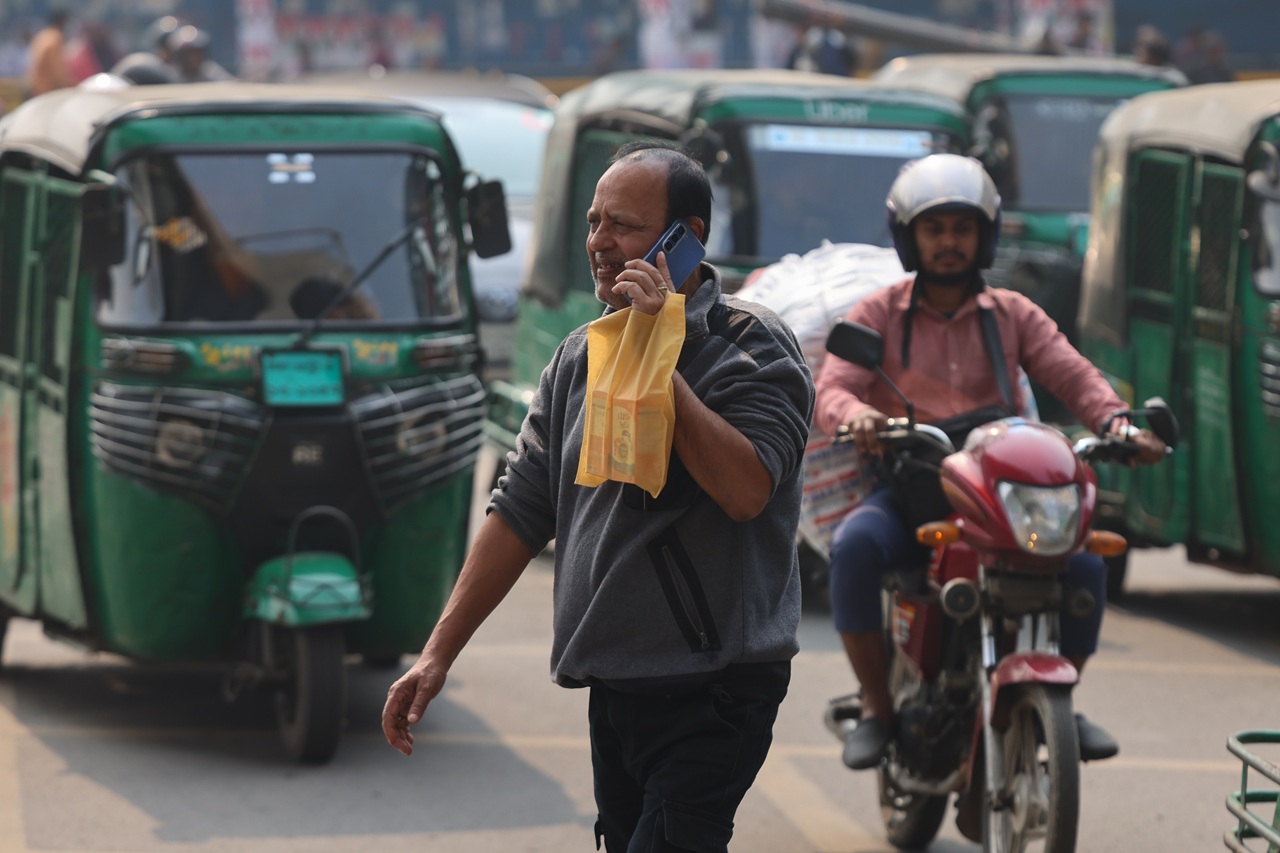
In densely packed cities, the risk multiplies. Footpaths are broken or missing. Vehicles move fast and close. Pedestrians already fight for space. A phone call makes them blind.

One hand signals traffic, the other holds a phone. Confidence replaces caution, and attention is divided. This is not a quiet street or a safe crossing. This is chaos on wheels and flesh.
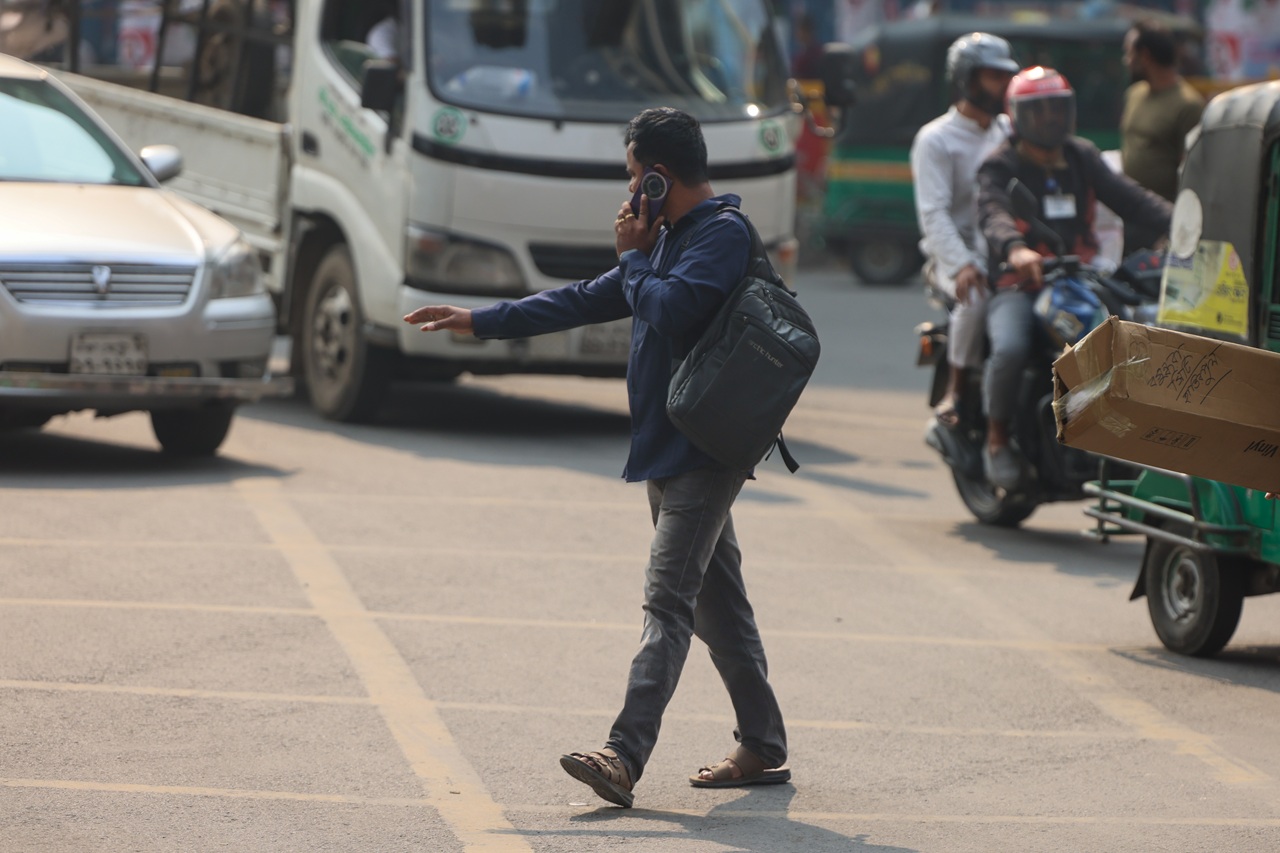
Yet calls continue- laughter, arguments, office pressure, personal drama. The road hears none of it. A step forward becomes risky. A sudden horn changes everything. A light brake may fail; a small mistake turns fatal. Many never see it coming.



Talking on the phone steals attention. It slows reaction time, blocks sound and narrows vision. It creates a false sense of safety. Some argue it is necessary, maybe an urgent call or a work emergency. But no call is worth a life.
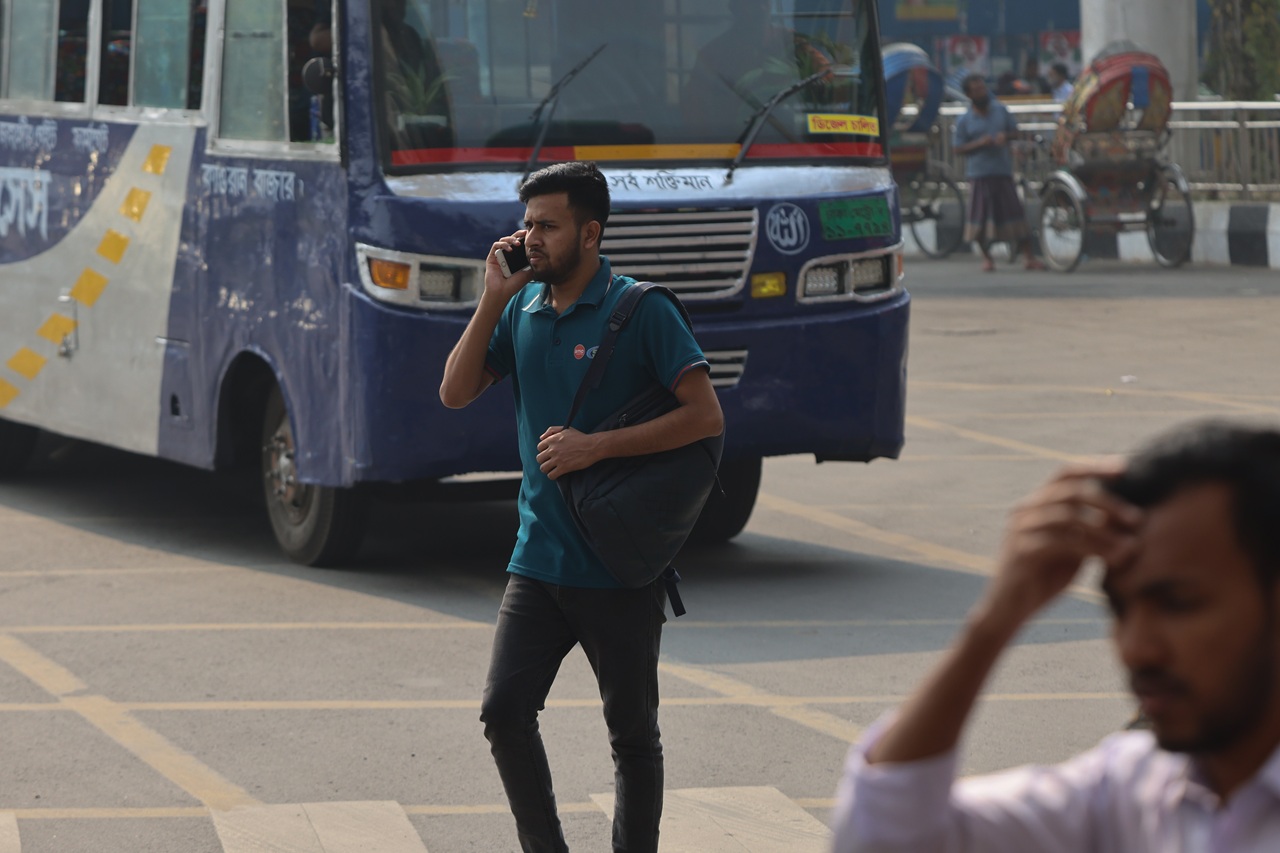
Children copy adults; now they walk with phones too. They learn danger as a habit. They learn carelessness as normal. The wide road watches all this. It does not care who you are or who called. It only responds to movement.
Danger has now become background noise. Traffic does not slow down for phone calls, drivers do not read minds, and vehicles cannot predict distracted steps.
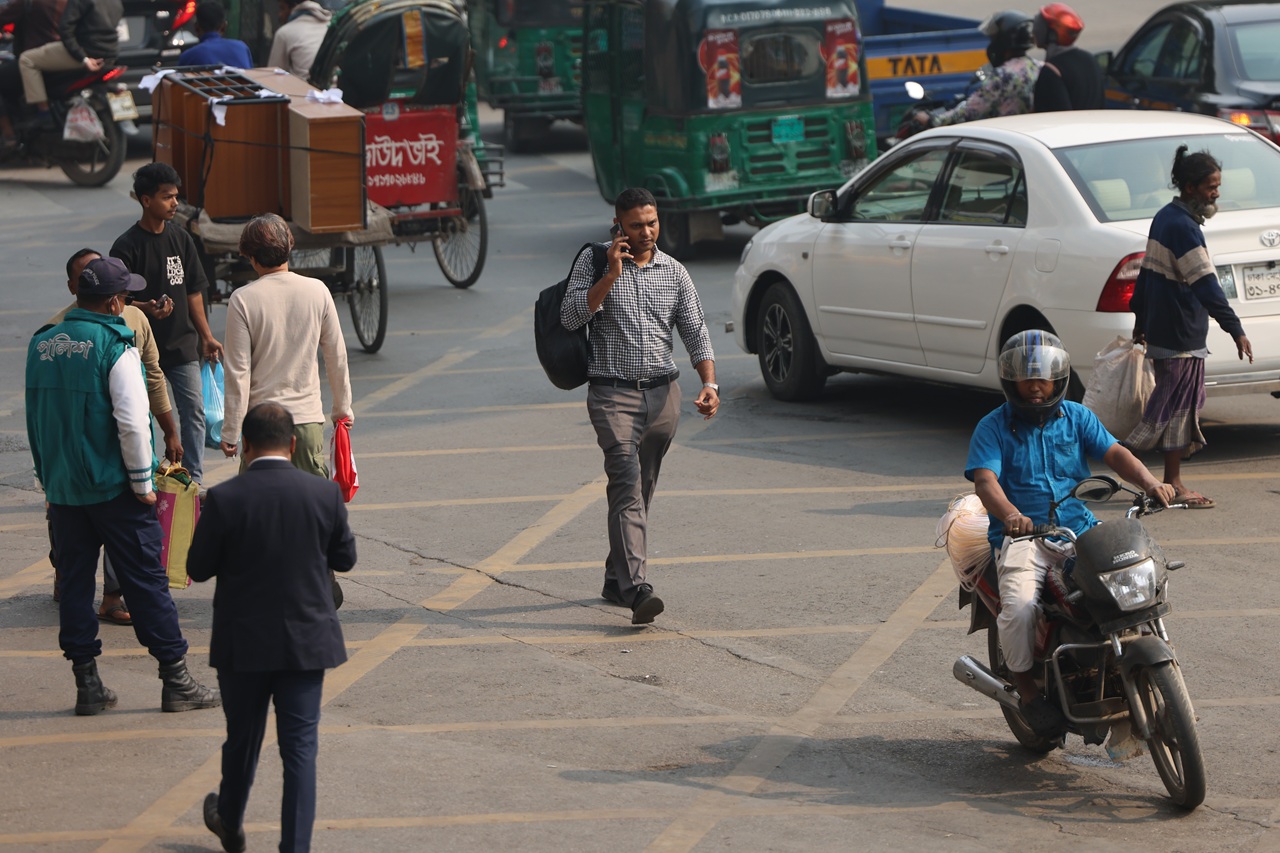
In Dhaka, space is already stolen, footpaths are occupied, crossings are ignored, and rules are optional. Add a phone to this mix, and survival turns into luck.
The street demands full attention. Safety begins with awareness. Stop walking while talking. If you must receive a call, step aside, finish the call, then move. Because on the street, one distracted step can be the last.