


Yemen’s Houthi rebels have advanced to within 60 kilometres (about 40 miles) of Aden, the interim seat of the country’s internationally recognised government, prompting government forces to deploy reinforcements and erect defensive fortifications around the city.
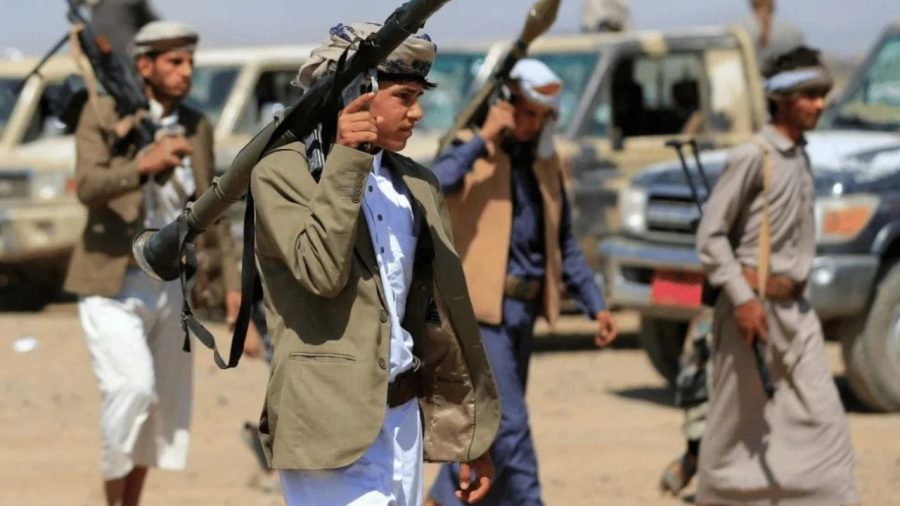
According to military and government sources, the Iran-backed Houthis seized control of two districts in Lahj province in south-western Yemen and established positions at the Al-Kharaz camp in Al-Madariba. The rebel forces have taken control of strategic positions in the Al-Maqatira district, as well as large parts of Al-Madariba and Al-Arah, the largest districts in Lahj province situated between the strategic Bab al-Mandeb strait and Aden.
In response to the Houthi movement along Lahj coast, Yemen’s internationally recognised government announced it was redeploying troops from areas near the Red Sea to reinforce key sectors, prioritising the defence of Aden and surrounding provinces, reports The New Arab.
Military officials confirmed that government units have begun digging tunnels and erecting sandbag defences around Aden as Houthi forces press southwards.

Following the retreat of government forces, Houthi military sources confirmed they deployed across evacuated Red Sea coastal areas stretching over 150 kilometres from Dhubab to positions near Khor Amira.
Additionally, Houthi fighters captured the mountainous Al-Maqatirah region, cutting the main road connecting Aden to Taiz, a city that has been under Houthi siege for weeks.



Government forces added they would continue military operations aimed at breaking the blockade of Taiz.
The territorial advances follow weeks of escalated attacks on Aden, including an assault on 15 October that targeted the presidential palace and left four people dead. On Sunday, a Houthi missile strike on a checkpoint in Lahj province near Aden killed eight people and wounded 12 others. Heavy fighting across multiple fronts over the past week has also left dozens of people dead.
Analysing the military situation, Mohammed al-Basha of US-based risk advisory Basha Report said government forces remain largely trapped in a defensive posture and are unable to open new fronts or regain the initiative.
He attributed this failure to a lack of political will, fragmented command structures, factional rivalries, and the persistent problem of “ghost soldiers” who exist on paper but not on the battlefield, adding that the Houthis are dictating the pace and direction of the war.
Amid the escalating hostilities, the International Committee of the Red Cross (ICRC) confirmed that the Houthis unilaterally released 600 members of government forces held since fighting resumed in July.

The Houthis described the move as a humanitarian initiative and pardon operation – terming it the largest unilateral release in the history of conflict – while accusing their adversaries of failing to make reciprocal moves.
The United Nations reports that more than 1,600 people have been killed and over 300,000 displaced since a 2022 truce collapsed in July.
Moreover, the UN refugee agency expressed grave concern over clashes near the Kharaz refugee camp in Lahj province, warning that the violence puts 9,600 refugees at risk and severely restricts the delivery of protection and humanitarian assistance.