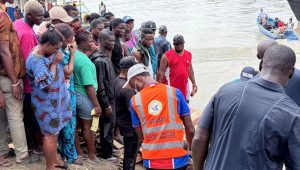
The crew of a Russian cargo ship struck by drones believed to have been launched by Ukraine in the Gulf of Finland has been evacuated to a nearby cargo vessel. They are reportedly expected to be transported directly back to Russia.
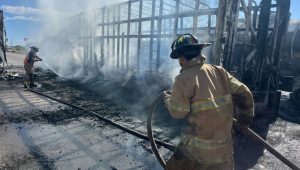
Finnish authorities have confirmed that the Sparta II has links to the Russian armed forces. The damaged vessel is currently anchored off Loviisa, a town on Finland’s southern coast, where firefighting and cooling operations are continuing.
Rescue operations at the scene involve Finnish Border Guard patrol vessels and rescue units, along with a patrol aircraft and helicopters. Two civilian rescue tugs from Finland and a patrol vessel from the Estonian Navy are also assisting in the operation.
Finnish authorities said the Russian rescue vessel Murman had joined the response at the request of the Finnish Border Guard.
Meanwhile, Finnish Defence Minister Antti Hakkanen told the newspaper Helsingin Sanomat that the Sparta II was scheduled to be towed out of Finnish territorial waters on Saturday night.
On Saturday morning, Finland’s Ministry of Defence reported that its forces had detected a drone attack targeting a Russian vessel in international waters. Initial information indicated that the ship had sustained damage.
Following the report, Finnish Border Guard units were sent to the area. An image captured by a Finnish patrol aircraft showed flames and dense smoke rising from the rear section of the vessel.
The incident took place west of Gogland Island, off the coast of Loviisa in Finland. In response to the attack, Finnish authorities promptly introduced temporary restrictions on air and maritime traffic in the eastern part of the Gulf of Finland.

The situation became more sensitive after a Russian helicopter reportedly entered Finnish airspace, penetrating more than 4 kilometres (2.5 miles) into Finnish territory.
Finnish Defence Minister Antti Hakkanen said the suspected airspace violation could have been connected to rescue or surveillance activities involving the damaged cargo ship in the Gulf of Finland. He added that the Finnish Defence Forces and Border Guard were managing the situation in coordination with other relevant authorities.
By Saturday afternoon, the Finnish Defence Forces assessed that Ukraine was likely responsible for the drone strike.
Earlier, Finnish Prime Minister Petteri Orpo had addressed the incident in a post on X, warning that the war was increasingly affecting Finland’s immediate surroundings. He said Finnish authorities were responding to the situation in the Gulf of Finland, where a Russian merchant vessel had been hit by a drone. Orpo also maintained that Ukraine had the right to defend itself against Russian aggression.
What is known about the Sparta II?
According to Finland’s Border Guard, the Sparta II has known connections to Russia’s armed forces. The vessel is a roll-on/roll-off cargo ship, was built in 2000 and operates under the Russian flag, according to the maritime tracking website VesselFinder.



However, Finnish authorities have not confirmed what the ship was carrying at the time of the attack.
Commander Ilja Iljin of the Finnish Border Guard said there was currently no verified information about the vessel’s cargo, although the possibility that it was transporting military equipment could not be excluded.
Earlier on Saturday, Alexander Drozdenko, governor of Russia’s Leningrad region, said the extent of the damage to the vessel had not yet been fully determined.
Shortly after the incident, Drozdenko wrote on the Russian messaging platform Max that a cargo ship travelling towards Kaliningrad had been attacked by two drones approximately three nautical miles (5.6 kilometres) from the Russian border.
Meanwhile, Alexey Besprozvannykh, governor of the Kaliningrad region, sought to reassure the public that supplies to the Russian exclave were not under threat.


Environmental concerns following the attack
One of the most significant concerns associated with attacks on ships is the potential for environmental damage, particularly if a vessel begins leaking or sinks. Countries bordering the Baltic Sea place considerable importance on preventing such incidents because of the potential consequences for the marine environment.
The threat is particularly concerning in the case of Russia’s so-called ‘Shadow Fleet’ tankers, some of which are reportedly in poor condition.
Robin Haggblom, a senior adviser at Risk Intelligence and an expert on Finnish maritime affairs, said the environmental risks could be considerably greater when vessels from this fleet are involved.
Speaking to Al Jazeera, Haggblom noted that preventing environmental damage had also been a key point in the Finnish Border Guard’s communications about the incident.
He added that, fortunately, the Gulf of Finland had not yet experienced ice coverage this season. The absence of ice would make it easier to carry out oil spill containment and recovery operations if they became necessary.
Busy shipping routes raise concerns over civilian vessels
The Baltic Sea is characterised by narrow, relatively shallow waters and some of the world’s busiest maritime shipping routes. A substantial volume of commercial, passenger and military traffic passes through the region despite its comparatively limited geographical size.
For example, the ferry connection between Helsinki and Tallinn recorded approximately 7.5 million passenger crossings last year. Several other passenger services connect major Baltic ports and capital cities, while cargo ships and military vessels add to the already heavy maritime traffic.
Against this backdrop, the use of aerial or maritime drones by Ukraine to target Russian vessels could pose risks to other ships operating in the region, including civilian vessels.
Haggblom acknowledged that the possibility of collateral damage could never be completely ruled out. However, he said Ukraine appeared to be taking measures to limit those risks.
He pointed to the Sparta II incident as an example, noting that the vessel was apparently identified and struck only a few kilometres from Russian territorial waters.
Haggblom also referred to an earlier attack on a Russian corvette in the Gulf of Finland. According to reports, Ukrainian forces had managed to identify and target the specific warship despite the presence of perhaps a dozen other vessels in the surrounding area.
He said there were also unconfirmed indications that the Sparta II had been deliberately selected as the target, rather than being attacked simply because it was a merchant vessel associated with Russia.
Earlier this month, Finland’s military reported detecting an attack on a Russian warship in the Gulf of Finland, an operation for which Ukraine subsequently claimed responsibility. Helsinki later confirmed that it had raised concerns with Kyiv over military strikes in the area.
Throughout the ongoing war, both Russia and Ukraine have repeatedly targeted each other’s maritime assets. Most of these attacks have taken place in the Black Sea.
The latest incident involving the Sparta II has brought renewed attention to the expanding geographical reach of the conflict and the potential security and environmental implications of military operations in the heavily trafficked Baltic Sea.