The faint roar of an aeroplane engine still freezes the hearts of Milestone School survivors, pulling them back to that single, devastating moment when the sky itself seemed to fall. The explosion ripped through playgrounds and classrooms, turning a place of laughter into a scene of fire and screams. Jet fuel of a fighter jet turned to flames that devoured everything in seconds, leaving 36 people dead and 172 injured.
“Every time a plane flies over the school, they flinch,” said an English teacher, Abhijit Adhikari. “Some cover their ears. They think it’s going to crash again, even me myself flinch if an aeroplane passes over.”
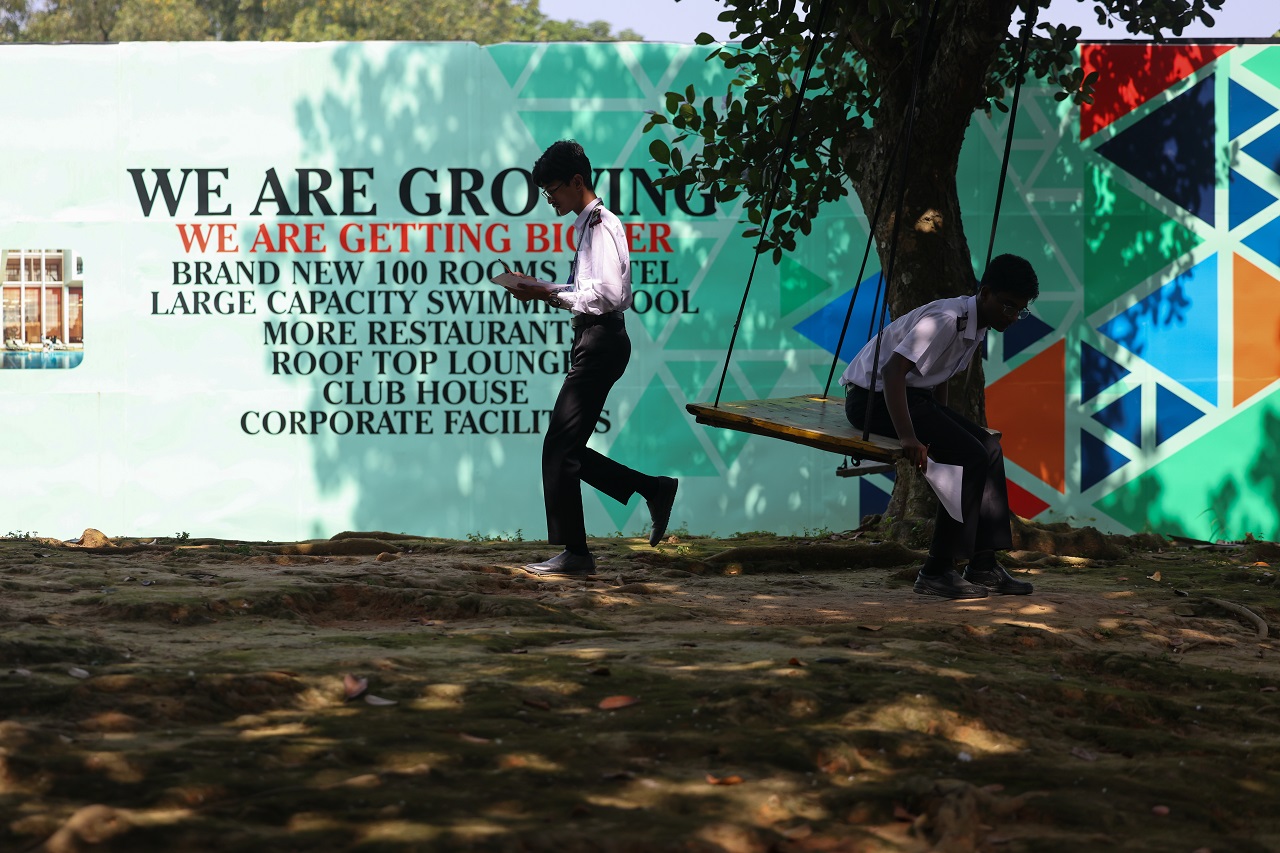
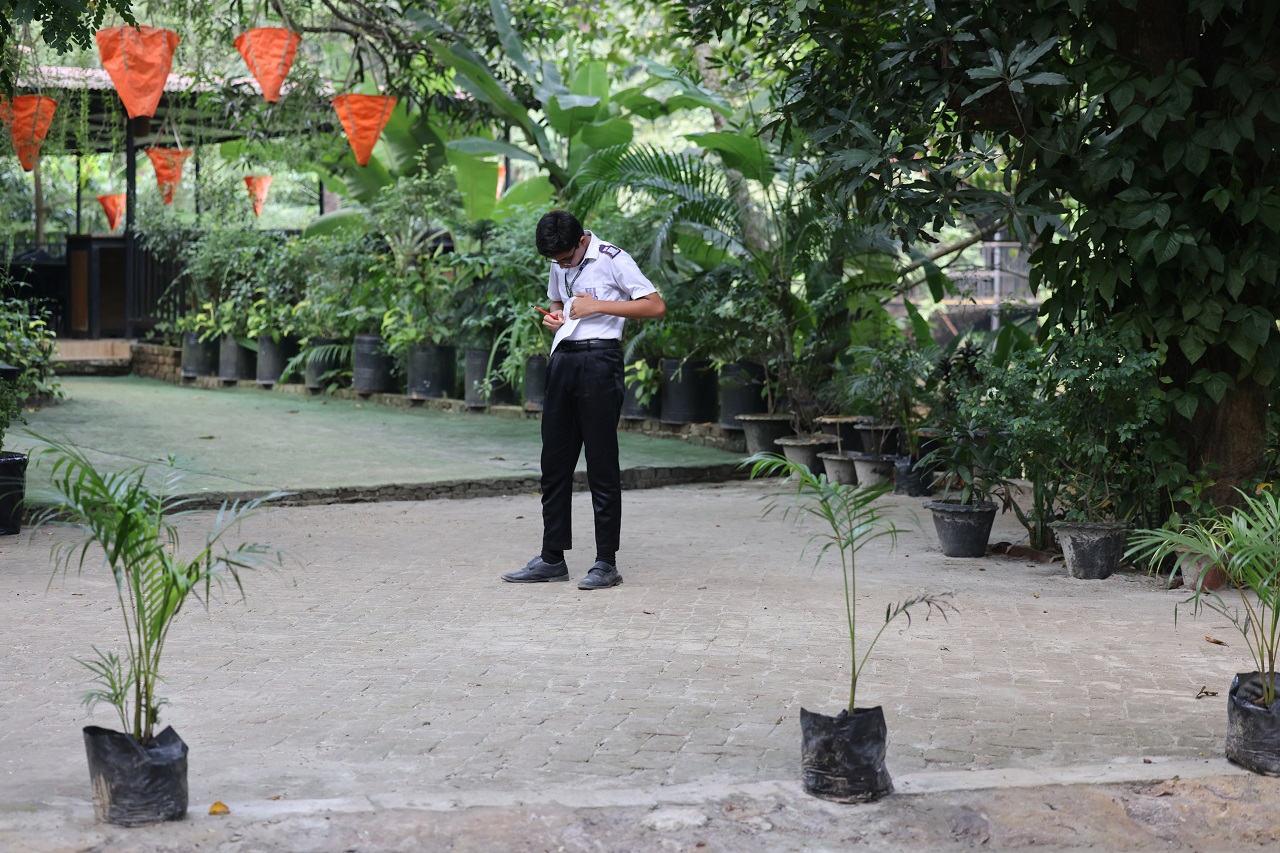
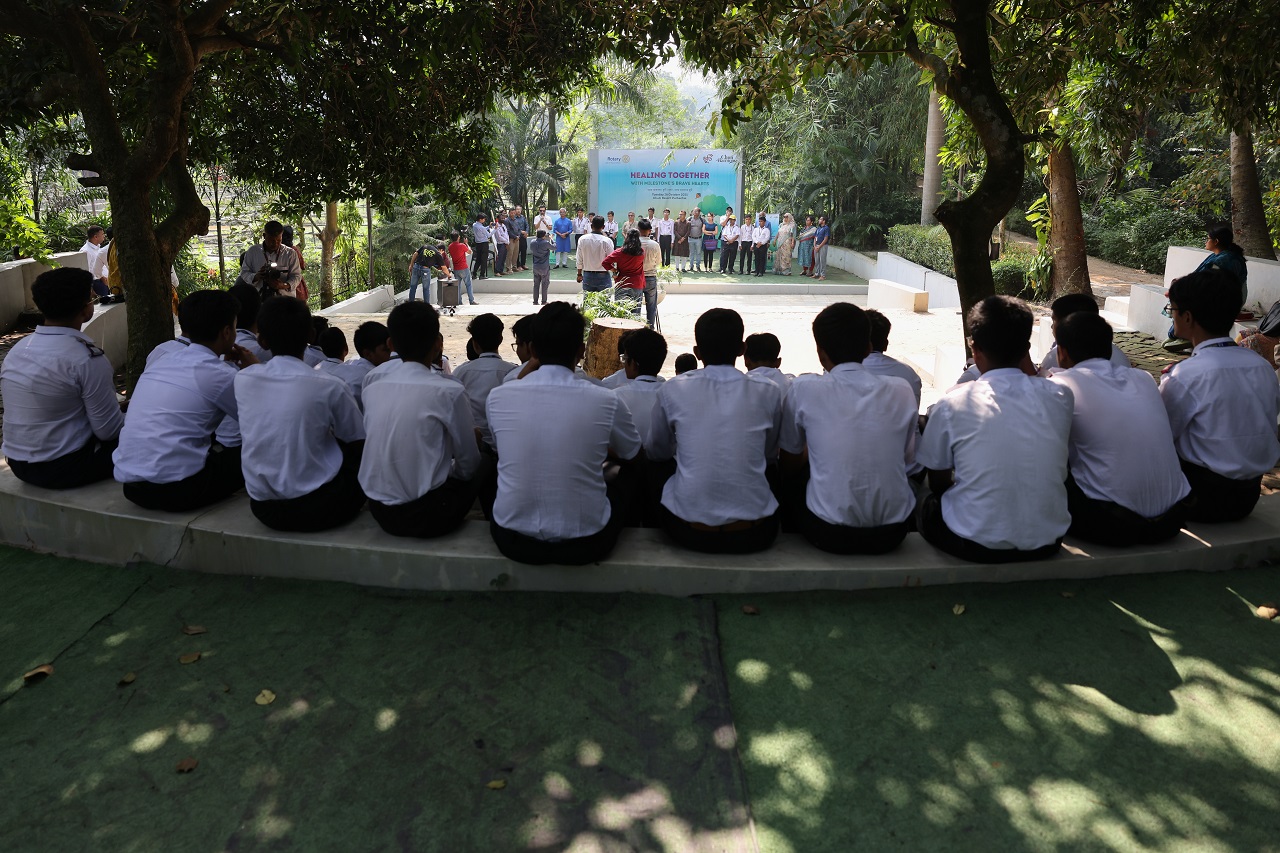
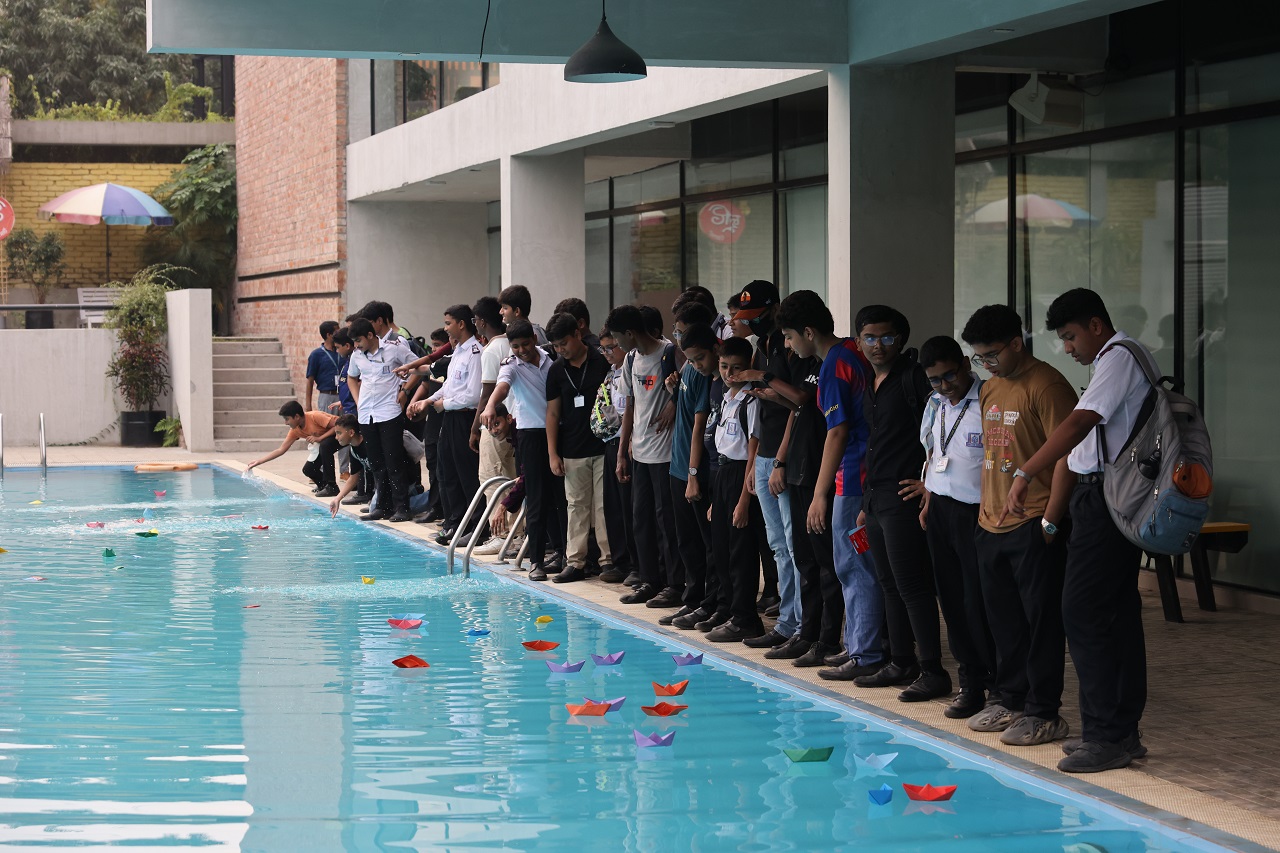
Yesterday, Rotary Club of Banani and Chuti Resort organised a healing session titled “Healing Together with Milestone’s Brave Hearts” at Chuti Resort in Purbachal. Forty students from class 6, 7, and 8 took part in the event, which featured a series of reflective and therapeutic activities.
During the session, students shared their favourite foods, scents, and natural sensations, and explored how they relate to elements of nature. Many drew strength from these comparisons — some likened themselves to trees, describing how they endure many storms yet continue to stand tall. Others compared themselves to butterflies, symbolising transformation and resilience. A few said they wanted to be like water — calm and adaptable — or as vast and open as the sky.
In Class 8, Rohan speaks barely or makes eye contact. His friend Tanvir died in the explosion. “He comes in my dreams,” Rohan said quietly. “Sometimes I see him running, sometimes burning.”
At night, Rohan dreams of the crash replaying in slow motion — a plane falling, children screaming, the fire spreading across the courtyard. “I don’t like going to school anymore,” he said. His best friend Zayon hasn’t come back since the accident; his family took him to their hometown in Cox’s Bazar. “The football team is gone. My friends are gone,” Rohan said. “It’s not the same school anymore.”

His parents, worried about his silence and nightmares, have enrolled him in an art school, hoping that drawing might help. But he still spends evenings staring at the sky, tracing the path of planes.
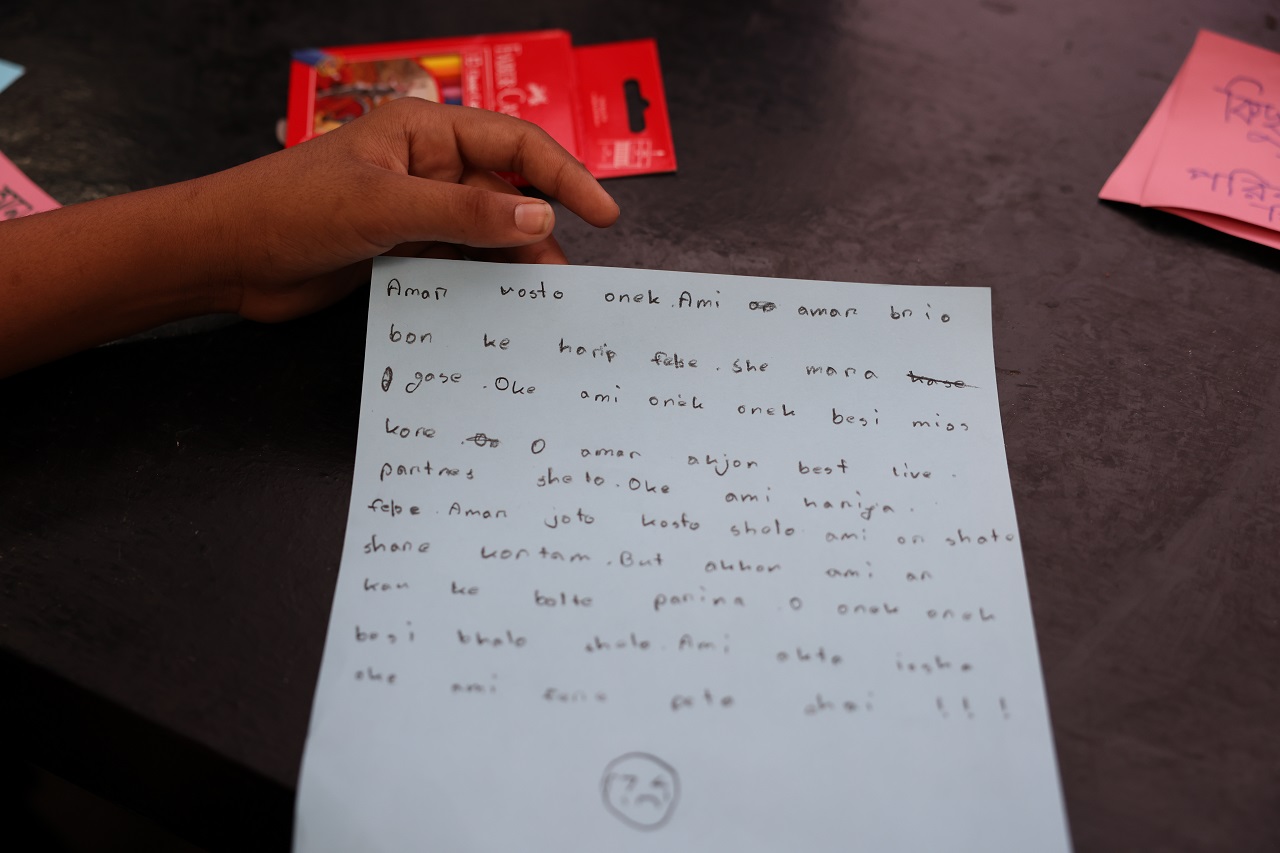
During the art session at Chuti Resort, many students reached for shades of vivid orange, red and pitch black — the colour of the flames that engulfed their school after the fighter jet crash, some even tried to paint the burnt school building. Some wrote heartfelt messages to their departed friends on paper boats, letting their words drift like memories on the water. The exercise revealed the deep emotional scars of losing those with whom they once shared laughter, secrets, and tiffin boxes — a burden far too heavy for such young hearts.
Class six student Tahsin speaks vividly of his scars. His elder sister, Tasnia, was one of the students killed when the jet slammed into their building. Tasnia was a student of class 8. They were in two different buildings when the fighter jet slammed. He ran through the playground to save his sister and tried to bring saline and water as he was instructed by a stranger as a remedy for the burn. Tasnia left his beloved brother after 28 days of gruelling fight in the ICU. At the end of the art session, Tahsin wrote a letter to her sister: “She’s the only one I shared my feelings with. Now I can’t share anything with anyone. I have lost my best friend.”
Another Class 6 student, Tahrim Ashraf, still replays his last conversation with his friend Shamim. “He was in a hurry that day,” Tahrim recalled. “We were talking by the gate, and suddenly he said he had to go upstairs. Two minutes later, the crash occurred.”


Tahrim now believes that if he had kept talking, Shamim might have lived. The guilt weighs on him. The canteen — where the two often shared snacks — has become unbearable for him. “I won’t eat there anymore,” he said. “Shamim’s seat is empty.”
At night, Tahrim dreams of Shamim coming to visit his grandparents, smiling and talking. His parents plan to move him to a new school next year, hoping a change of environment will help.
Monira Rahman, founder and executive director of the Innovation for Wellbeing Foundation, cautioned that some of the children remain extremely vulnerable. “If they are not quickly identified and provided with mental health support, it could have serious consequences for their development,” she said.
“The depression stemming from their post-traumatic state could strip away their ability to find joy in life.” She shared the example of a student, who at first likened himself to a leaf, only moments later to admit that he didn’t know who he was or what he wanted to become.
Seven students were killed alone from class seven that day. Arif Hossain Limon keeps their memories in his phone. He scrolls quickly to a picture of his friend Samir — a smiling boy in a school uniform. “He was on the balcony,” Limon said. “Spot dead.”
When the school reopened, the silence was suffocating. “It felt empty,” he said. “The football team is gone. Many teachers left. The new ones don’t feel like ours.”
Limon’s trauma is tied to colour and sound. His mother was late picking him up that day, and he saw the aftermath — rows of burned, white bodies. “Now,” he says, “whenever I see something white, I think of that afternoon.
At home, even the sound of something falling makes him jump. He’s scared all the time – keeps saying the sound is like a plane.
Monira found something staggering while leading yesterday’s art therapy session. She told TIMES many children are trying to come out of this and remain strong, attempting to return to their studies. However, they need support from their families and teachers. It is crucial to assess how much assistance their families and teachers are providing and how well they understand the children’s needs.
For Abhijit Adhikari, an English teacher who has spent years nurturing these children, the tragedy is personal. One of his brightest students, Maya, was among the dead. “I see her face every time I walk past her classroom,” he said. He once promised Maya to visit her hometown if she gets a scholarship to keep her motivated. Hence, he visited Meherpur, Maya’s hometown, to give her the last goodbye.
On the day of the crash, Adhikari told TIMES with tearful eyes, I helped carry children out of burning rooms. The memory of their screams still wakes him at night. “The smell of smoke, the sound of their voices — it never leaves you,” he said. “But I try to be strong. The children look at me for comfort.”
He now spends afternoons organising small games and group storytelling sessions to help students talk again. “They’ve stopped laughing,” he said. “If we don’t help them find joy again, they’ll lose more than just their friends.”
Milestone School stands, but the courtyard where students once played football is now a quiet memorial garden.
Yet, the path to healing has only just begun. Monira Rahman told TIMES that the children’s artwork reveals classic signs of post-traumatic stress, even as they try to project strength. Their recurring nightmares, avoidance, anxiety, and guilt are deeply troubling.
For Rohan, Tahsin, Tahrim, Limon, and countless others, normal life feels unreachable. The school bells still ring. The classes go on. But in the minds of the survivors, 21 July never really ended.
“Some nights, I dream the plane is still falling,” Rohan said softly. “And I see the child who was running away with fire on his body.