


Bangladesh increasingly speaks of smart cities, digital transformation and sustainable urban development. Metro rail, elevated expressways, digital public services and major infrastructure projects are visible signs of modernisation. But a fundamental question remains: are these investments creating the inclusive, safe, resilient and sustainable cities promised under Sustainable Development Goal 11 (SDG 11), or merely islands of modern infrastructure within fundamentally unsustainable urban systems?
The United Nations defines SDG 11 as making cities and human settlements inclusive, safe, resilient and sustainable. Its targets cover affordable housing, sustainable transport, participatory urban planning, disaster resilience, air pollution, municipal waste, green and public spaces, and protection of cultural and natural heritage. Judged against these standards, Bangladesh still has a considerable distance to travel, with only four years remaining before the 2030 deadline.
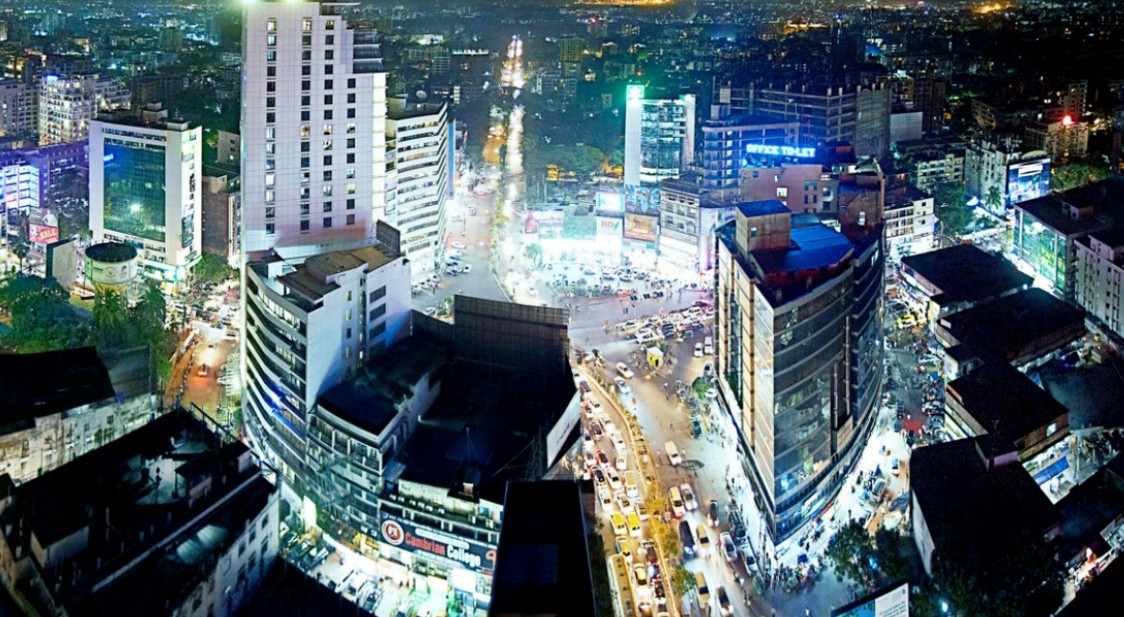
A starting point for understanding the challenges is recalling that about 38% of Bangladesh’s population, or 58 million people, already live in urban areas, according to the World Bank – and this number is projected to rise to 60% by 2050. Dhaka’s economic and employment boom has driven population growth. However, Bangladesh lacks strategic planning and institutional capacity in public services for smart city development. Dhaka and many other cities are sprawling over wetlands, croplands, and natural drainage channels. Natural canals, water bodies, and open spaces are vanishing under the concrete jungle. As a result, traffic congestion, parking problems, and pollution threaten Bangladesh’s transition toward smart cities.
Housing represents one of the clearest weaknesses. SDG 11.1 requires adequate, safe and affordable housing and basic services for all, including upgrading slums and informal settlements. Yet the Bangladesh SDG Tracker identifies significant data gaps in measuring the proportion of urban residents living in slums, informal settlements or inadequate housing. This is itself a governance problem. How can progress towards adequate housing be properly measured without reliable, regularly updated data? Transport presents another contradiction. Bangladesh has made genuine progress through Dhaka Metro Rail, but SDG 11.2 requires safe, affordable, accessible and sustainable transport for everyone, including women, children, older people and persons with disabilities. A modern metro system cannot by itself make an entire metropolitan transport system smart.

Bangladesh has made remarkable progress in developing modern transportation infrastructure, such as Dhaka Metro Rail. However, Target 11.2 requires Bangladesh to provide access to safe, affordable, accessible, and sustainable transport systems for all. Dhaka still has many transportation problems, including traffic congestion, road safety issues, and a lack of integrated transport systems. The metro rail system will be helpful, but it will only be a part of a more significant sustainable transport network that will also include buses, walking, and cycling.
Air pollution is perhaps the strongest evidence that Bangladesh remains far from sustainable urban development. According to the World Bank, air pollution caused more than 159,000 premature deaths and 2.5 billion days of illness in Bangladesh in 2019. The health costs were equivalent to 8.3 percent of GDP. The World Bank also reported that Dhaka’s annual PM2.5 concentration was 18 times higher than the World Health Organisation’s Air Quality Guidelines. These figures expose a fundamental contradiction. A city cannot be considered smart if its residents are forced to breathe dangerously polluted air. Pollution is not merely an environmental issue; it is a public health, economic and governance crisis.
Waste management is another major weakness. The Bangladesh SDG Tracker, under Target 11.6, identifies controlled municipal waste management and urban PM2.5 as key indicators. Yet many urban areas still depend heavily on conventional collection and dumping. Waste segregation and recycling remain limited, while plastic and other waste frequently enter drains and waterways, contributing to pollution and flooding. The loss of green spaces and natural drainage is equally worrying. Parks, playgrounds, wetlands, canals and open spaces are essential urban infrastructure. They reduce heat, absorb rainwater, improve air quality and provide recreation. The Bangladesh SDG Tracker recognises access to public open space as an SDG 11.7 indicator, but protection on the ground remains inadequate.


Disaster resilience is another critical concern. Bangladesh has achieved considerable success in cyclone preparedness and early warning, but urban risks are becoming more complex. Flooding, extreme heat, fires, drainage failure and earthquakes threaten densely populated communities. Dhaka’s earthquake vulnerability is particularly serious. A major earthquake could cause enormous casualties because of dense construction, inadequate emergency access and weaknesses in enforcement of building regulations. SDG 11.5 requires cities to reduce disaster deaths, affected populations and economic losses. Resilience therefore must be incorporated into land use, construction, infrastructure and emergency planning.
Perhaps the least discussed obstacle to Bangladesh’s smart city ambition is institutional capacity and skilled manpower. Building and managing a smart city requires urban planners, transport specialists, environmental scientists, data analysts, engineers, GIS experts, disaster management professionals and capable municipal administrators. Bangladesh has talented professionals, but many urban institutions lack sufficient specialised manpower to manage the scale and complexity of modern cities.
Modern technology is often not easy to understand, operate, and manage. It requires professionals during installation, operation, and regular maintenance. Bangladesh’s experience with traffic management is that technology and data analytics alone are insufficient; smart traffic monitoring and management systems require skilled personnel. The World Bank has prioritised strengthening institutional capacity, coordination, and urban governance to address many of Bangladesh’s urban challenges, including rapid urbanisation, environmental degradation, and disaster risks. Therefore, investing in human resources and governance is the primary step toward Bangladesh’s smart city development.
The World Bank has repeatedly emphasised institutional capacity, coordination and stronger urban management as essential for Bangladesh’s rapidly growing cities. Investment in human resources must therefore become as important as investment in physical infrastructure.
Governance is an even deeper challenge. Urban responsibilities are divided among city corporations, development authorities, WASA, transport agencies, ministries and other institutions. Without effective coordination, one agency may construct a road while another fails to address drainage, waste or land-use consequences. A smart city requires smart governance: integrated planning, transparent decision-making, reliable data, professional management and clear institutional responsibility. The World Bank’s $900 million urban resilience financing announced in 2024 illustrates the scale of the challenge. The programme supports infrastructure and planning in secondary cities, partly to absorb climate migrants and reduce pressure on Dhaka. With urbanisation projected to reach 60 percent by 2050, such long-term planning is increasingly urgent.
Bangladesh needs integrated metropolitan planning, stronger coordination among agencies, protection of wetlands and public spaces, affordable housing, safer public transport, modern waste management and stronger enforcement of environmental and building regulations. It must also invest urgently in the professional capacity of municipalities and urban agencies and give citizens a meaningful voice in urban planning.
With 2030 approaching rapidly, Bangladesh should confront an uncomfortable reality: the country may be building smarter infrastructure without yet having the institutional capacity, skilled manpower and governance systems required to create genuinely smart cities. Unless planning becomes integrated, governance more accountable, technical capacity stronger, environmental protection more effective and development more inclusive, Bangladesh is likely to fall short of several SDG 11 targets by 2030.
The views expressed in this article are solely those of the author
The writer is the Editor and CEO of News Network. E-mail: [email protected]