

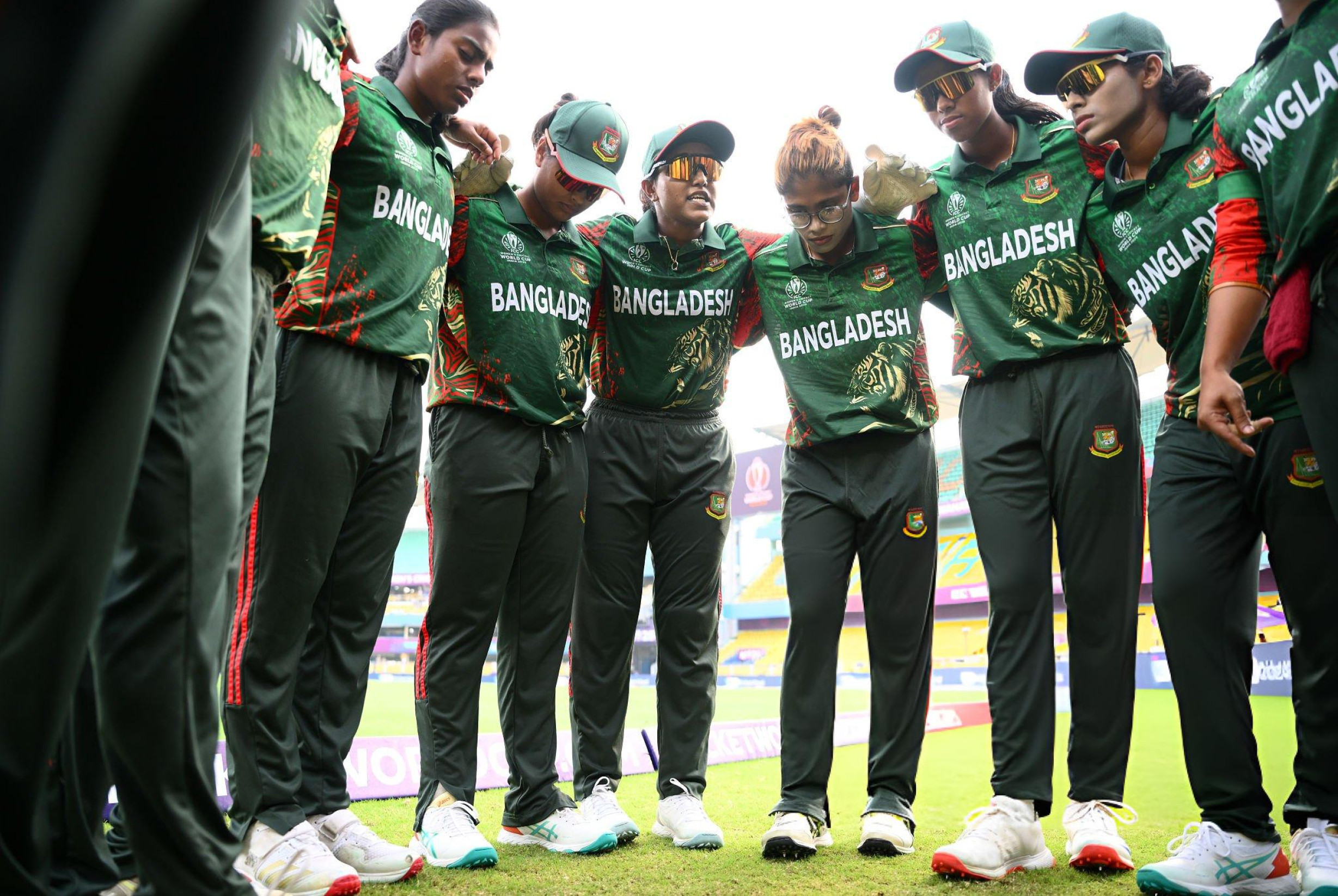



When the Bangladesh women’s cricket team arrived at the World Cup, expectations were low. They hadn’t played an international match for six months, and this was only their second-ever appearance at the tournament. Few believed they could challenge the world’s best. But in their very first game, they shocked everyone.
Bangladesh bowled out Pakistan, a side far more experienced, with a fiery new-ball spell from Marufa Akter, who took 2 for 31, and a stunning 3 for 5 from 18-year-old Shorna Akter. It was a performance that gave a message to the cricketing world: The Tigresses are not here for nothing.
However, as the tournament progressed, the wins didn’t come. They lost to England, New Zealand, and South Africa. That brought in waves of criticism, but should they be treated like the men’s team?
Bangladesh’s women cricketers don’t have the same facilities, exposure, or opportunities as their male counterparts. At the grassroots level, the situation is worse. Girls in rural areas barely get proper grounds or coaching. Even at the top level, resources remain limited. Yet, despite all this, these young women have gone toe to toe with some of the best in the world.
Take the game against England, for instance. It was a thriller that could have gone either way. Heather Knight survived a controversial umpiring call and went on to win the match for England. Bangladesh’s bowlers had pushed a world-class side to the brink, something few expected.

Against South Africa, Shorna Akter, the teenager who has become a symbol of this team’s fearless attitude now and earned praise globally, smashed the fastest fifty ever by a Bangladeshi woman 51 not out off 35 balls lifting the team to 232/6. South Africa, led by Laura Wolvaardt, were in deep trouble at 78/5. Bangladesh fielders dropped key catches, and that cost them dearly. The hosts chased down the total with just three balls remaining.
When the match ended, young Rabeya was on her knees, and captain Nigar Sultana Joty fought back tears.



“I am so proud of the effort of my girls, but I am sad because they are crying in the dressing room. They are very young,” Nigar Sultana Joty said, supporting her team in the post-match presentation.
It was heartbreak, yes, but also a glimpse of what this team could become.
Former Bangladesh captain and selector, and former Game Development Program Coordinator of the BCB’s Women’s Cricket Committee, Habibul Bashar summed it up perfectly in his interview with Times of Bangladesh:
“I think our girls played really well in the World Cup so far. It’s unfortunate that we won 1 and lost 3. But it could have been 3 wins easily. It’s bad luck. In rural areas, our girls don’t get enough facilities. Even at the top level, they have less than the men. But how they are performing deserves credit.”
Bashar further added, “Marufa, Rabeya, Shorna have been brilliant. When our team went through transition, it was natural to struggle. But this World Cup performance shows promise. The practice facilities for our women should be improved. We must make them interested in playing cricket.”
His words address the heart of the issue. The problem isn’t just how they are performing. It’s the lack of support.
These young women are fighting two battles: one on the field against stronger, better-funded opponents, and another off it against a system that doesn’t fully back them.
Bangladesh women have already won an Asia Cup, and they are showing their strength in the grandest stage of cricket – the World Cup. With the increase of more facilities by taking steps as Habibul Bashar suggested, more results can come, and the women will finally look at cricket as a career with a secure future.
Their passion, their tears, and their fearless performances should remind Bangladesh fans of one thing: progress is already happening. It’s time the nation stands behind them.
– Shajedul Hassan Rahin