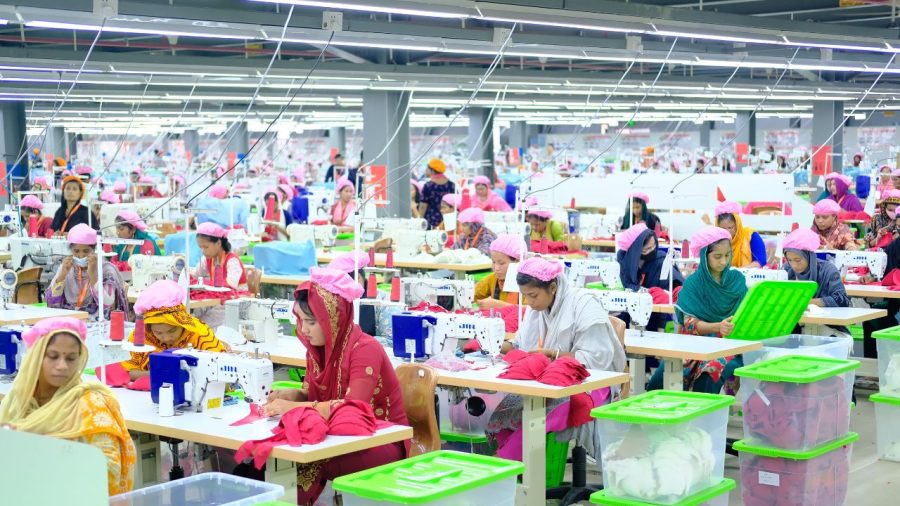



The wage board will begin the process of setting a new minimum wage for ready-made garment (RMG) workers with its first meeting on Wednesday.
The meeting is considered important amid workers’ long-standing demands for higher wages and recent labour unrest. Workers have demanded that the monthly minimum wage be raised to Tk30,000.
According to a meeting notice issued by the board under the Ministry of Labour and Employment, the meeting has been called to formulate recommendations on minimum wage rates for all categories of workers and employees in the garment industry under Section 139 of the Bangladesh Labour Act, 2006.
The meeting is scheduled to take place at around 11am at the Wage Board’s conference room in Segunbagicha, Dhaka. Board Chairman and Senior District Judge Sheikh Ashfakur Rahman will preside over the meeting.

The agenda includes the introduction of board members, the formulation of recommendations on minimum wage rates for garment workers and employees, and other matters.
On 1 November, the government formed the six-member board to determine new wages for garment workers.
Professor Mosleh Uddin Ahmed of the Department of Public Administration at University of Dhaka has been appointed as the independent member.


The employers’ representatives on the board are Asif Ayub, joint secretary general of the Bangladesh Employers’ Federation, and ABM Shamsuddin, a director of the Bangladesh Garment Manufacturers and Exporters Association (BGMEA).
The workers’ representatives are Anwar Hossain, president of the Bangladesh Jatiyatabadi Sramik Dal, and Babul Akhtar, general secretary of Bangladesh Garment and Industrial Workers Federation.
After the board was formed on 1 November, workers’ representatives called for the first meeting to be held as soon as possible.
They said the board should begin its work quickly and finalise recommendations for a new wage structure by December so that workers could receive the revised wages from January. They also said they were prepared to hold consecutive meetings if necessary to complete the process within the deadline.
The last minimum monthly wage for garment workers was set at Tk12,500 in November 2023, with the new wage structure taking effect in December that year. Before that, the minimum wage stood at Tk8,000 in 2018. The 2023 revision therefore increased the minimum wage by Tk4,500, or 56.25 per cent.

One of the major demands this time is to set the monthly minimum wage at Tk30,000. Workers say rising prices of essential goods and the increasing cost of living over the past few years have made it difficult for them to manage household expenses with their current wages.
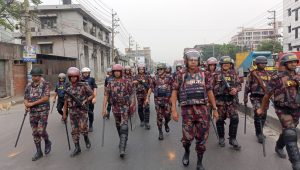
The demand has been accompanied by protests and clashes in several industrial areas in recent times, including Mirpur in Dhaka, Gazipur, Savar and Ashulia. Labour unrest that continued for several days also disrupted production at a number of factories.
Under Bangladesh’s labour law, the government determines workers’ wages in different sectors based on recommendations from the Minimum Wage Board. Amendments to the Labour Act in 2026 reduced the interval for wage reviews from five years to three years. As a result, the question of setting a new wage structure for garment workers has come up following the implementation of the previous structure in December 2023.
In determining the new wages, key considerations will include workers’ living costs, inflation, essential household expenses, the industry’s capacity, and the views of both employers and workers. The board’s first meeting will formally begin discussions on these issues and the process of preparing recommendations.