


Friday is Sumona Islam’s birthday, but a cake is a luxury her family cannot afford.
Her husband, Farid Islam Robin, a resident of North Badda in Dhaka, considered buying beef for the occasion. But at Tk800 a kilogram, it was beyond his budget. Instead, he settled for a medium-sized rohu fish at Tk350 a kilogram.
“Previously, we used to cook something special almost every Friday. Now prices have risen so much that we cannot afford fish or meat except on special occasions. This was the little celebration we could afford,” Robin told TIMES.
While living standards generally improve over time, Robin’s circumstances have deteriorated. His voice betrays his frustration.
Just as the world was beginning to recover from the coronavirus pandemic, Russia invaded Ukraine in February 2022, triggering inflationary pressures that have since made life increasingly difficult for families like Robin’s.
According to the World Bank, 8 million Bangladeshis have fallen below the poverty line over the past four years. Robin may be among them.
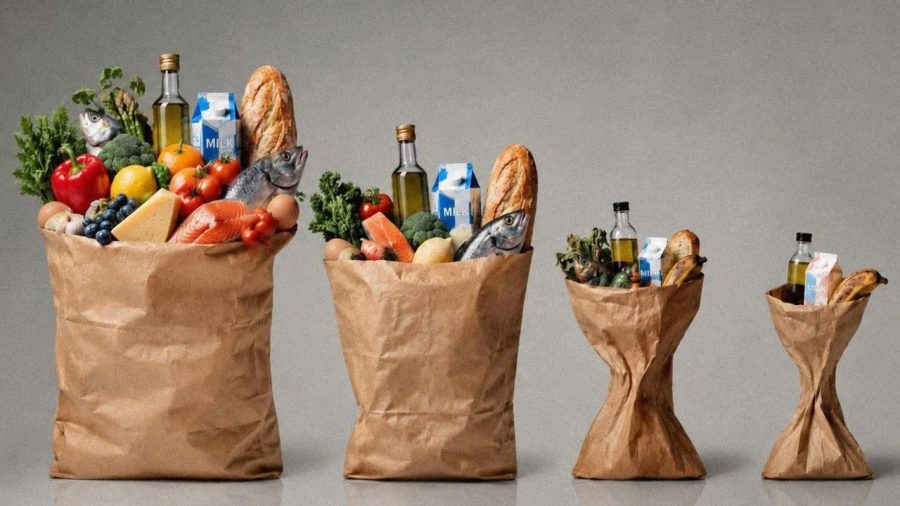
As prices of essential commodities soar, low-income families are sacrificing small pleasures and cutting their weekly shopping lists to the bare necessities.
Mohammad Yusuf, a security guard at a building in Banasree, faces a similar struggle.

His wife gave birth to a son last month but is suffering from severe weakness caused by low haemoglobin levels. A doctor advised her to eat shing fish, but Yusuf found it selling for Tk400 a kilogram at the wholesale market.
“The last money I had was a Tk500 note. After buying one kilogram of fish, I used the remaining money to buy one kilogram of rice and half a kilogram of lentils,” he told TIMES.
The shift towards cheaper food is reflected in a Bangladesh Institute of Development Studies (BIDS) study titled How Rural Food Inflation Impacts Rural Food Consumption Patterns: Evidence From 64 Districts.
The research found that soaring food prices have forced families to cut back on expensive protein-rich foods in favour of cheaper alternatives.
Beef and mutton consumption has steadily declined. Although overall fish consumption remains stable, households are switching from rohu and katla to cheaper pangasius and tilapia.
As protein consumption falls, dependence on rice and other carbohydrate-rich foods is increasing.




The study found that poor and lower-middle-income households have been hit hardest, sacrificing dietary quality to cope with rising living costs.
Early winter vegetables, including beans, cauliflower and radish, have begun arriving at Dhaka’s kitchen markets, but many remain beyond the reach of families like Robin’s and Yusuf’s.
Apart from papaya and pumpkin, most vegetables cost Tk80 or more a kilogram.
Tarikul Islam, a chef at a private organisation, loves tomatoes but abandoned plans to buy them after finding that the price had reached Tk200 a kilogram.
“I bought tamarind for Tk50 instead to give the food some texture,” he said.
At Merul Badda kitchen market, Md Alam said he had paid Tk100 a kilogram for local cucumbers and Tk160 for beans.
At Karwan Bazar, broiler chicken was selling for Tk180 a kilogram and Sonali chicken for Tk310.
“Over the past few weeks, prices have been fluctuating. They fall by Tk10 one week and rise by Tk10 the next,” said broiler seller Monir Hossain.
Another trader, Md Fuad, told TIMES, “The number of ordinary customers has dropped significantly.”
Rahman Islam, shopping at Fuad’s stall, said he previously bought three or four chickens at once and stored them in his freezer. Now he buys only one.
Fish prices, meanwhile, surged about three months ago and have shown little sign of easing. Even tilapia, considered a budget option, costs Tk250 a kilogram, while pangasius has crossed Tk200.
“Prices tend to be slightly higher on holidays or Fridays,” said Md Azad, a trader at Karwan Bazar’s wholesale fish market.
Fruit stalls are also seeing fewer customers.
Karwan Bazar fruit trader Abdul Mannan said sales had fallen sharply as imported fruit prices climbed.
“Many customers are buying smaller quantities, while others simply walk away after hearing the prices,” he said.
Sobhan Islam had come looking for fruit for his grandmother, who has sores in her mouth and cannot eat solid food. Her doctor recommended vitamin C-rich foods.
But malta oranges, priced between Tk450 and Tk550 a kilogram, left him stunned.
At the same shop, worker Sumon spends his days handling fruit he cannot afford to take home.
“I spend the whole day cleaning these fruits with my own hands. Yet I cannot afford to buy them for my own family,” he said.
Most imported fruits now cost more than Tk400 a kilogram, with expensive apples, pomegranates, grapes and oranges driving customers away.
Traders blamed high import duties, delays in port clearance, the rising cost of the dollar and increased transport costs for the relentless price rises.