


Sixteen years after the European Union Election Observation Mission recommended that political parties ensure at least one-third (33 percent) of leadership and decision-making positions are held by women, female representation in Bangladesh’s electoral race remains strikingly low.
Only 83 women—around 4 percent of the total candidates—are contesting the current national parliamentary election.
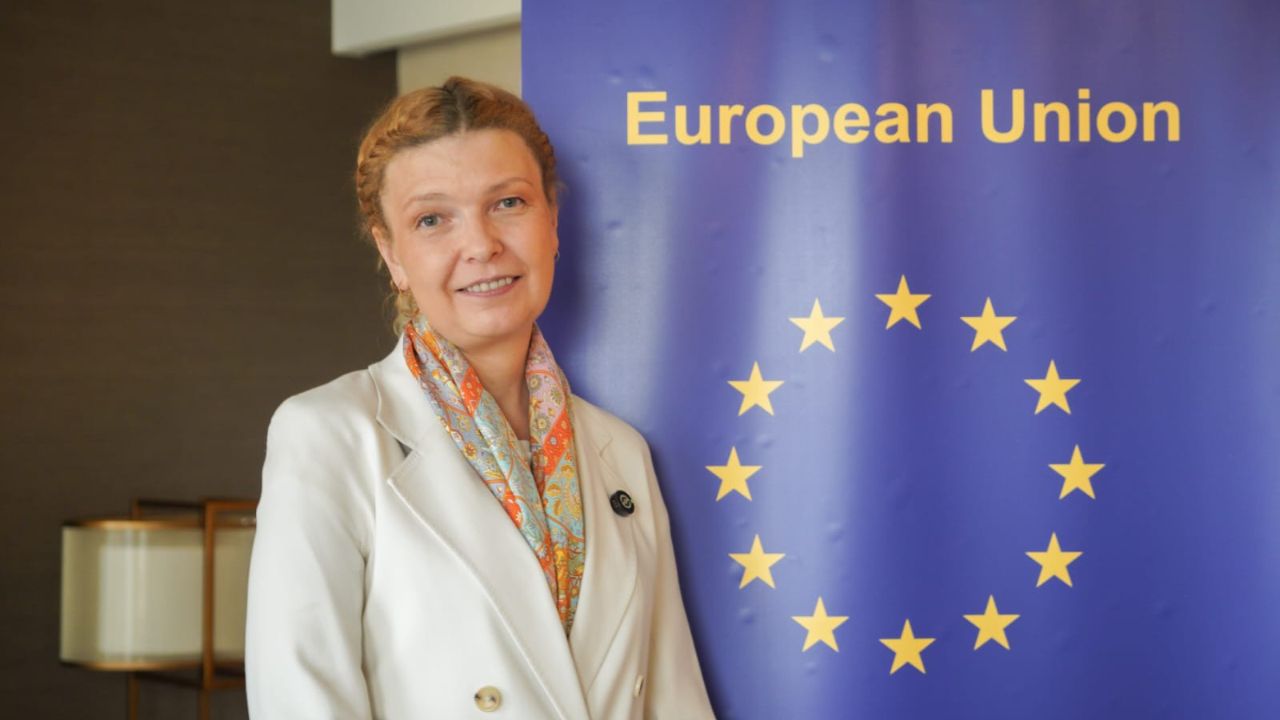
Deputy Chief Observer of the EU Election Observation Mission Inta Lase said the 2026 mission is closely examining the participation of women candidates and whether they are competing on an equal footing with their male counterparts.
In an exclusive interview with TIMES of Bangladesh, she outlined the mission’s comprehensive approach to monitoring the election, including its assessment of women’s representation, media coverage, social media discourse, and overall polling integrity.
“It’s a very, very small number,” Lase said, referring to the proportion of women candidates. “We are looking into how women candidates can participate and whether they are competing on equal footing. Democracy wins when women’s voices are heard and when women are in decision-making positions—not only in state institutions but also within political parties and among candidates.”

A complex assessment
Lase emphasised that evaluating an election is a complex and multi-layered process. “To simply label an election as ‘good’ or ‘bad’ would be an oversimplification,” she said. “There are many elements that must be considered in our overall assessment.”
One of the key factors examined by the mission is election-related violence. She stressed that violence has no place in democratic competition, whether in Bangladesh or elsewhere.
“One death is too many,” she said, noting that incidents are carefully documented by long-term observers and later analysed by political and social media experts in the capital.


The mission assesses whether such incidents are isolated or widespread, and how they affect voters in specific areas.
“Regardless of scale, any violence impacts people. But we also evaluate whether it is limited to certain locations or affects broader regions of the country,” she explained. “When it comes to violence, we strongly believe it has no place in a democratic electoral process.”
Monitoring media and social platforms
The EU mission is also closely monitoring both traditional and digital media. According to Lase, two specialised units have been deployed—one focusing on traditional media and the other on social media.
The traditional media monitoring unit evaluates three main aspects: the allocation of airtime among candidates, the extent of equitable coverage across news platforms, and the representation of women’s voices in election-related discussions. It also considers whether voters receive a comprehensive and balanced understanding of the electoral process through news coverage.
“We look at whether candidates are given fair coverage and whether women’s perspectives are reflected in public discourse,” Lase said. “From the voter’s point of view, it is important that they receive a clear and balanced picture of the election.”
The social media monitoring unit examines online messaging by political parties, influencers, and discussion groups. Analysts track whether parties focus on presenting policies and competing through ideas—a healthy and expected part of democratic competition—or whether harmful, abusive, or borderline hate speech is being used.
“Our analysts collect and evaluate data to determine whether political actors are using language that promotes democratic debate or language that is harmful and abusive,” she said. The unit also identifies the sources of such rhetoric and monitors its spread.
Ensuring informed choice
Lase noted that while public enthusiasm for the election is visible, voters must be able to make informed choices free from fear or intimidation. “Voters should have the opportunity to compare candidates and their ideas freely, and to cast their ballots based on informed judgment—not out of fear or pressure,” she said.
The EU Election Observation Mission has deployed around 200 observers across Bangladesh to monitor polling in both urban and rural areas. Their findings will contribute to a comprehensive assessment of the electoral process, including the level of inclusiveness, transparency, and fairness.
Despite progress in some areas, the mission’s focus on women’s participation highlights a continuing gap between long-standing recommendations and current realities. For the EU observers, strengthening women’s representation remains essential to deepening democratic practice in Bangladesh.